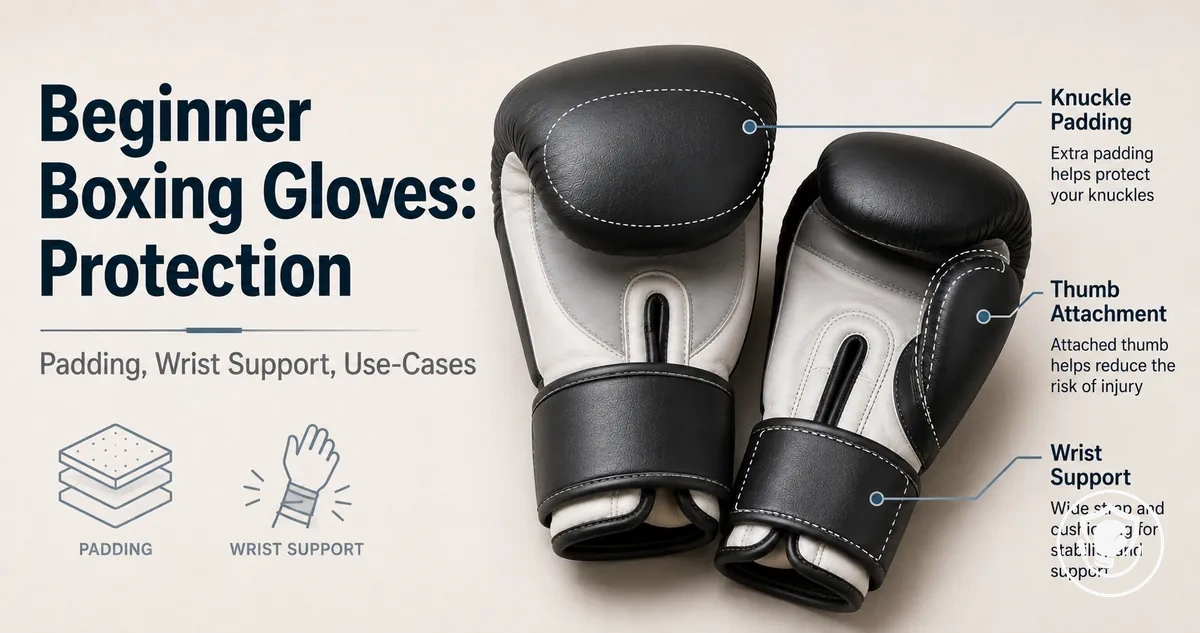
Beginner Boxing Glove Protection: Padding, Wrist Support, and Home Training Use-Cases
For beginners, boxing glove protection combines the roles of padding, wrist support, and fit to reduce impact stress and improve hand and wrist stability during typical home training sessions. When hitting a heavy bag or doing pad work at home, the glove acts as the main interface between your hand and the target, absorbing shock through its foam padding and aligning the wrist via the cuff and strap. This lowers the force that reaches your knuckles and wrist joint, but it is not a guarantee against soreness or strain, especially when technique, glove condition, or training intensity vary.
- Padding absorbs impact from repeated punches on a heavy bag or pad.
- Wrist support helps maintain alignment during hooks and uppercuts.
- Fit affects how the glove transfers force and whether the hand moves inside the glove.
These features can reduce discomfort, but their effectiveness varies with glove size, target type, and training volume. Sizing and weight selection are covered separately; this section covers only protection features. Product examples, if any, appear at the end of the checklist after the evaluation criteria are explained.
Protection Scope for Home Training: What Gloves Should Reduce and What They Cannot Prevent
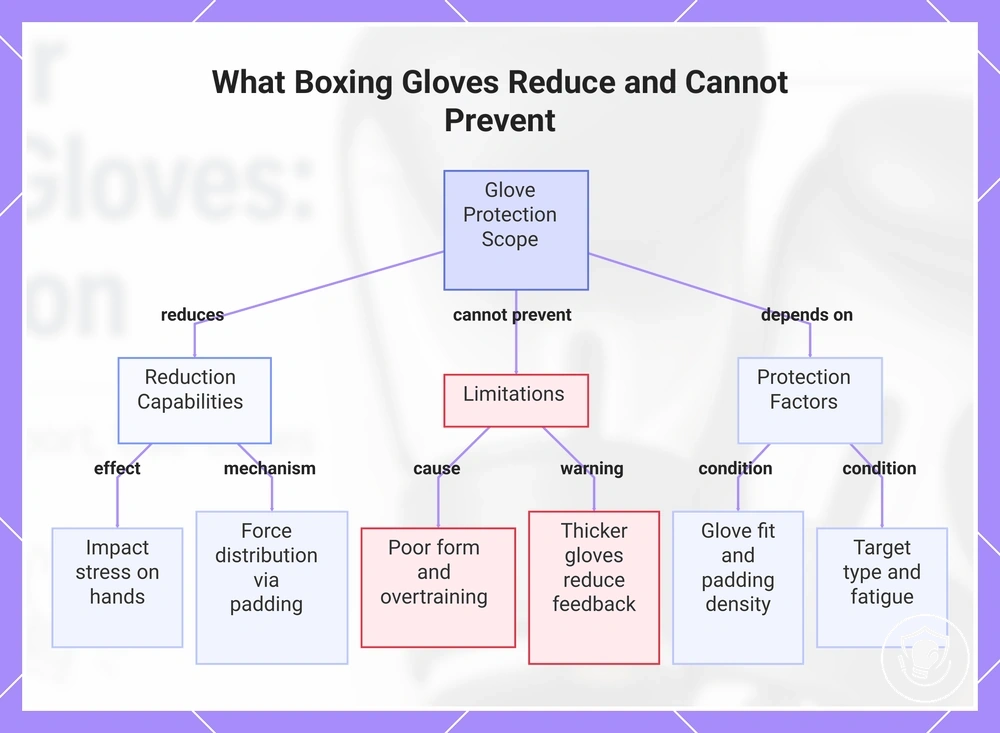
Boxing gloves reduce impact stress on your hands during home training, but they cannot prevent injuries caused by poor punching form, overtraining, or incorrect wrist alignment.
The reduce-versus-prevent distinction depends on how gloves are used. Gloves lessen the force transmitted to the knuckles and wrists by distributing the load over a padded surface. However, the degree of protection varies with glove fit, padding density, and the type of target.
The type of target and your fatigue level can increase the impact beyond what the glove can manage.
Protection Scope for Home Training can lead to unrealistic expectations about what gloves can achieve. Common misconceptions and their realistic counterparts include:
- Misconception: Gloves eliminate hand pain entirely.
Reality: Gloves reduce impact but cannot stop pain from poor punching mechanics. - Misconception: Thicker gloves always provide better protection.
Reality: Thickness improves shock absorption but can reduce hand speed and feedback, potentially leading to awkward impact. - Misconception: Gloves protect against all joint strains.
Reality: Wrist and knuckle injuries can still occur if form is off or if you overtrain. - Misconception: Wearing gloves allows you to hit harder without risk.
Reality: Increased power raises stress on your own hands, and gloves cannot fully stop overuse injuries.
When choosing between heavy bag and pad work, note that the heavy bag presents a harder target, producing more stress on the hands. Pad work allows higher frequency and better comfort because the partner or trainer can control the impact. In both cases, glove protection reduces shock but cannot override poor technique or excessive volume. Follow safety rules for beginners to keep training within a safe range.
This chart explains the realistic protection scope of boxing gloves during home training, including what they reduce, their limitations, and the factors that affect protection.
Padding Systems That Protect Knuckles and Metacarpals: Type, Density, and Layout
Glove padding is the primary shock-absorbing system that dissipates impact forces during punching. Its construction influences how much shock reaches the knuckles and metacarpals. The key variables that affect performance are the type of material used, its density, and how it is distributed across the glove.
The density and compressibility of the padding foam directly affect how the glove feels on impact. Higher-density foam tends to compress less, offering greater shock absorption but a firmer striking surface. Lower-density foam compresses more easily, providing a softer feel but less protection margin over repeated hits. Choosing between them depends on whether you prioritize hand protection or tactile feedback for a given training volume.
How padding is arranged across the glove determines whether impact forces are safely distributed or concentrated on the knuckles and metacarpals. Padding concentrated over the knuckle line can direct impact force to that area, but without adequate spread, the metacarpals remain exposed. A well-designed layout distributes force across a broader area of the palm and hand, reducing peak pressure on any single bone.
When choosing gloves, check whether the padding extends beyond the knuckle region to cover the back of the hand and wrist transition.
Padding systems in a boxing glove are arranged to protect the knuckles and metacarpals during impact.
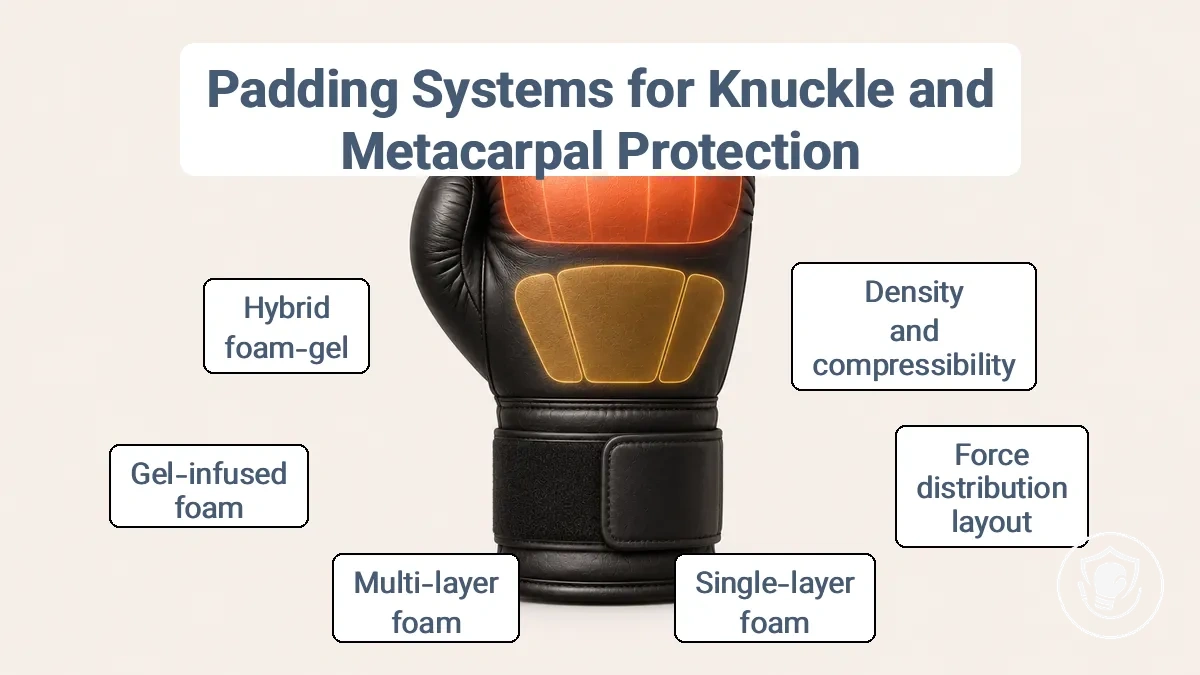
Padding systems come in several construction patterns, each with a distinct feel, protection margin, and best home use-case.
| Padding construction | Typical feel | Protection margin | Best home use-case |
|---|---|---|---|
| Single-layer low-density foam | Soft | Lower for heavy bag use | Light bag work or pad work |
| Multi-layer high-density foam | Firm | Higher | Heavy bag and medium-volume training |
| Gel-infused foam | Medium with conforming fit | Good | Sparring or general training |
| Hybrid foam-gel | Balanced | Good | Versatile for varied training sessions |
Use this table to match padding construction to your primary training activity rather than assuming one type is universally superior.
A common misconception is that more padding always equals safer hands. In practice, excessive padding can reduce striking surface feedback, making it harder to judge targeting accuracy.
Gloves that absorb most of the impact force may feel comfortable but can mask improper technique. Conversely, those with firmer padding tend to provide clearer knuckle feedback but tend to transfer more vibration to the hand. This trade-off is especially relevant when comparing gloves for different training phases.
Padding Types Explained: How Construction Changes Shock Absorption and Feedback
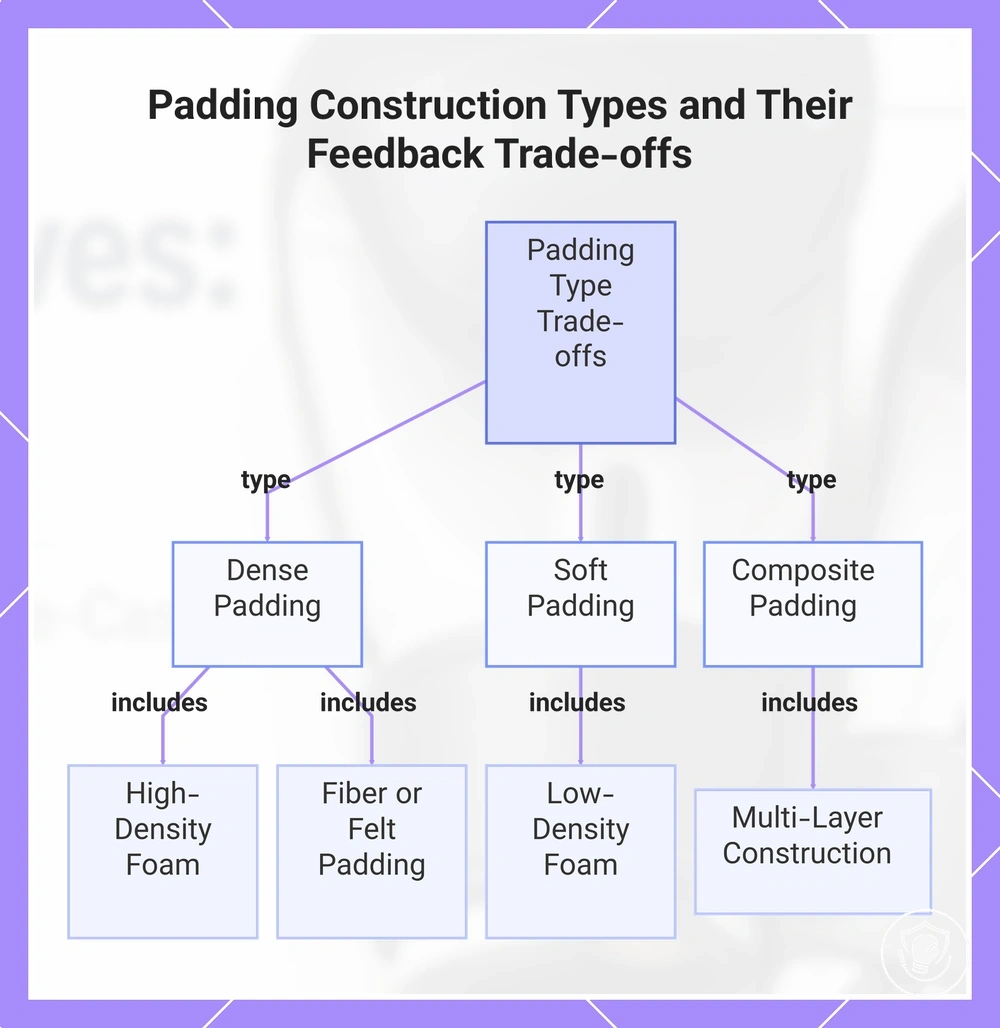
Padding construction shifts the balance between shock absorption and feedback. Denser, more rigid padding compresses less, so more force reaches the hand, but control improves. Softer, more open padding compresses more, absorbing shock but reducing tactile feedback.
Padding types explained: construction patterns and their feel trade-offs:
- High-density foam: Compresses relatively little, providing firm support and strong rebound. Shock absorption is lower, but feedback is clear, improving targeting accuracy.
- Soft, low-density foam: Compresses easily, absorbing much of the impact energy. Rebound is slower, and the cushioned feel reduces feedback, which may limit control for precision work.
- Multi-layer construction: Combines a soft inner layer for shock absorption with a firmer outer layer for rebound and feedback. This creates a moderate balance for general training.
- Fiber or felt padding: Very dense and flat, offering minimal rebound. Shock absorption is low, but feedback is direct and consistent, often suitable for light contact drills where control is key.
For beginners, the ideal construction depends on training volume and primary goal. High-volume, high-impact sessions often benefit from greater shock absorption to reduce fatigue, even if feedback softens. Lower-volume, accuracy-focused drills may favor constructions that preserve feedback and control.
This chart shows how different padding constructions balance shock absorption and feedback based on density and layering.
Where Padding Sits Matters: Knuckle Line Coverage, Back-of-Hand Support, and Impact Spread
The position of padding on a hand wrap or glove influences how impact load spreads across the hand. When padding sits correctly over the knuckle line, force disperses over a wider area rather than concentrating at a single point. Pressure is felt at the knuckles and across the back of the hand.
Knuckle line coverage is the padding directly over the knuckles, the primary contact area during impact. Back-of-hand support, by contrast, provides stability to the area behind the knuckles and helps keep the wrist in a neutral line. When both zones are adequately padded, the hand feels more stable; when one is lacking, the other may take excess force, which can indicate a mismatch between the wrap or glove and the user's hand shape.
During light bag work or pad drills, consistent pressure points over the knuckle line or a slipping wrap can suggest the padding does not align with your hand's anatomy. Hotspots on the top of the hand may indicate a too-tight wrap or shifted padding. These are signals to reassess how the wrap sits — not a diagnosis of injury or technique fault.
Where Padding Sits Matters — here are a few checks to verify your padding placement:
- Ensure the knuckle pad sits directly over the knuckle line and does not slide toward the wrist during wrapping.
- Check that the back-of-hand wrap provides even compression without creating a single tight spot.
- After a few repetitions, note any pressure points that feel sharper or more concentrated than others.
- Confirm that the wrap maintains its position and does not loosen, which would reduce impact spread.
- Feel for any slipping or shifting of padding during contact.
Wrist Support Design for Beginners: Cuff Geometry, Strap Mechanics, and Stability
Wrist support design for beginners is stability created by cuff geometry and closure mechanics, not a guarantee against injury. When cuff shape and closure tension align, the wrist can maintain a neutral position under impact. These design signals help beginners evaluate a glove's ability to limit unwanted wrist bend.
Cuff length, shape, and stiffness define how much bracing feel the glove provides. A longer cuff that extends past the wrist line can offer more stability, but may reduce mobility when the glove is new. Stiffer materials tend to lock the wrist more firmly, while softer cuffs allow more natural movement at the cost of support consistency. The trade-off between stability and comfort depends on the cuff's construction and how it fits the user's wrist shape.
Clear visual cues show cuff length, strap direction, and closure area for inspecting these features on a glove.
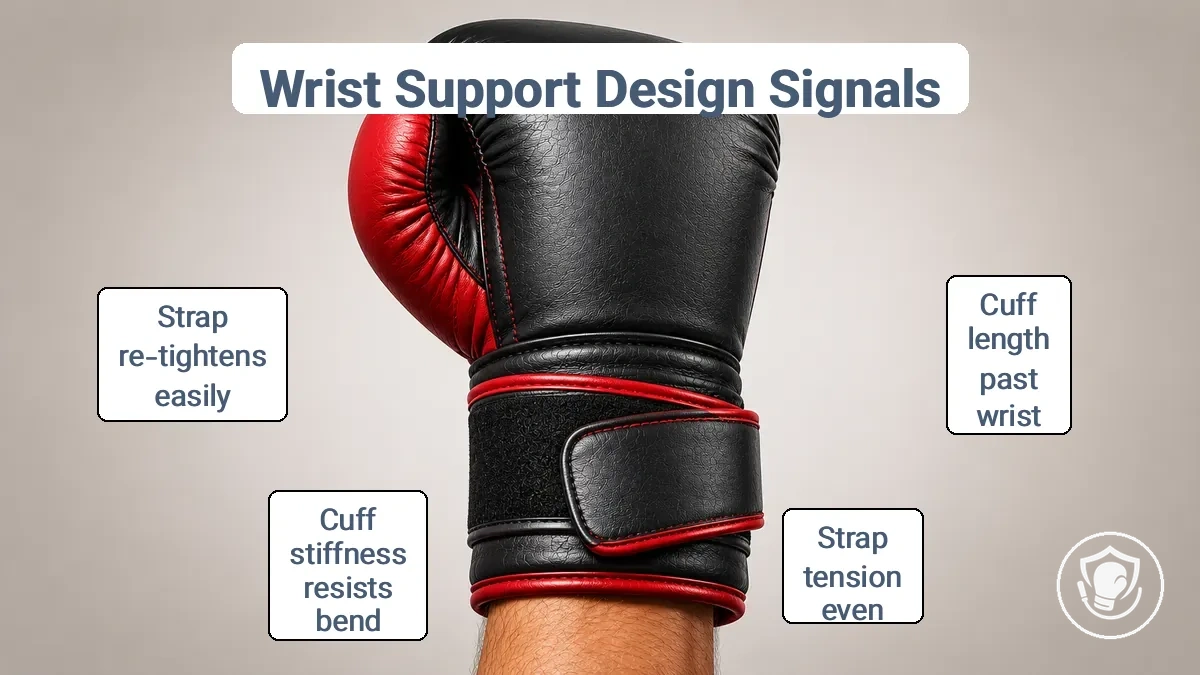
Inconsistent support often stems from strap mechanics that fail to maintain alignment and tension. A closure strap that applies even tension across the cuff maintains alignment under repeated impact. If the strap loosens between rounds, support becomes less consistent. An ideal tension range can keep the wrist secure without cutting circulation or limiting movement. Re-tightening can adjust the feel, but the strap's material and hook-and-loop quality ultimately determine how well it holds during heavy use.
The Wrist Support Design for Beginners checklist helps evaluate stability under load:
- Cuff signals:
- Cuff length extends clearly past the wrist line when worn.
- Cuff stiffness provides noticeable resistance when you try to bend the wrist sideways.
- Cuff shape follows the wrist contour without gaping.
- Strap signals:
- Strap overlaps the cuff at a consistent angle across the wrist.
- Tension from the strap stays even from the base to the edge of the closure.
- Strap re-tightens easily between rounds without losing grip.
If several signals are absent, the glove may not offer reliable wrist support for heavy bag or sparring work.
A useful boundary cue: closure convenience does not equal stability under load. A glove that feels snug when you put it on may still allow wrist bend when you punch. The actual locking effect depends on how the strap and cuff work together during impact, not just how the closure feels while standing still. This difference matters when choosing between gloves that seem similar in the store but behave differently during training.
Hook-and-Loop Closure Benefits and Limits: Locking Feel, Re-tightening, and Support Consistency
Hook-and-loop closures can give beginners a consistent fit when re-tightened between rounds, but support consistency may drop as the strap material wears. Hook-and-Loop Closure Benefits and Limits include:
- Allows quick re-tightening to adjust tension and restore support when initial fit loosens, helping maintain wrist alignment.
- Locking feel from hook-loop engagement can help distribute tension evenly across the strap.
- With wear, the closure can lose grip and require more frequent re-tightening to preserve the locking feel.
- Strap length changes over time may shift the contact point, reducing support consistency.
- Debris buildup between hooks and loops can degrade tension retention.
Tension retention depends on the mechanical lock between hooks and loops. When fresh, the closure holds evenly; as wear and debris accumulate, engagement lessens, making re-tightening necessary to maintain consistency across a session.
If the strap length increases from stretching, the locking point moves, altering the support feel even after re-tightening.
Cuff Length and Stiffness as Support Signals: When More Cuff Helps and When It Restricts
The trade-off between a longer, stiffer cuff and a shorter, softer cuff is stability versus mobility. A longer, stiffer cuff can limit unwanted wrist bend on impact, supporting stability for harder or higher-volume training. However, that same length and stiffness may restrict natural range of motion and feel restrictive during extended use. How much depends on hand size, wrap bulk, and target type, so whether more cuff helps or hinders depends on the specific training context and individual anatomy.
For home routines that include bag work, shadow boxing, and pad drills, the right cuff length depends on the wrist support needed for each activity. A longer, stiffer cuff offers stability during power shots or heavy bag work, but it may limit wrist mobility during speed drills or uppercuts where range of motion matters. Shorter or softer cuffs allow more freedom but may not prevent excessive bending on off-center strikes. Your choice depends on whether you prioritize stability or mobility for your typical session.
Cuff length and stiffness affect stability and comfort differently.
| Helps stability when… | Restricts comfort when… |
|---|---|
| On heavy bag work or high-volume punching. | For speed drills, uppercuts, or extended training. |
| Your hand is smaller relative to glove size, leaving more space that a longer cuff can fill. | You use thick wraps or have a larger hand that already fills the pocket, making a stiff cuff feel tight. |
| You prefer a locked-in feel to minimize wrist fatigue over long rounds. | Your training focuses on mobility and fluid combinations. |
Breathable Lining and Sweat Control: Comfort, Grip Security, and Odor Risk
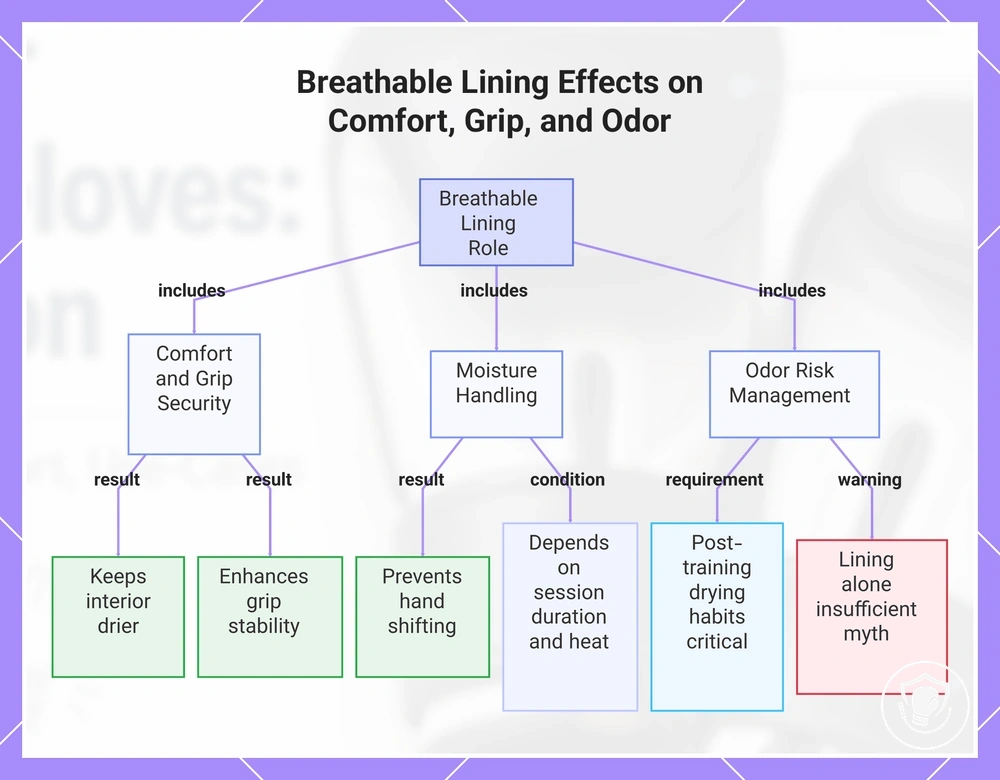
A breathable lining in boxing gloves refers to a material layer designed to allow air circulation and manage moisture. For beginners training at home, this feature influences comfort by reducing heat buildup and limiting sweat accumulation against the skin. When the lining keeps the interior drier, the glove feels more stable, helping with consistent hand placement and grip security during practice.
Moisture handling within the lining affects how well the glove resists slippage during use. As sweat accumulates, the interior surface may become slippery, increasing the risk of the hand shifting inside the glove and compromising punch control. The effectiveness of this moisture management often depends on session length and ambient heat; longer or more intense workouts increase the need for a lining that wicks sweat away from the skin quickly.
Odor risk is closely tied to how the lining dries between sessions. Sweat trapped in the fabric provides a damp environment that can contribute to odor. The outcome is largely habit-driven: allowing the lining to air out fully after each use and avoiding storage in closed, humid bags can significantly reduce persistent smell. A lining alone typically does not eliminate odor, but one that dries faster makes odor control easier.
A common myth is that breathable lining alone prevents odor, but actual odor control depends on post-training care. To preserve the benefits of breathable lining and sweat control, the following simple drying habits help prevent odor buildup and maintain grip integrity:
- Remove gloves immediately after training and unzip or open the closure fully to allow airflow.
- Wipe the interior lining with a dry cloth to remove excess moisture after each session.
- Store gloves in a well-ventilated area, away from direct heat or sealed bags.
- Allow gloves to air dry thoroughly before the next use.
Even a breathable lining may not prevent odor buildup or preserve grip security if drying habits are neglected.
This chart shows the key roles of breathable lining in boxing gloves, including comfort and grip benefits, moisture handling, and odor risk factors.
Fit-Driven Protection: Hand Lock, Finger Space, Thumb Design, and Seam Pressure Points
Fit quality directly affects protection because it controls hand movement and pressure points. A stable fit prevents the glove from shifting, reducing friction hotspots that cause discomfort and reduce control.
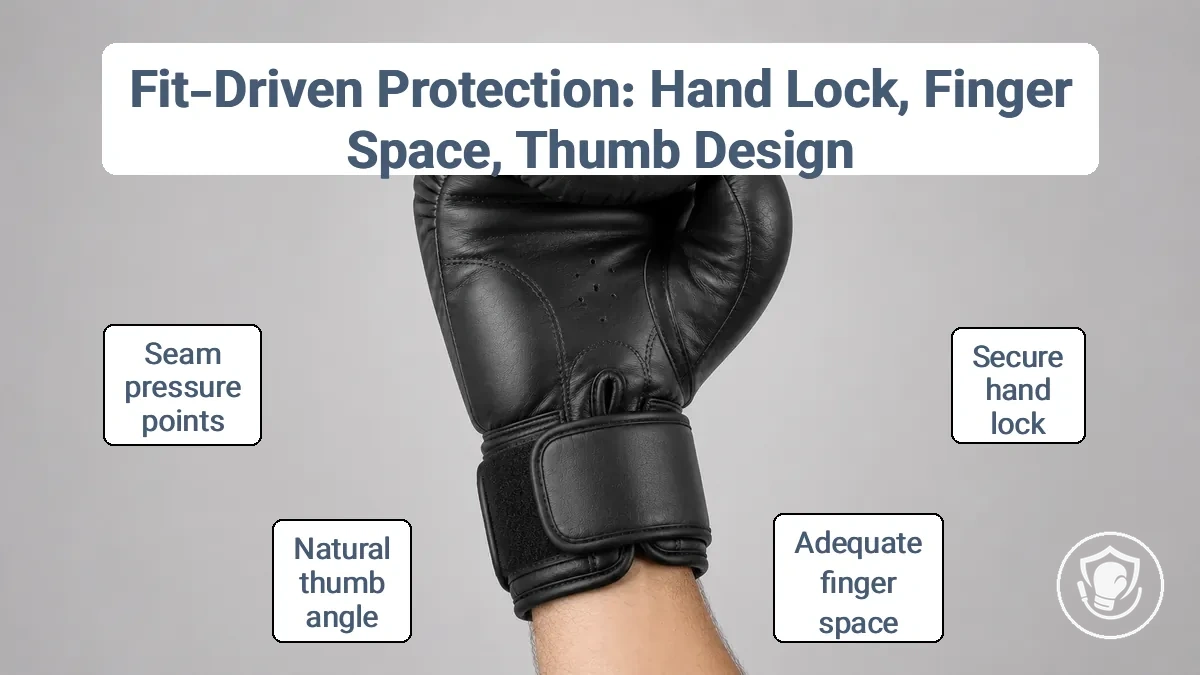
Hand lock describes how the glove wraps around the palm and wrist to keep the hand stable. A secure hand lock helps prevent the glove from rotating during impact. Finger space is the room for each finger to move without bunching. Adequate finger space allows the knuckles to align properly. These two criteria are the foundation of fit-driven protection. Detailed measurement guidance is available in the glove size chart and fit checks.
Improper thumb positioning can create pressure points along the seam. A well-designed thumb pocket aligns the thumb naturally, reducing strain. Seams that press into the skin during gripping can cause irritation and fatigue. Sharp pressure or numbness along the seam is a warning that the glove does not fit correctly.
Fit-Driven Protection is verified by a fit check that identifies pressure and stability signals. If any of these checks fail, the glove likely creates pressure points that compromise protection.
- The palm area wraps securely without excess material.
- The wrist closure holds the glove in place without slipping.
- No rotation of the glove when you move your hand.
- Each finger has a small gap at the tip, not pressed flat.
- The knuckles align with the glove’s knuckle line.
- The thumb pocket follows the natural angle of your thumb.
- No pinching or binding at the thumb crotch.
- Seams lie flat without digging into the skin.
- No redness or marks after fitting.
- You can flex your hand without feeling sharp edge pressure.
Tight does not mean stable. A glove that is too tight can restrict circulation and cause numbness or sharp seam pressure, while a stable fit allows controlled movement. For detailed sizing steps, refer to the dedicated size guide.
Inner Wrap Fit Inside the Glove: Bulk, Friction, and Wrist Wrap Stack Height
The fit of inner wraps inside a boxing glove depends on how the added bulk, friction, and wrist wrap stack height interact with the glove interior space. When the glove has enough room, wraps can improve stability without compromising fit.
When the glove feels too tight across the knuckles or the wrist wrap stack height presses against the cuff, the wraps may be adding excessive bulk. These signals indicate a mismatch between the wrap's bulk, friction, or stack height and the glove interior space. In these cases, adjusting the wrap technique or choosing a different glove fit helps restore comfort and protection.
Common Inner Wrap Fit Inside the Glove problems:
- Wraps create too much bulk around the knuckles. Check: the glove feels tight even before making a fist. Meaning: the wrap thickness may exceed the glove interior space; consider a lighter wrap or reduced padding.
- Wrist wrap stack height can cause the glove cuff to feel restrictive. Check: the wrist wrap ends push against the glove cuff. Meaning: wraps may be built up too high near the wrist; try a shorter wrap length or adjust the wrist wrap layering.
- Friction between wraps and glove lining can cause bunching during movement. Check: the wrap shifts or wrinkles inside the glove. Meaning: increased friction from certain materials can create hotspots; consider a smoother wrap material or adjusting the wrap’s tension.
- Hand slips inside the glove despite tight wraps. Check: the glove feels loose around the fingers but snug at the wrist. Meaning: the wraps may not be filling the glove interior space evenly; adding a thin inner wrap or adjusting technique can help.
- Bunching near the palm can reduce grip feedback. Check: wraps gather under the palm during punching. Meaning: the wrap may be too long or not secured properly; try a wrap length that matches your hand size.
Use-Case Matching for Beginners: Choosing Protection for Bag Work and Pad Work at Home
Protection priorities shift depending on whether your home training focuses on a heavy bag or pad work, with different demands on padding resilience, wrist stability, and comfort. Understanding these differences points to the right selection signals for each use-case.
Heavy bag training involves a high-impact profile against a dense, resistive surface. The volume of strikes and the rebound force typically require padding that can absorb shock without breaking down quickly. Wrist stability becomes important because the bag can torque the joint on off-center hits. Padding that feels too soft or compresses easily may cause protection to decline over time during high-volume sessions.
Use-case matching for beginners: the table compares protection demands for heavy bag training and pad work.
| Heavy bag focus | Pad work focus |
|---|---|
| Denser padding to handle impact resistance and rebound | Softer padding for repeated catching and quick transitions |
| Firmer wrist support to maintain alignment on heavy strikes | Moderate wrist support for varied angles and speed drills |
| Precise fit to reduce hand movement inside the glove | Generous fit tolerance for longer wear and frequent donning |
| Durability emphasis on outer material and stitching | Durability emphasis on inner lining and moisture management |
During pad work, the focus shifts to strike frequency and the variety of angles the holder presents. Gloves should feel comfortable for extended periods and fit well enough for quick hand adjustments between combinations. The demands are less about absorbing heavy shock and more about maintaining consistent hand position and comfort across many rounds. For pad work, prioritizing fit tolerance over extreme padding density can be a useful selection signal.
Wrist fatigue after bag sessions often indicates that wrist support may be insufficient in your current glove. Choosing a model with a longer cuff or reinforced closure system can improve stability and may not require a heavier glove weight. The 14 oz vs 16 oz glove choice becomes more relevant when balancing bag work and pad work in a single glove.
Heavy Bag Training Protection Needs: Padding Resilience, Wrist Support Demand, and Rebound Control
Heavy bag resistance and rebound can increase stress on knuckles and wrists, as the padding and wrist support must absorb higher impact forces with each punch. Bag stiffness and punch volume determine the force level and change the protection needed.
Padding resilience and wrist stability are key factors for protection. Resilience determines whether padding maintains cushioning through repeated impacts or starts to bottom out, affecting comfort. Wrist stability depends on how well the support system controls unwanted bending during power punches.
Heavy Bag Training Protection Needs: common mismatch warning signals include:
- Knuckle heat or soreness after short rounds can indicate insufficient rebound absorption.
- Wrist extension or bending on impact may signal insufficient wrist stability for the bag's resistance.
- A hard, jarring hand sensation can indicate padding bottoming out under bag hardness and punch volume.
- Hand shifting inside the glove during combinations points to inadequate support alignment.
Pad Work Protection Needs: Impact Frequency, Hand Alignment Tolerance, and Comfort Priorities
Pad work often increases contact frequency compared to heavy bag training, so comfort and fit tolerance become noticeable sooner. The repeated impact from varied angles requires consistent support without shifting; a poor fit leads to faster hand fatigue.
Higher frequency and angle variance shift pad work protection needs toward a glove that balances impact absorption with freedom of movement. Without sufficient fit tolerance, constant adjustment can lead to fatigue and reduced targeting control. These effects depend on session intensity and coaching quality. A well-fitted glove helps maintain control, but the hand still requires periodic breaks to avoid overuse.
Beginner Glove Protection Checklist: What to Verify Before Buying or Keeping a Pair
The Beginner Glove Protection Checklist converts earlier attribute guidance into a practical verification routine for deciding whether to buy or keep a pair. For a broader overview of training fundamentals, refer to the home boxing equipment hub. The checklist groups signals by padding, wrist support, fit, and lining so you can evaluate each critical area in order.
Beginner Glove Protection Checklist: The items below organize the decision signals by padding, wrist support, fit, and lining. Each item follows a feature cue, a pass or fail condition, and the likely protection or comfort consequence.
- Padding: Press the knuckle area; padding should feel dense and even without bottoming out. Even padding can reduce hand fatigue and impact stress.
- Padding: Squeeze the front of the glove; it should resist compression evenly. Uneven soft spots may indicate poor shock absorption.
- Padding: Check the thickness over the knuckles; it should be consistent across the striking surface. Inconsistent padding can lead to localized pain.
- Padding: Tap the glove against a hard surface; it should not produce a sharp sting. A sting often signals insufficient padding density.
- Padding: Roll the padding between fingers; it should not have lumps or voids. Lumps can create pressure points during punching.
- Padding: After a few punches on a bag, feel for any bottoming out. Bottoming out means the padding compresses fully, may risk hand injury.
- Wrist support: Fasten the closure; the strap should hold the wrist snug without cutting circulation. Secure wrist support can help prevent sprains during impact.
- Wrist support: Make a fist and move the wrist; the glove should limit lateral movement. Excessive movement is a warning signal for inadequate stability.
- Wrist support: Check the closure type; hook-and-loop straps are easier for solo adjustments. Poor strap tension can cause the glove to shift during training.
- Wrist support: Pull the strap tight; it should not loosen during a heavy bag session. Loosening under force is a red flag for fatigue and potential injury.
- Wrist support: Observe the wrist area after training; persistent wrist soreness may indicate insufficient support from the glove.
- Fit: Insert your hand with wraps; your fingers should reach the end of the glove without being compressed. Overly long fingers can reduce control.
- Fit: Make a fist; the glove should feel locked around the hand without excess room. Too much space can lead to slipping and blisters.
- Fit: Check for seam hotspots; rub the interior seams against your skin. Rough seams can cause irritation and chafing during long sessions.
- Fit: Close the glove fully; the thumb should sit naturally without being forced inward. Forced thumb position increases the risk of sprains.
- Fit: Shake the glove; it should not slide off your hand. A loose fit can compromise punching precision and hand protection.
- Lining: Insert your hand; the lining should feel smooth and not trap sweat. Moisture buildup can lead to odor and skin irritation.
- Lining: After a short workout, check the interior; moisture should evaporate quickly. Poor breathability increases the risk of bacterial growth.
- Lining: Grip the glove's inner palm; the lining should provide some friction. Slippery lining can reduce grip security on the bag or pad.
- Lining: Smell the interior; any strong chemical odor may indicate cheap materials that degrade quickly. Odor resistance can be a sign of a quality lining.
Most checks passing means the glove likely provides adequate protection and comfort for regular training.
For those using thicker wraps or training mostly on a heavy bag, some checks may shift. Thicker wraps can make a snug fit feel tighter; try the glove with your typical wrap thickness. Heavy-bag training stresses padding and wrist support, so prioritize the padding density and wrist stability checks. Warning signals like bottoming out or strap loosening indicate the glove may not hold up to repeated bag work.
The products below are useful examples for comparing available options. Before buying, check that the compatibility criteria, key features, and product details match your needs.
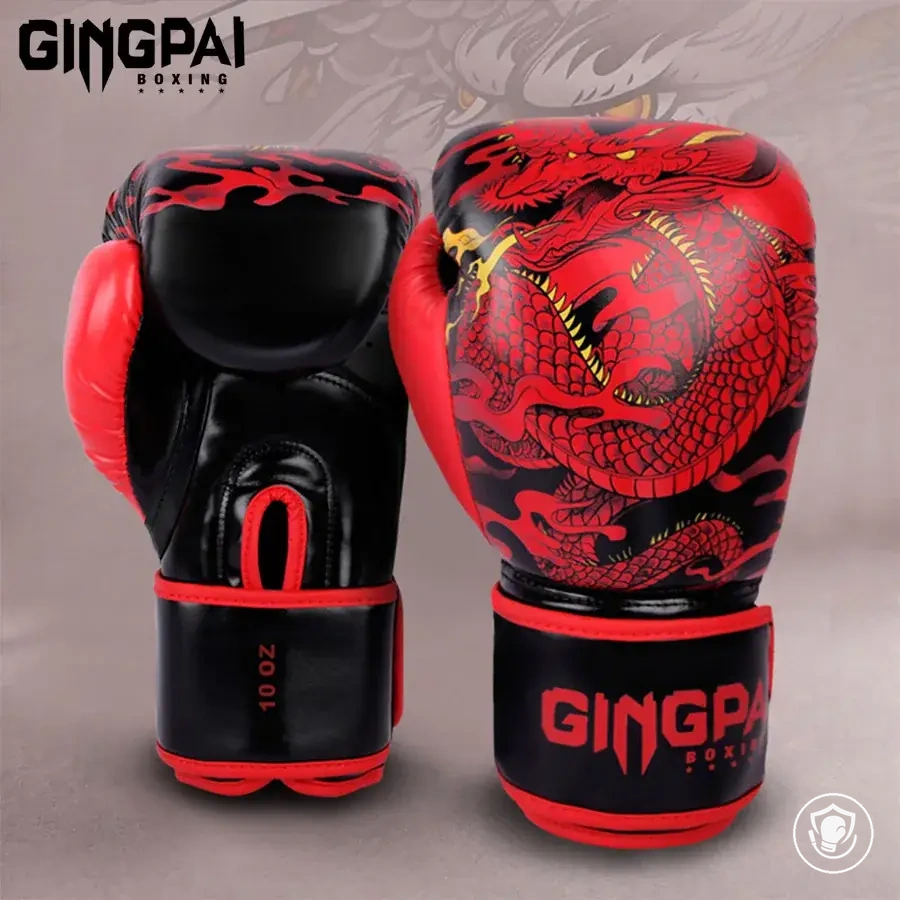
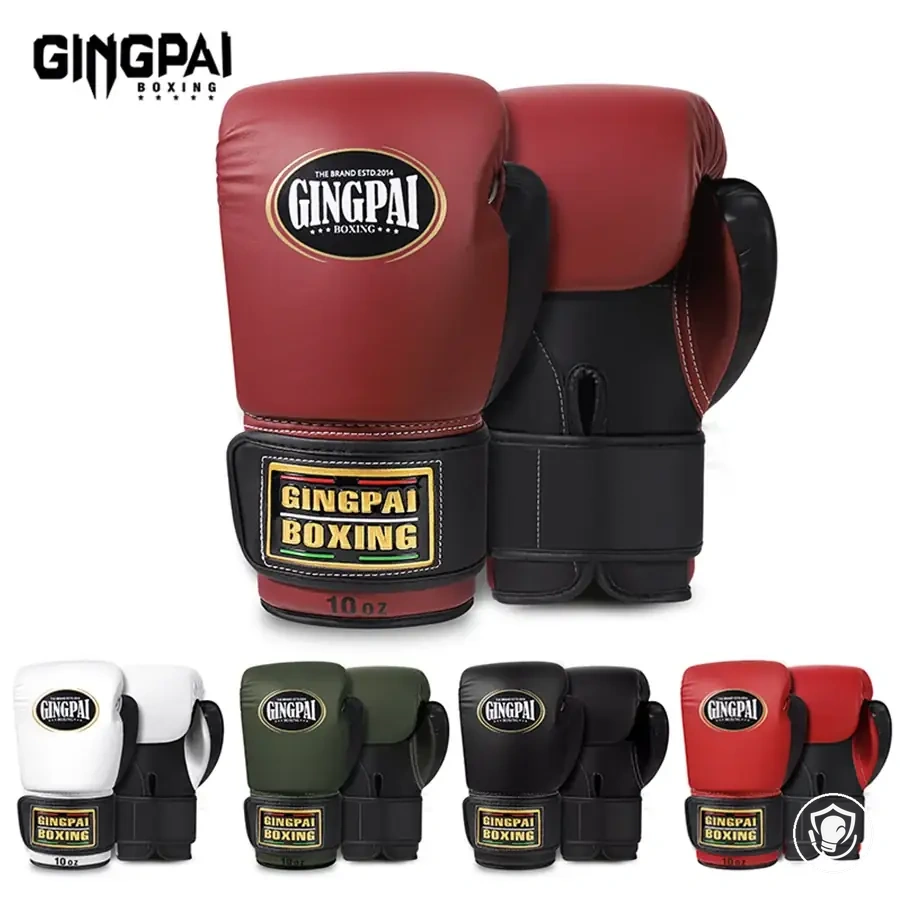
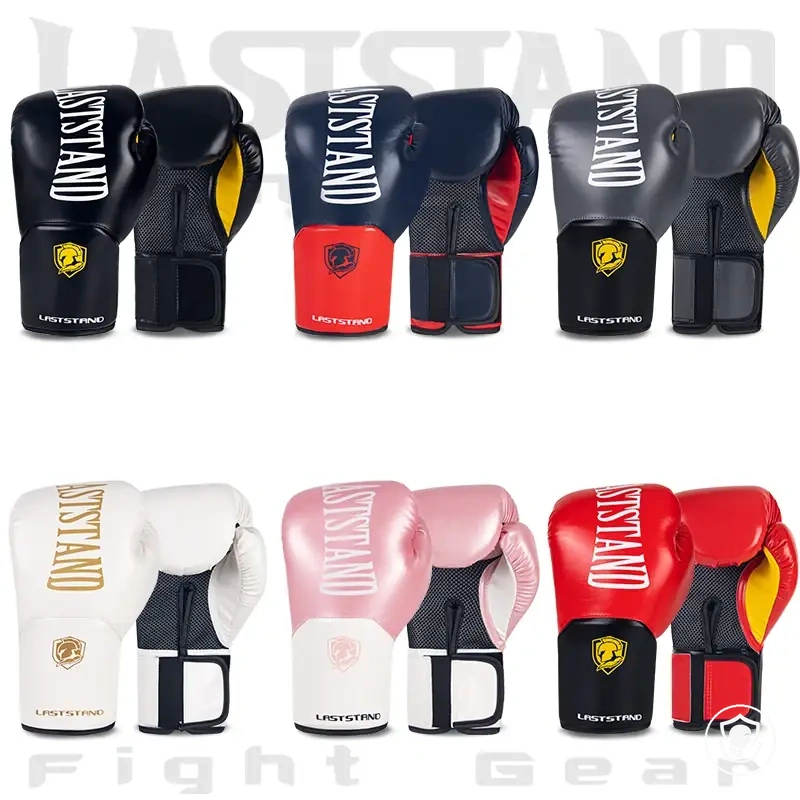
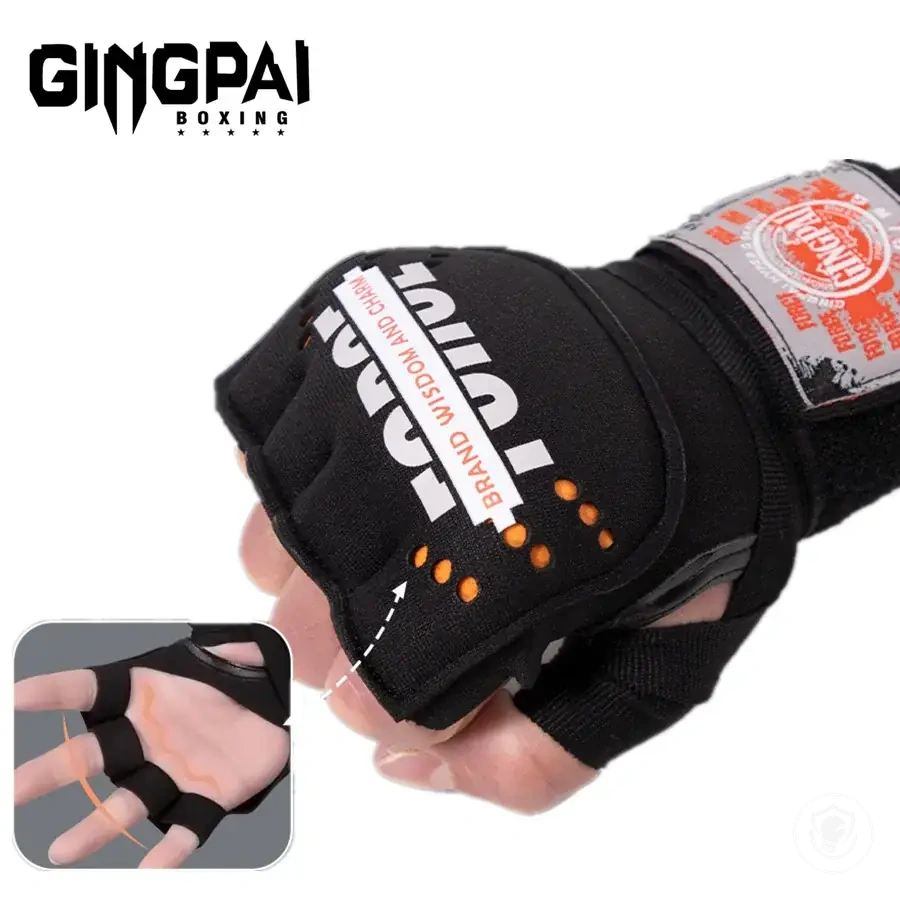
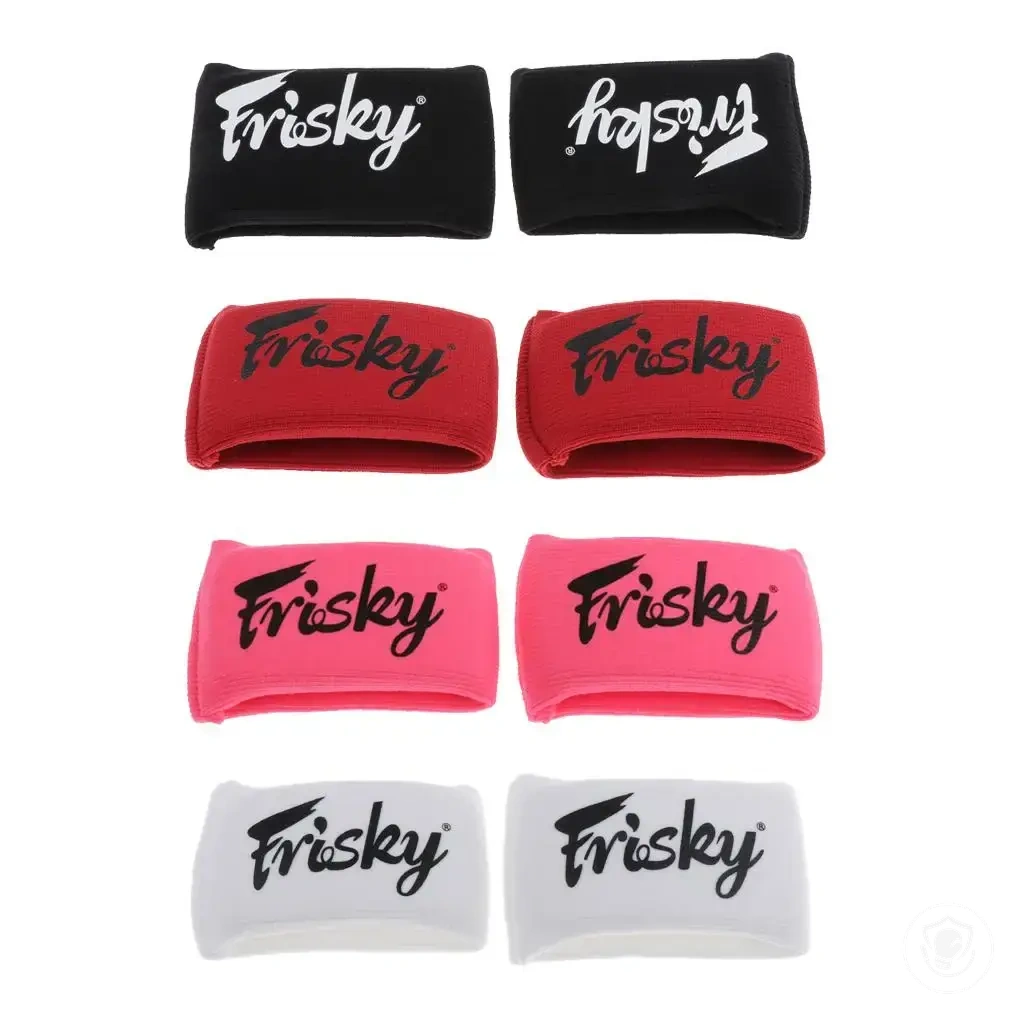
A common myth is that a high price or flashy design guarantees protection. In reality, a hands-on test can reveal whether the glove fits your hand shape and training intensity. Rely on the checklist's pass or fail results rather than marketing claims. Multiple checks failing means the glove likely needs to be replaced or returned.
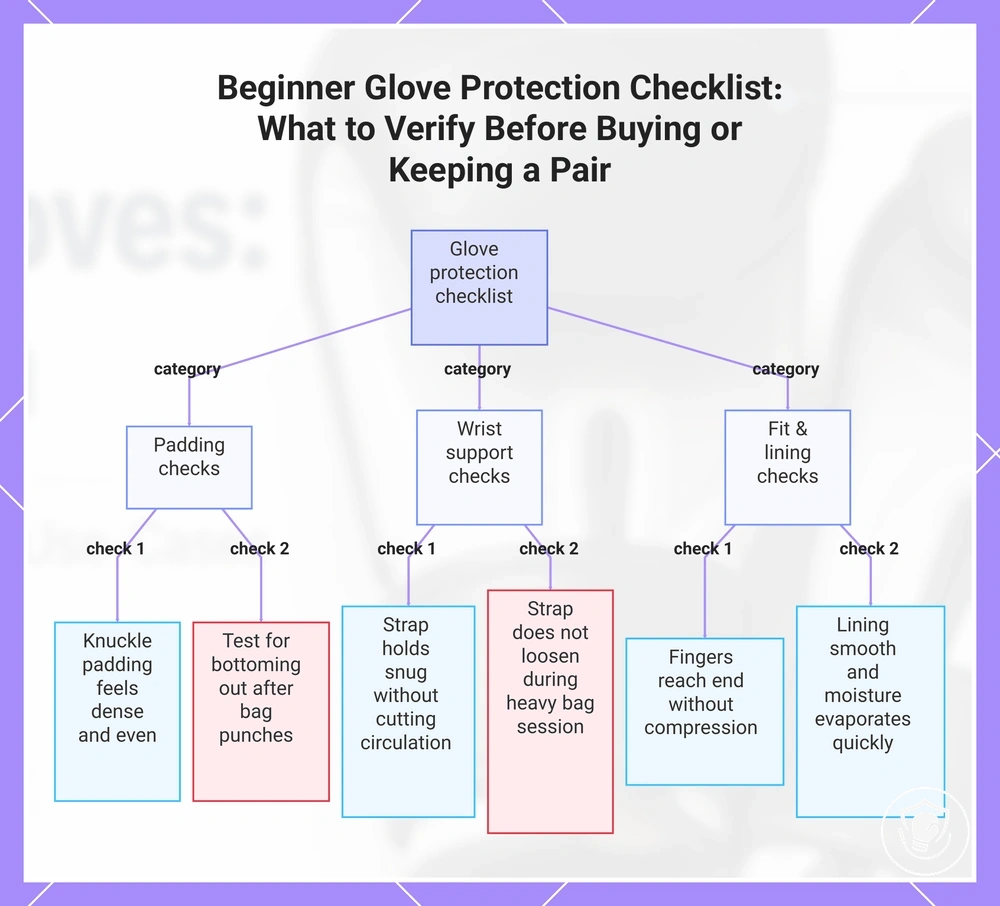
This chart shows the key verification checks for boxing glove padding, wrist support, fit, and lining, along with warning signs that indicate poor protection.
Protection Degradation Over Time: Padding Breakdown, Strap Wear, and When to Replace
Protection declines as padding compresses and closures lose tension. How fast that happens depends on training volume, drying habits, and bag hardness—no single lifespan fits every pair.
Protection degradation over time affects the glove's impact absorption and stability. Each signal in the checklist below points to a specific wear pattern that may warrant replacement.
- Padding feels noticeably thinner or softer than when new
- You feel the bag or pad surface through the glove during impact (bottoming out)
- Hotspots develop on knuckles or hand after short rounds
- Straps no longer hold firmly and need re-tightening mid-session
- Buckle or closure system feels loose or slips during use
- Inner liner shows permanent compression marks or tearing
- Glove shape no longer holds its original contour
- Sweat odour persists even after thorough drying
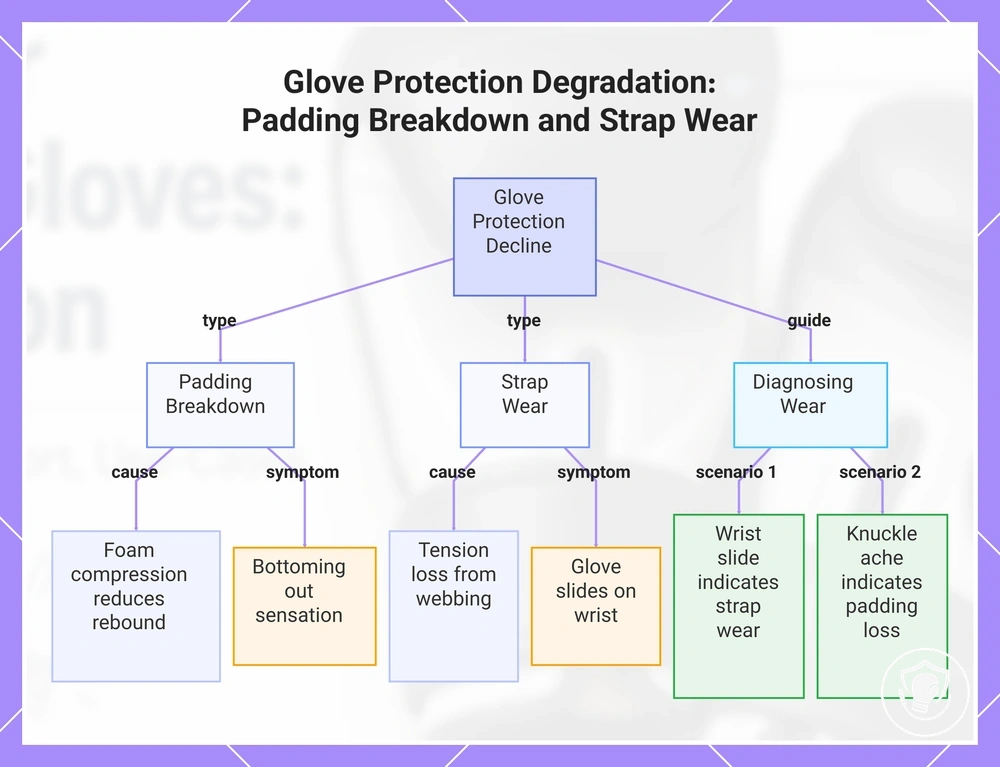
Padding breakdown starts with gradual compression of the foam layers. Once the foam can no longer rebound fully, the glove may absorb less shock and transfer more force to the hand. Repeated impact on heavy bags or hard mitts accelerates this process. When compression becomes significant, protection has dropped enough to consider replacing the glove. Drying the gloves properly after each use slows compression, but does not stop it.
Strap wear shows up as tension loss in the closure system—stretched webbing, worn hook-and-loop patches, or loosened buckles. A glove that shifts on the wrist or needs frequent re-tightening may not provide stable support for safe punching, leading to wrist strain or less control. Strap wear often develops faster in gloves used for high-volume training or stored while still damp.
Consider a scenario where padding feels adequate but the glove slides on the wrist during hooks—that signals strap fatigue rather than padding breakdown. In another case, the wrist stays tight but knuckles ache after a few rounds, pointing to padding compression as the cause. Distinguishing these symptoms helps decide whether to adjust the closure or replace the glove. When both padding and straps show clear wear, replacement is often the safer choice.
This chart shows the main types of protection decline in boxing gloves—padding compression and strap wear—and how to diagnose which issue is affecting your glove.