
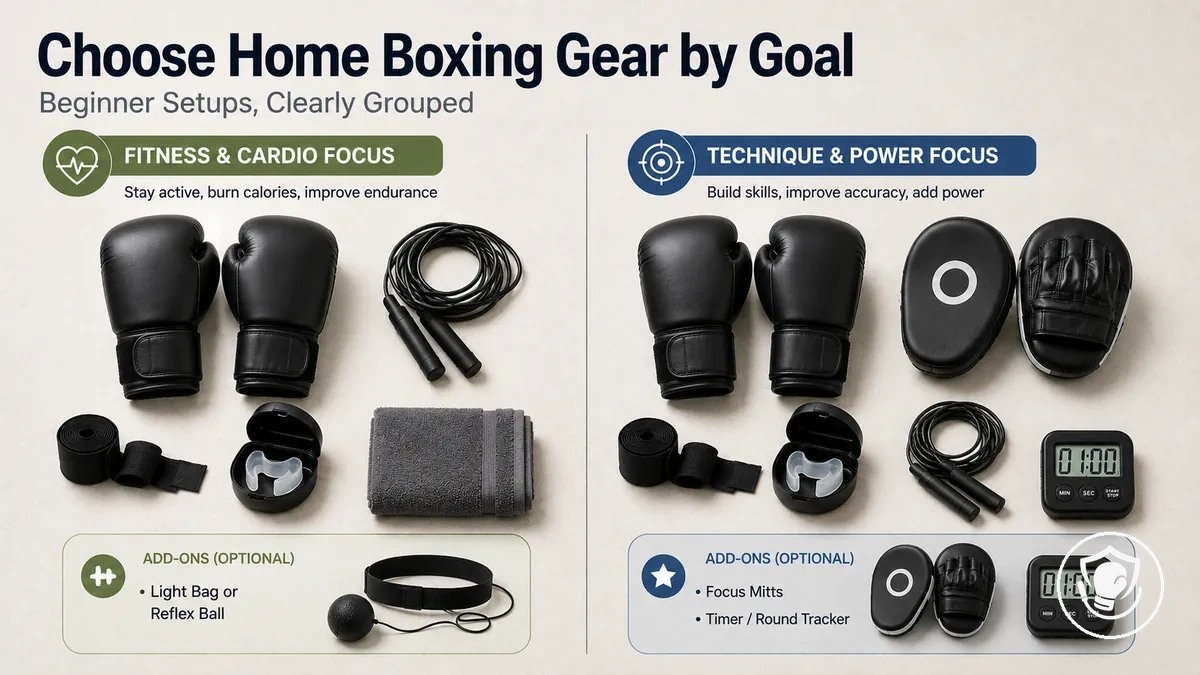
Choosing Home Boxing Equipment for Beginners by Training Goal
Choosing home boxing equipment for beginners depends on your training goal, which defines what you want to improve — fitness, technique, or conditioning — and each goal changes which gear you need. Space, noise, and whether you have a training partner also affect your choices.
For example, a beginner focused on general fitness may prioritize a heavy bag and gloves, while someone working on technique might need pads or mitts and a reflex ball, and a conditioning goal often adds resistance bands and a jump rope.
Space or noise constraints can make a free-standing bag or no-bag training more practical.
A common myth is that you need a full gym to start boxing at home. In reality, beginners can begin with just hand wraps and gloves, then add gear as their goal becomes clearer. Goal categories for choosing home boxing equipment by training goal include:
- Fitness — Focus on cardiovascular conditioning and full-body workout; a heavy bag or punching bag and gloves are often enough.
- Technique — Emphasize form, timing, and accuracy; pads or mitts and a reflex ball support skill development.
- Conditioning — Build endurance and strength; resistance bands and a jump rope complement bag work.
- No-bag training — When space or noise is a concern, shadow boxing with hand wraps and a reflex ball can still improve rhythm and coordination.
Training goals that change the right home boxing equipment for beginners
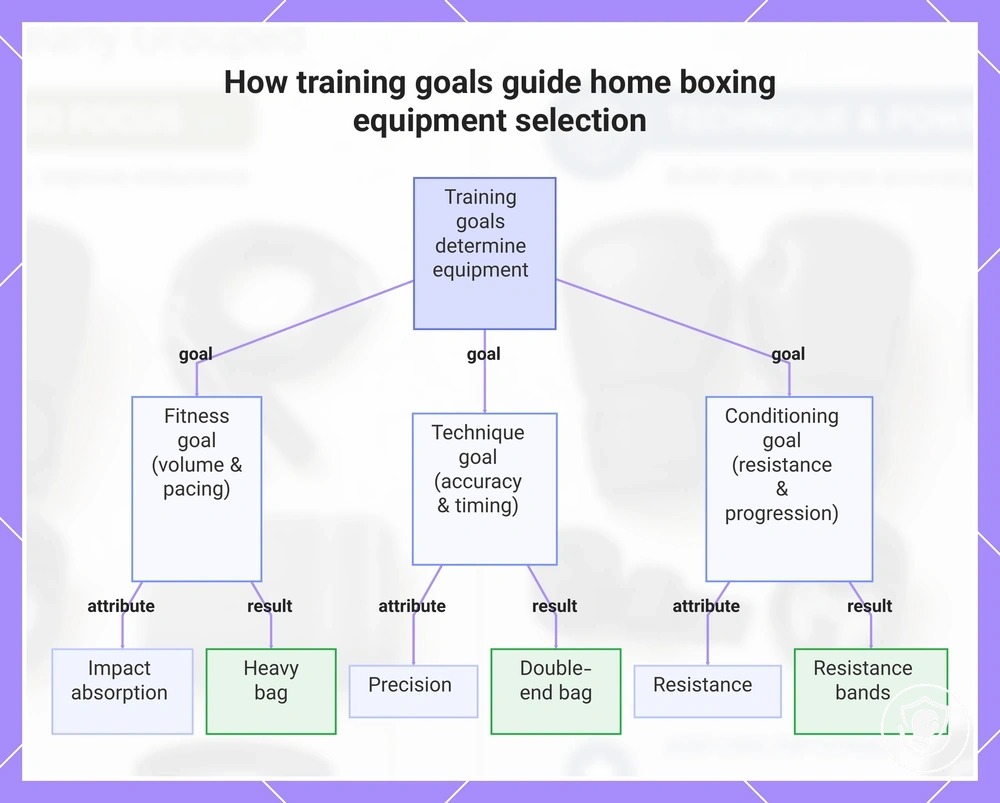
Your training goal determines which home boxing equipment features matter most. A fitness goal prioritizes volume and pacing; a technique goal prioritizes accuracy and feedback; a conditioning goal demands resistance and progression. The equipment you choose must also fit your constraints such as available space, noise limits, and whether you train alone.
Volume means high rounds with low disruption, so you need a target that absorbs impact without demanding constant reset. Accuracy means you focus on timing and targeting, which calls for a responsive surface or a partner. Intensity means controlled resistance that challenges your muscles and cardio over time. For example, if you are serious about improving your technique, a double-end bag can offer more precise feedback than a heavy bag.
Use the following checklist to identify which goal is dominant before you choose your equipment. Each entry maps a goal signal to the primary equipment attribute and the category that matters most.
- You want repeatable volume and pacing → primary stimulus is impact absorption → feedback comes from low disruption and consistent rounds → equipment priority: heavy bag or stable freestanding bag.
- You want improved accuracy and timing → primary stimulus is precision → feedback comes from target response and motion → equipment priority: double-end bag, reflex ball, or punch mitts.
- You want to build conditioning and power → primary stimulus is resistance → feedback comes from progression and fatigue control → equipment priority: resistance bands, weighted gloves, or speed bag for endurance.
- You want to practice combinations without a partner → primary stimulus is volume and pacing → feedback comes from bag swing and sound → equipment priority: heavy bag or hanging bag.
- You want to track performance over time → primary stimulus is intensity → feedback comes from data and metrics → equipment priority: punch trackers or smart training wearables.
- You have limited space or noise restrictions → primary stimulus is low disruption → feedback is reduced impact sound → equipment priority: freestanding bag with padded base or a music boxing machine.
What changes with your goal is the add-on equipment and bag type; basic hand protection and glove selection typically stay similar. Pick one primary goal to simplify your equipment list.
This chart shows how three primary training goals—fitness, technique, and conditioning—determine the key equipment attributes and priorities for home boxing.
Core home boxing equipment that stays consistent across beginner goals
Boxing gloves, hand wraps, and a punching bag form the core home boxing equipment that stays consistent across beginner goals. These three items provide protection, feedback, and resistance for training. Start with this minimum kit before considering add-ons.
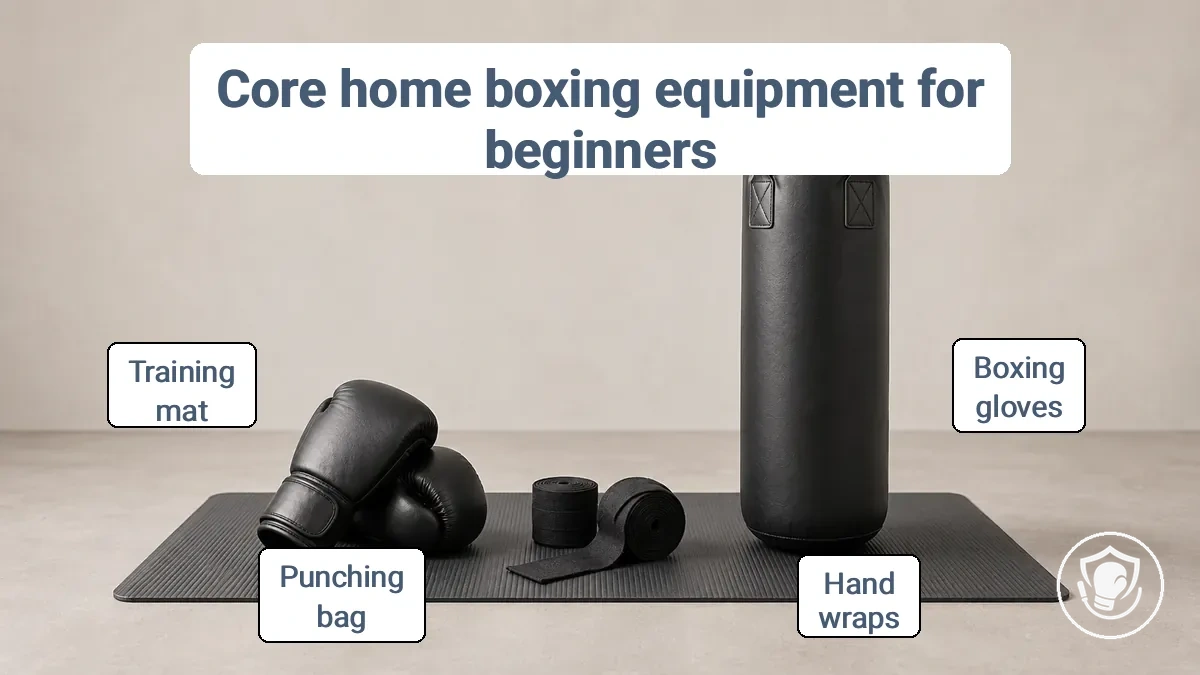
Every beginner needs these cross-goal essentials, which are listed in the starter kit checklist:
- Boxing gloves: padding, fit, and closure quality affect hand safety and comfort.
- Hand wraps: wrist support and knuckle padding reduce injury risk; closure style affects ease of use.
- Punching bag (heavy bag): weight, fill material, and base stability determine feedback and durability.
- Training floor mat: protects flooring, reduces noise, and provides a non-slip surface.
- Hand wrap hygiene: material breathability and drying affect odor and skin health.
- Floor space: adequate clearance around the bag is essential for movement and safety.
Bag type (hanging vs. freestanding) depends on ceiling structure and floor space, not on your training goal.
When hand size or wrist circumference falls outside average ranges, glove fit and wrap length may need adjustment. Limited ceiling height often requires a freestanding bag instead of a hanging one. These changes are driven by physical or spatial limits, not by whether you aim for cardio or technique. Avoid adding goal-specific accessories until you have trained consistently with the core kit.
Match beginner home boxing equipment to your goal
Match beginner home boxing equipment to your goal by identifying the type of feedback, impact, or resistance your training requires. Each goal—fitness, technique, or conditioning—prioritizes a different combination of gear categories. Start with your constraints: available space, noise limits, and whether you train alone.
A common misfit is buying a heavy bag for technique-only training. A heavy bag provides impact feedback, which can mask form errors and reinforce poor habits when accuracy is not the focus.
The diagram below maps each goal to its equipment priorities.
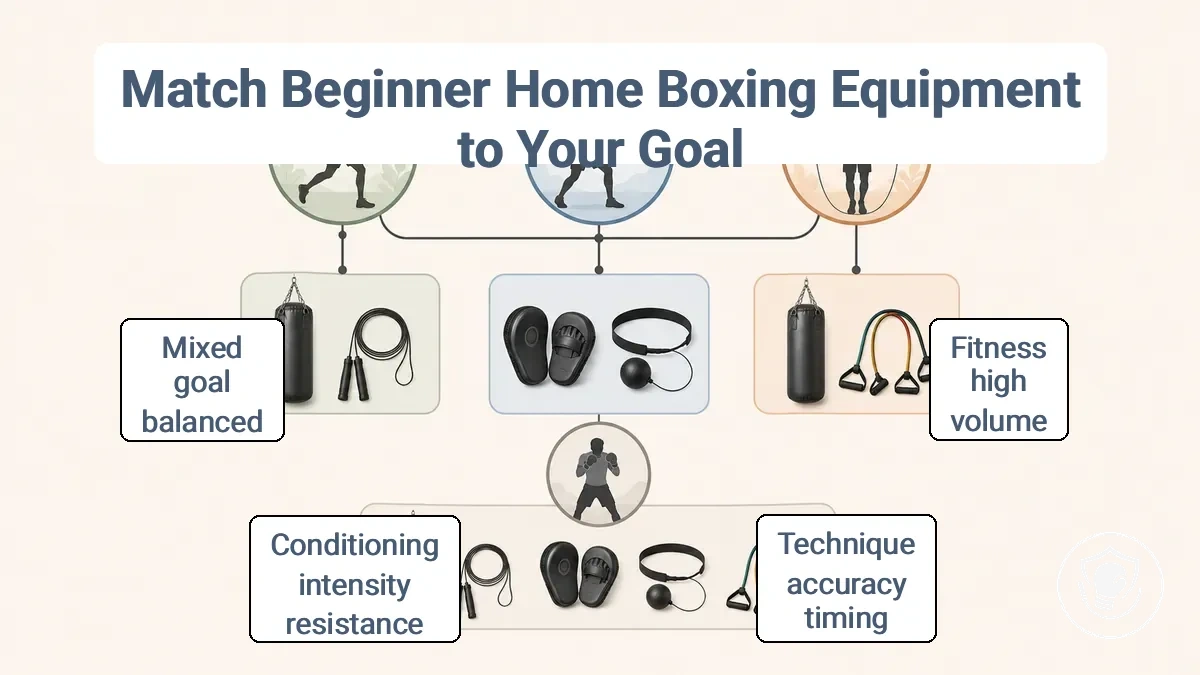
The table below groups gear categories by goal fit and primary need.
| Goal | Primary need (feedback/impact/resistance) | Best-fit gear categories | Common misfit |
|---|---|---|---|
| Fitness / weight loss | High volume, moderate impact | Heavy bag, jump rope, resistance bands | Buying a speed bag (low impact, not for volume) |
| Technique | Accuracy, timing, feedback | Pads/mitts, reflex ball, no-bag shadowboxing | Using a heavy bag exclusively (can mask precision) |
| Conditioning / power | Intensity, resistance | Heavy bag, resistance bands, floor-to-ceiling bag | Choosing a light bag (insufficient resistance) |
| Mixed goal | Balanced feedback & impact | Heavy bag + pads/mitts + timing tools | Relying on one tool for all needs |
Accuracy versus power is a key trade-off when selecting gear.
For example, limited space or noise restrictions change the recommended choice set. In a small apartment with noise concerns, a bag may be impractical; pads/mitts and a reflex ball can provide the feedback and timing work without a heavy bag.
Home boxing gear for fitness and weight loss at home: volume and repeatability
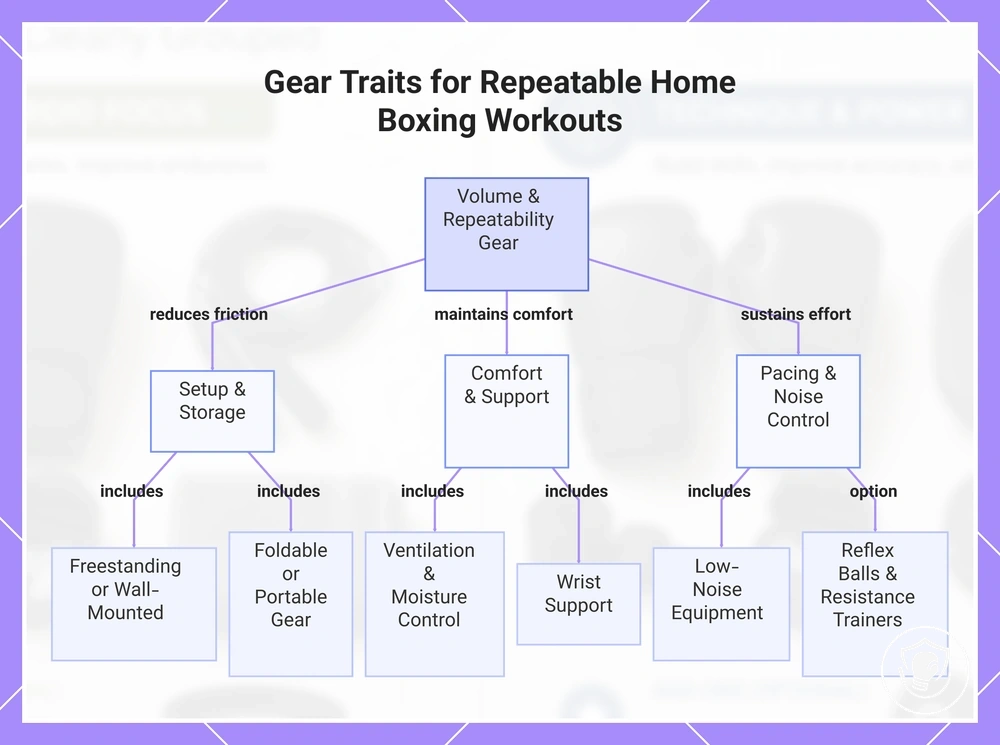
Gear traits that support volume and repeatability in home boxing workouts prioritise quick setup, low disruption, and features that help maintain pacing and comfort. For weight loss, the effectiveness of any gear depends on how consistently and intensely it is used, so reducing friction matters as much as the equipment itself.
The following checklist pairs gear qualities with why they improve repeatability for consistent, higher-volume sessions.
- Quick setup – Freestanding or wall-mounted systems that avoid mounting or disassembly, enabling quicker starts and more frequent use.
- Low noise – Equipment such as reflex balls, resistance band speed balls, or padded floor mats minimise sound, allowing workouts at any time without disturbing others and supporting longer or more consistent sessions.
- Compact storage – Foldable or portable gear like jump ropes, reflex ball sets, and speed bags can be stowed quickly in a closet or under furniture, reducing the effort to set up and put away.
- Breathable materials – Gloves and hand wraps made with mesh or moisture-wicking fabrics help manage sweat during extended workouts, improving comfort and reducing the urge to cut sessions short.
- Wrist support – Gloves with firm wrist straps or integrated wraps help maintain proper alignment, reducing fatigue and the risk of discomfort that can derail consistency.
- Pacing tools – Music boxing machines, timers, or interval apps built into smart equipment provide rhythm and round cues, which reinforce interval feel and help sustain effort over time.
- Sweat management – Glove deodorisers, quick-drying wraps, and removable liners extend the usable life of gear between wash cycles and keep equipment fresh, making it easier to train multiple days in a row.
For those with joint sensitivity or shared living constraints, low-noise options such as reflex balls or resistance-based speed trainers may be better than heavy bags when impact or sound is a concern. These alternatives reduce shock and disruption while still offering a full workout, prioritising comfort and safety for long-term adherence.
This chart shows the key gear traits that support volume and repeatability in home boxing workouts, grouped by how they reduce friction, maintain comfort, and sustain effort.
Home boxing gear for technique: accuracy, timing, and feedback loops
Gear that improves technique prioritises feedback quality over resistance. Focus mitts, reflex bags, and boxing sticks tend to give clearer signals about accuracy and timing than heavy bags alone. This approach favours precision and consistency over maximum impact capacity.
Feedback attributes like target stability, timing cue clarity, and error visibility reveal how well a tool supports accuracy, timing, and feedback loops.
- Target stability – a stable mitt or reflex ball helps you see when your punch lands cleanly; instability reveals off-centre strikes and encourages corrections.
- Timing cue clarity – moving targets (coach-held pads or a swinging bag) help you match your rhythm to the cue, which can improve coordination and reaction speed.
- Error visibility – immediate bounce or wobble after a miss shows you where your punch trajectory or distance was wrong.
- Rhythm development – consistent cadence from a reflex bag reinforces timing without requiring a partner.
- Reaction speed – unpredictable target movement helps you recognise and respond to a cue quickly, improving timing.
- Coordination reinforcement – hand-eye alignment can improve when the target offers both visual and tactile feedback.
- Control feedback – thinner pads or sticks increase the need for wrist alignment and comfort, which encourages safer, more controlled punching.
Start simple with one tool that gives clear feedback — a pair of focus mitts or a reflex bag — before adding more gear. A common misconception is that a heavier bag automatically builds better technique, but what matters is how clearly the equipment reveals misses and corrections.
Home Boxing Gear for Conditioning and Power: Intensity and Progression Tools
You select intensity and progression tools for home boxing gear by matching progression methods to equipment attributes. Progression methods include increasing resistance, adding load, or adjusting interval density, and each variable requires a tool that fits both your fitness level and space. Without proper control, higher intensity can increase strain on joints or recovery time, so safety should guide every choice.
The table below organizes these methods by tool category, trade-off, and best-fit constraint.
| Progression method | Tool category | Main trade-off | Best-fit constraint |
|---|---|---|---|
| Resistance increase | Resistance bands, weighted vest | May limit range of motion if too tight | Often paired with shadow boxing or bodyweight exercises |
| Load increase | Medicine ball, fitness sandbag | Heavier loads risk strain if technique breaks | Use controlled throwing drills or partner tosses |
| Interval density | Battle rope, jump rope | Cumulative fatigue if rest is too short | Follow timed rounds with equal recovery |
| Impact adaptation | Heavy bag, reflex bag | Vibration and noise in home spaces | Choose stable hanging or padded mounts for noise control |
For solo training, tools that offer repeatable feedback, such as a heavy bag or resistance bands, can help you track progression without a partner. However, setup time and available space can limit which tools are practical, so control should come before power output in every session.
Choosing what to hit at home: heavy bag, pads, or no-bag training
The three training paths—heavy bag, pads, and no-bag training—each optimize a different goal: heavy bag for impact and conditioning, pads for accuracy and feedback, no-bag for technique and footwork. Your choice depends on available space, noise tolerance, and whether you have a training partner.
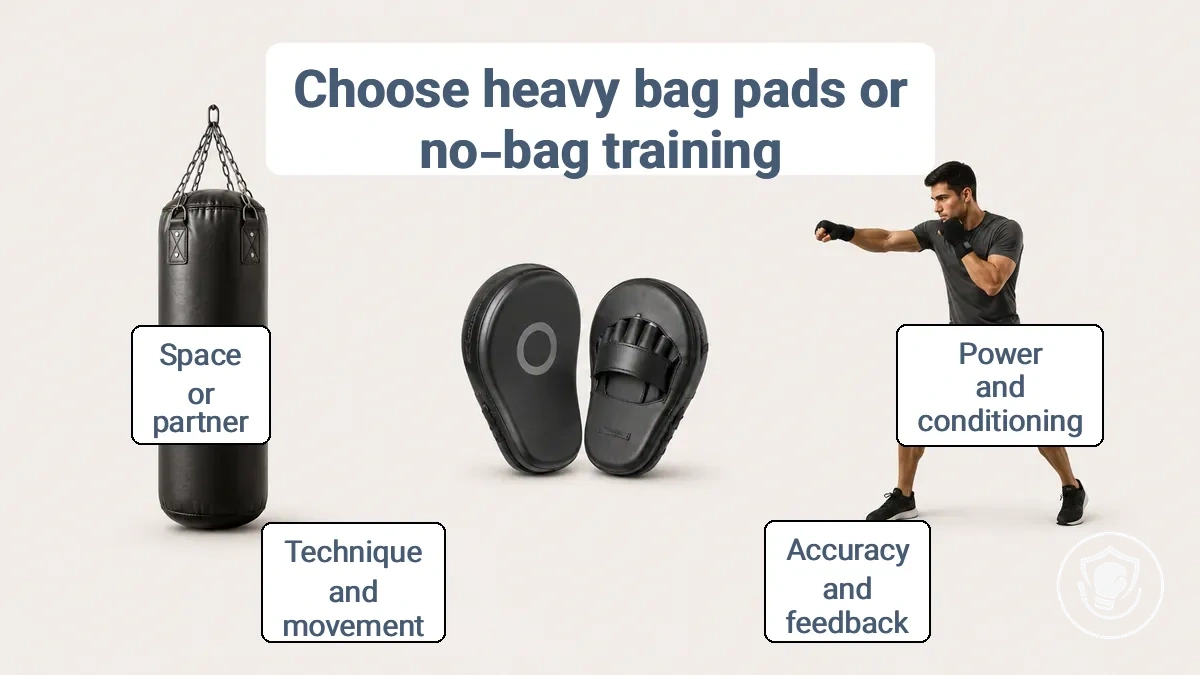
This table compares the three paths by key constraints to help you choose heavy bag vs pads or decide if no-bag training fits first.
What changes across paths is the target tool; what typically remains the same is the need for hand protection.
| Path | What it optimizes | Main constraint | Best beginner goal |
|---|---|---|---|
| Heavy bag | Power and conditioning | Space, vibration, noise | Can build strength and endurance |
| Pads (mitts) | Accuracy, timing, feedback | Needs a partner | Develops form and precision |
| No-bag training | Technique, footwork, reaction | Limited impact feedback | Can improve movement and form |
In a small apartment where a hanging bag would disturb neighbours, no-bag training or pad work with a partner are safer alternatives. Shadowboxing in a corner requires almost no space and produces minimal noise, while pads with a willing partner keep feedback high without the vibration of a heavy bag.
When pads and mitts fit best for beginner goals
Pads and mitts fit best for beginner goals when training prioritizes real-time feedback on technique, timing, and accuracy. They require a partner for callouts and target adjustments, but adapt well to home training due to minimal space and low noise.
The fit and misfit signals below show when pads and mitts fit best for beginner goals and when they may not.
- Fit signals:
- You have a regular training partner and both can exchange feedback.
- Interactive callouts improve defensive timing and rhythm.
- Training space is limited and noise must be low; pads and mitts work quietly with proper technique.
- Hand-eye coordination and reaction speed develop under realistic conditions.
- Misfit signals:
- You train alone most of the time and cannot reliably arrange a pad holder.
- Your focus is on building raw power or endurance, which pads and mitts alone may not target effectively.
- You need a fixed, heavy target for prolonged repetitive strikes without the interactive element.
Solo alternatives like pad-holding stands or fixed targets exist, but they remove the live feedback that makes pads and mitts valuable for technique development.
When a heavy bag is worth it for your goal and constraints
A heavy bag is worth it when your goal emphasizes repetitive impact and power development, provided your space, mounting stability, and noise tolerance meet its physical demands. If vibration from strikes travels through floors or walls, or the bag’s swing requires more room than you have, the trade-off may tip against it.
Use this checklist to check if a heavy bag fits your constraints:
- You train for power and endurance: the bag builds impact and stamina with consistent resistance.
- You have adequate open space: a swinging bag needs sufficient clearance on all sides from walls and ceilings.
- Mounting point is structurally stable: ceilings or beams must handle repeated load without excessive vibration.
- Noise from strikes is acceptable to you and your household: the thud can travel through floors, especially in multi-story homes.
- You can tolerate some floor vibration: repeated strikes may transfer movement through the mounting, affecting rooms nearby.
- If your primary focus is repetition and power delivery, the bag’s feedback is impact-driven, not precision-based.
For goals that prioritize footwork, accuracy, or light hand-speed drills, a double-end bag or reflex bag may offer clearer feedback with a lower disruption footprint.
How to train boxing at home without a heavy bag: safe alternatives and limits
When home constraints limit heavy bag use, alternatives like shadowboxing, resistance bands, timing tools like a reflex ball, or focus mitts support footwork, coordination, and conditioning without a heavy bag. However, no-bag training cannot replicate the impact feedback needed for developing punching power.
Common home constraints and compatible no-bag alternatives are listed in the table, which shows what each tool supports and its key limit.
| Constraint | Alternative tool category | What it supports | Key limit |
|---|---|---|---|
| Small space | Shadowboxing | Technique, footwork, conditioning | No impact feedback for power development |
| Noise restrictions | Reflex ball | Hand-eye coordination, timing | Limited application of punching force |
| Shared living (neighbors) | Resistance bands | Punch resistance simulation, muscle endurance | Cannot mimic bag swing or full-range impact |
| No training partner | Shadowboxing + wrist weights | Shoulder endurance, form practice | No external target for accuracy |
| Limited budget | DIY alternatives | Basic punching practice, hand conditioning | Requires setup space and gloves to avoid injury |
Maintain proper form and progress gradually to avoid joint strain.
In a small apartment without a heavy bag, you can shadowbox on a mat while using a reflex ball for timing drills. Still, the lack of impact limits force gauging, so complement with resistance bands for power-oriented progression.
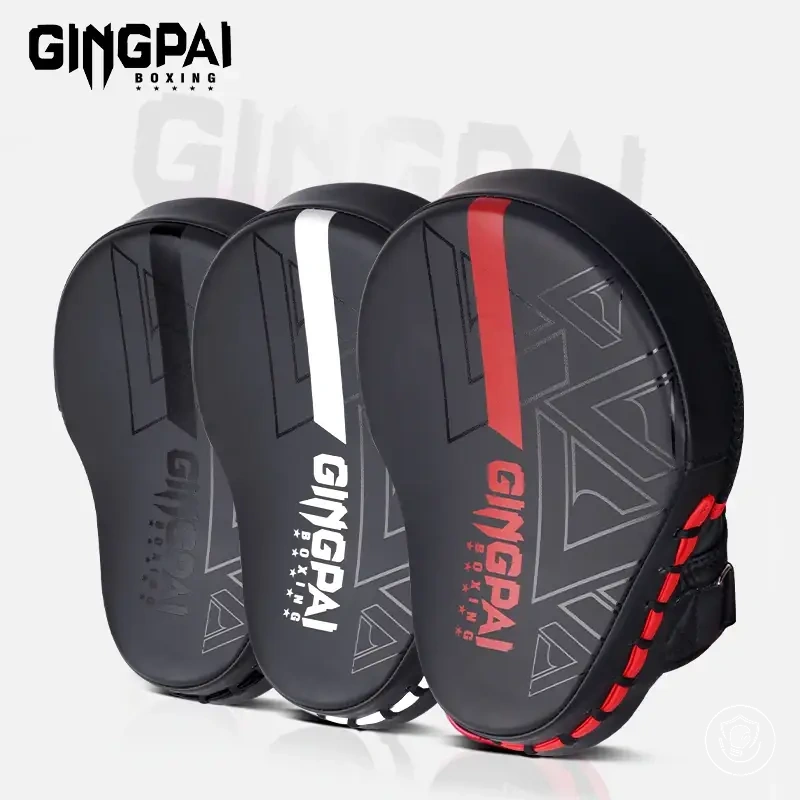
How to choose boxing focus mitts and training pads for beginners
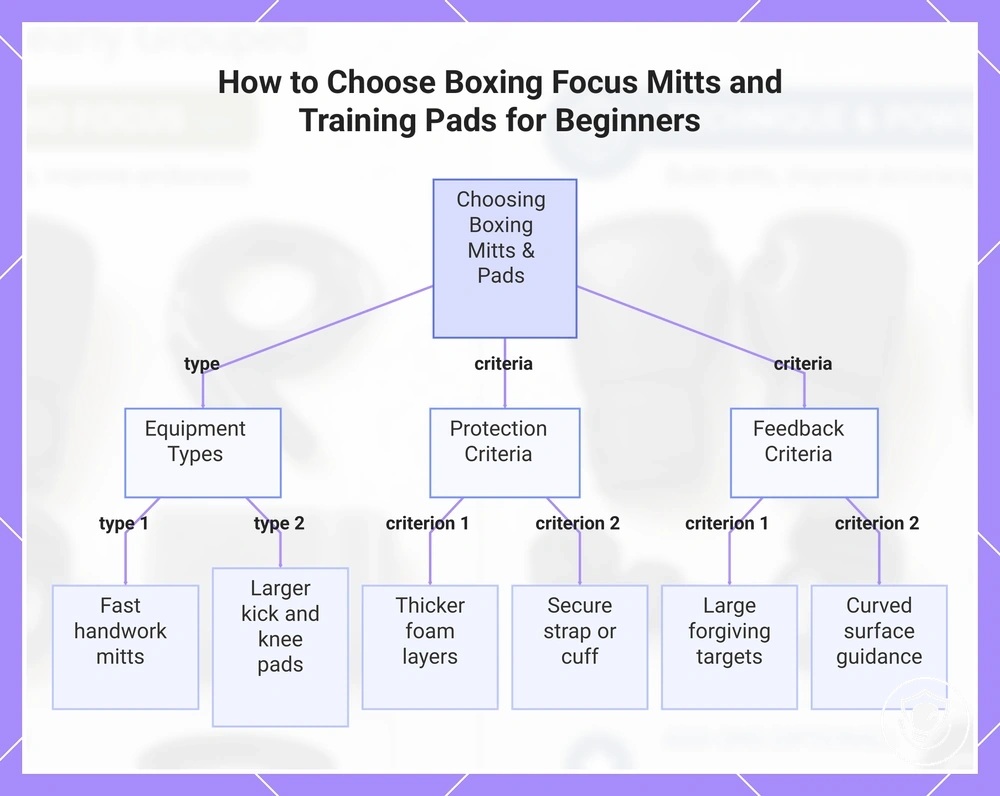
Choosing boxing focus mitts and training pads for beginners starts with matching the equipment attributes to your training goal, partner availability, and safety needs. Focus mitts are lightweight and suit fast handwork, while training pads offer more surface area and impact absorption for kicks and heavy punches. Proper padding and wrist support can reduce the risk of injury for both the person striking and the person holding the equipment.
Use these criteria to match mitts or pads to your training scenario. Each criterion affects protection, feedback, or usability.
- Padding thickness – Thicker foam layers absorb more impact, reducing stress on the striker’s knuckles and the holder’s arms; this is especially important when learning to punch with full extension.
- Wrist support – A secure strap or cuff helps keep the pad aligned with the holder’s forearm, preventing twisting that can cause wrist strain.
- Impact absorption material – Dense foam or air pocket construction dampens shock; material quality affects how much energy reaches the holder’s joints.
- Target size – Larger targets give beginners a forgiving area to work accuracy; smaller targets demand precision as skill improves.
- Shape curvature – Curved surfaces help guide the fist into a proper angle, while flat surfaces allow clearer auditory feedback on fist rotation.
- Audible response – A sharp sound from a clean hit indicates proper technique; a dull or muffled sound often indicates a mistake.
- Grip stability – Ergonomic handles or hand compartments help the holder maintain position with less fatigue, especially during longer drills.
- Strap adjustment – Adjustable fasteners allow a custom fit for different hand sizes, helping keep the pads from slipping during movement.
- Comfort during wear – Padding on the holder’s side and breathable materials reduce sweat buildup and improve focus during a session.
Question: What is the difference between focus mitts and training pads?
Answer: Focus mitts are small, lightweight pads for punch drills; training pads are larger, thicker pads for kicks and knees.
Question: Which type is better for a beginner?
Answer: The choice depends on the sport. Focus mitts are commonly used for boxing, while training pads suit Muay Thai or MMA as they handle both punches and kicks. Beginners who train alone may find focus mitts simpler to use.
If a beginner’s main goal is to learn correct punching technique, the shape and target size become the key criteria because they provide immediate feedback on accuracy and form. When the goal shifts to building power or conditioning, padding thickness and wrist support take priority to allow harder hitting with less discomfort.
This chart explains the two main equipment types and the key protection and feedback criteria for selecting focus mitts or training pads.
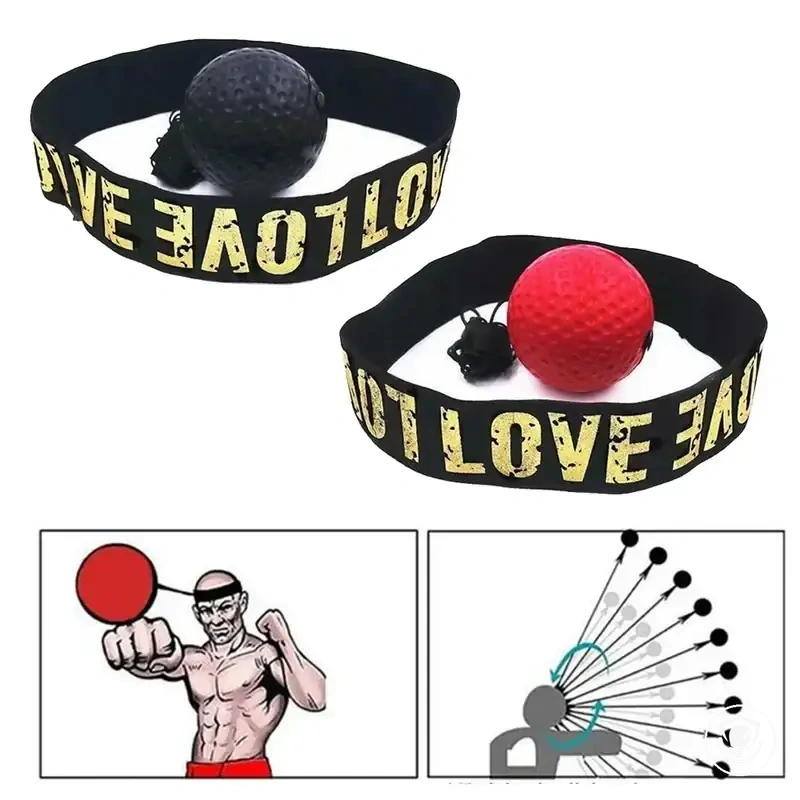
Reflex balls and other timing tools for beginner home boxing training goals
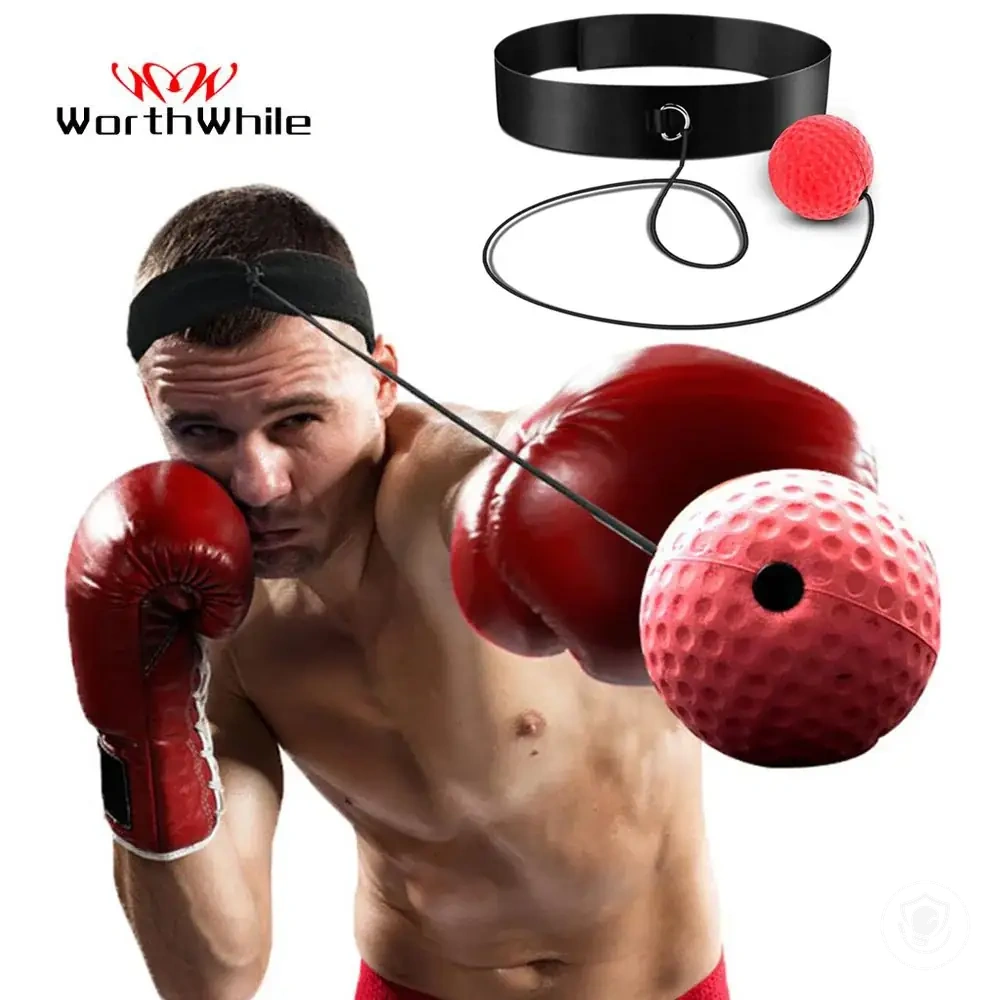
Timing tools can help develop coordination, rhythm, and reaction cues without the impact of a heavy bag. They fit when improving hand-eye coordination and punch accuracy are the priority, especially in limited space. Safe use requires consistent eye awareness and controlled movement to avoid overreaching.
To avoid common beginner mistakes, follow these patterns:
- Start with the lightest ball to help build basic control before progressing to heavier versions.
- Maintain steady footwork and proper spacing rather than punching from a static stance.
- Keep your eyes on the ball to help train reaction timing and focus.
- Begin with single jabs, then add simple combinations once rhythm becomes consistent.
- Avoid swinging wildly; focus on controlled, accurate strikes to help improve precision.
- Use short sessions to prevent shoulder fatigue and maintain technique quality.
- Do not skip the warm-up; reflex balls can work well as an active warm-up tool.
- Start each session at a slow pace and increase speed only when your control stays consistent.
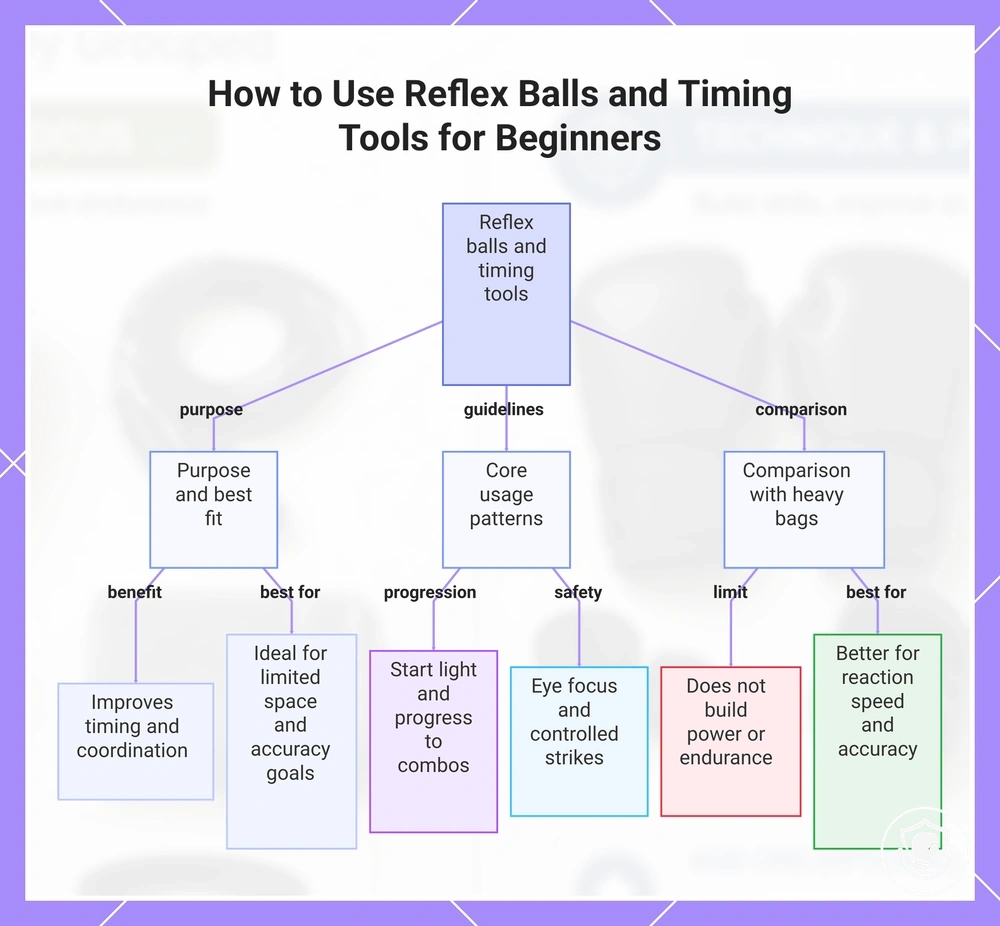
Unlike heavy bags or impact mitts, timing tools do not build power or resistance endurance. They are a better fit when the goal is refining reaction speed and accuracy rather than conditioning. Timing tools are typically used as an add-on alongside other training equipment, not as a replacement for full boxing workouts.
This chart shows the purpose, usage guidelines, and key differences of timing tools compared to heavy bags for beginner boxing training.
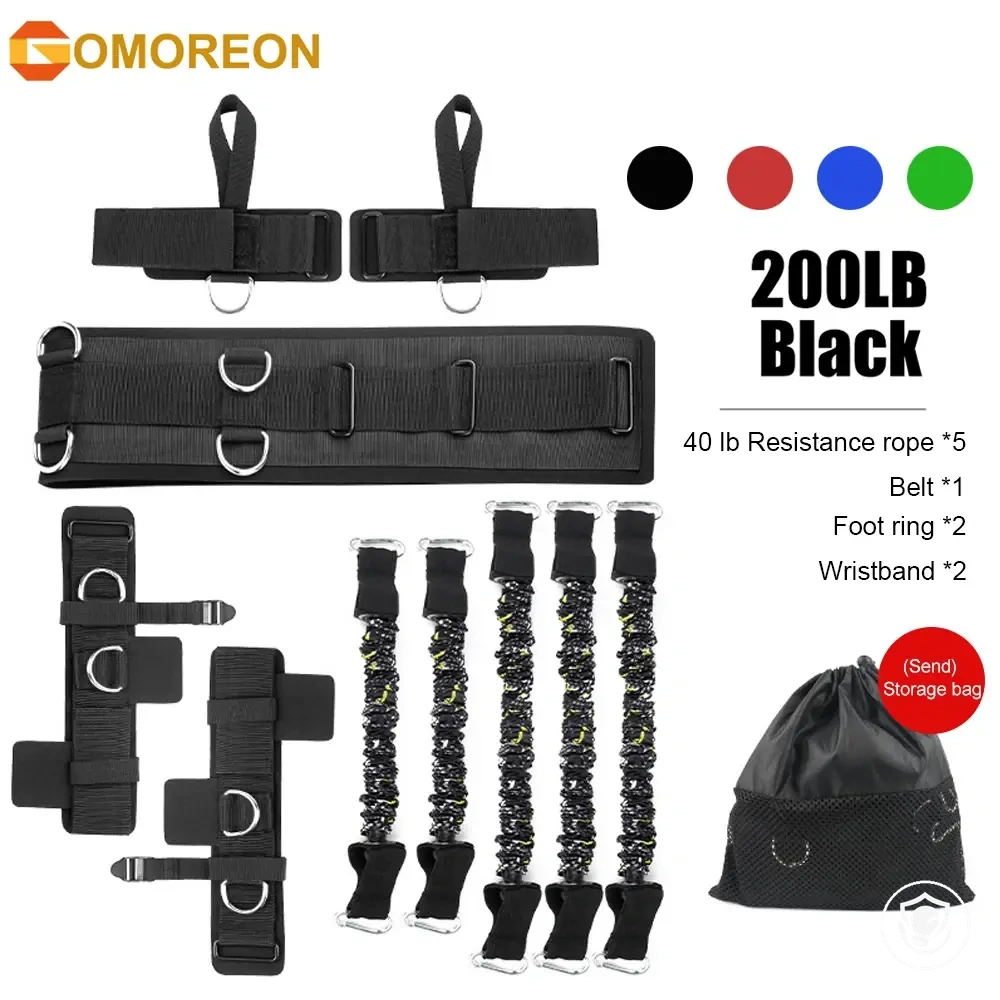
Resistance bands for boxing: when they help and what goal they support
Resistance bands can help with boxing goals like conditioning, controlled tempo, and endurance, but their main trade-off is the risk of altering punching mechanics if form is not maintained. An insecure anchor point or unstable setup increases that risk, so check anchor stability before band work.
Band methods vary by load direction. Anchoring a band behind your back creates resistance during straight punches, while wrapping bands around your legs adds tension to footwork drills. These setups target shoulder stamina, core stability, and controlled range of motion, but keep a controlled tempo and stop if the band pulls you off balance to avoid technique degradation.
The table maps common boxing goals to appropriate band use cases and cautions. When evaluating whether bands fit your training, a budget-based upgrade path can help you decide which tools to prioritize first. Anchor point security and stability must be checked; do not use bands for any boxing drill if the anchor is not secure.
| Goal use | Band setup condition | What it improves | Main risk |
|---|---|---|---|
| Endurance / conditioning | Light band anchored behind back or under arms | Shoulder and arm stamina | Technique degradation if tempo is too fast or band too heavy |
| Punch speed / snap | Light band, focus on retraction | May improve hand speed when used for retraction focus | Overemphasis on arm, neglecting leg and core |
| Footwork / stance | Band around ankles or knees | Lateral movement and stability | Distorted stance if band pulls legs too tight |
| Punch power (explosive) | Moderate band, anchored behind | Extension strength in short sets | Risk of hyperextension or altered mechanics |
| Combination flow | Light band, full range of motion | Flow and coordination under load | Fatigue leading to sloppy form |
Stop using bands if your form breaks down; they are useful only when you can maintain correct form throughout the drill. For a beginner, banded shadow boxing can improve arm endurance but risks teaching a slower, pulling-back motion. A simpler tool like a light dumbbell used for slow, deliberate punches may better preserve natural punching mechanics.
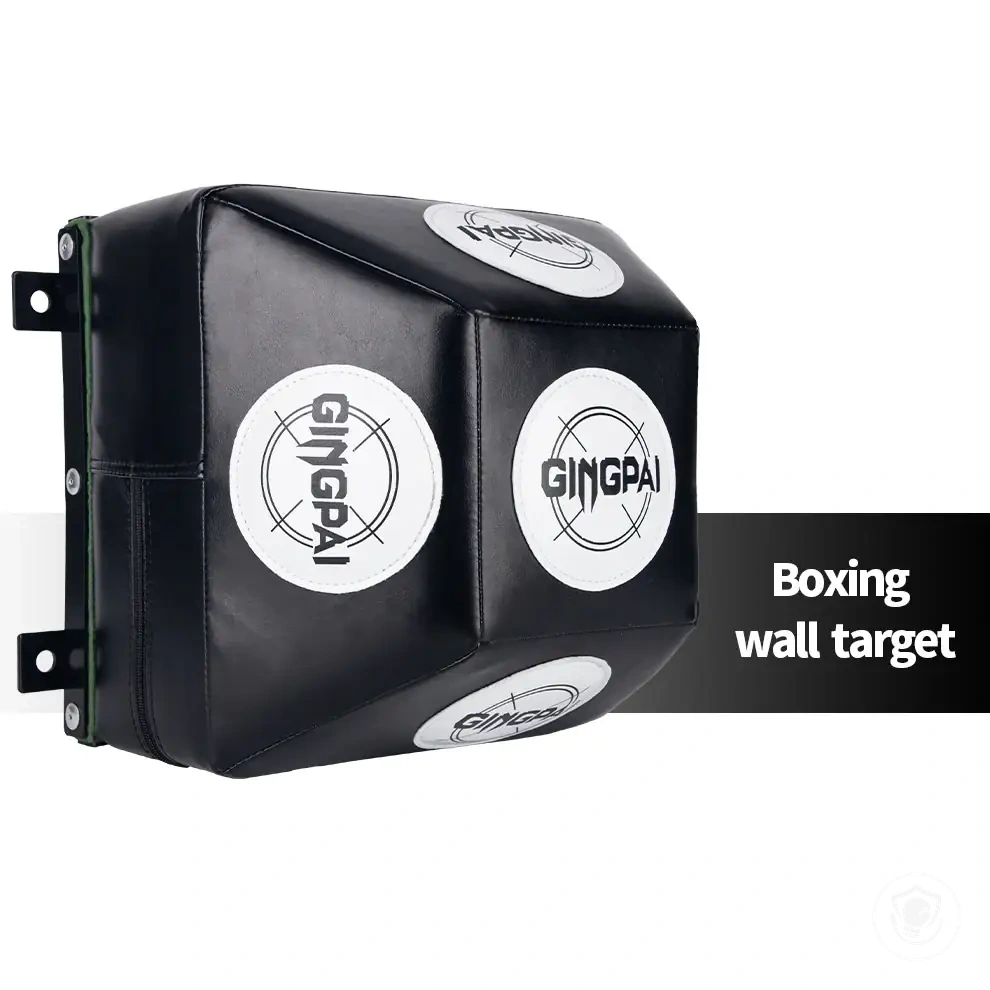
The products below are useful examples for comparing available options. Before buying, check that the compatibility criteria, key features, and product details match your needs.
Pre-Purchase Fit Checks That Prevent the Wrong Beginner Home Boxing Equipment Choice
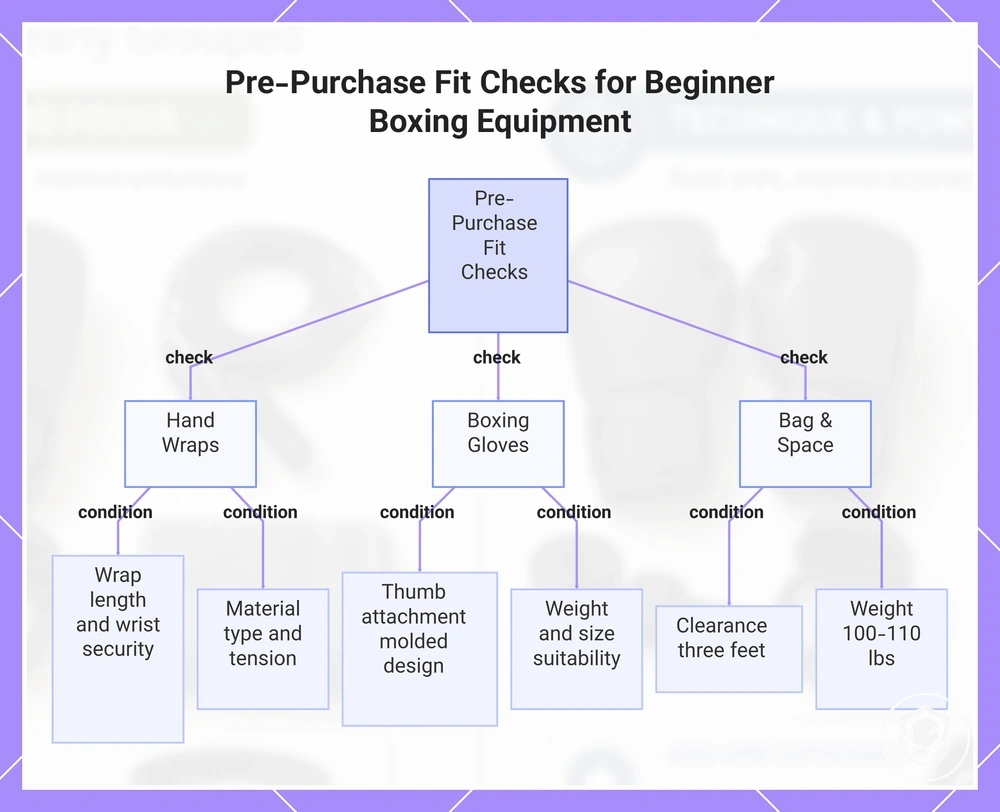
These final fit checks prevent regret by verifying safety, usability, and constraint alignment. They examine equipment-specific attributes such as glove fit, wrap comfort, and space requirements that affect training consistency and hand protection.
Run through these quick checks, each with a pass/fail condition to verify if the item supports your training.
- Hand wraps – Check wrist support and wrap comfort. Passes when wraps are long enough to secure the wrist and knuckles without pinching. Fails if wraps are too short or if elastic wraps restrict circulation. Failure often leads to reduced wrist stability and increased injury risk.
- Boxing gloves – Check thumb attachment. Passes when the thumb is attached to the glove body (molded design). Fails if the thumb is separate. A separate thumb can cause pain and long-term thumb strain, discouraging consistent training.
- Glove size and weight – Check that the weight suits your body size. Passes when gloves (typically 14–16 oz for many beginners) fit snugly without excessive looseness. Fails if gloves are noticeably too light or too heavy. Improper weight can affect punching mechanics and hand fatigue.
- Punching bag space – Check floor space and clearance. Passes when the bag can be mounted with sufficient clearance (e.g., at least three feet on all sides). Fails if the space is cramped. Limited movement can hinder footwork and technique development.
- Hanging bag weight – Passes when the bag weighs around 100–110 pounds for stable minimal swing. Fails if it is significantly lighter, which can cause excessive swinging and may reduce workout quality.
- Freestanding bag base – Passes when the base is heavy and wide enough to resist tipping during moderate strikes. Fails if the bag shifts or tilts easily. A moving bag interrupts flow and may not absorb punches effectively.
- Bag mounting hardware – Passes when the mount (ceiling joist, wall bracket, or stand) is rated for the bag weight and installation is secure. Fails if the mount seems weak or creates excessive noise or vibration.
- Hand wrap material – Passes when the wrap is cotton or elastic that holds tension without over-tightening. Fails if the material is stiff or slips during a workout. Poor wrap material reduces confidence in hand protection.
If any safety or comfort check fails, choose a different product or alternative category before buying additional gear.
In shared homes, noise and surface protection are important. A hanging bag can transmit vibration through ceilings and floors. Adding a heavy mat or choosing a freestanding bag with a wide base can help reduce impact noise and protect flooring. Adjust your bag choice or mount location accordingly.
More gear does not automatically improve your training. A few well-chosen items that pass these comfort and space checks can support more consistent workouts than a full set of mismatched equipment. Choose what fits your space and feels secure, then build from there.
The products below are useful examples for comparing available options. Before buying, check that the compatibility criteria, key features, and product details match your needs.
This chart shows the key fit checks with pass/fail conditions to verify safety, usability, and space compatibility before buying beginner home boxing equipment.
Protection and comfort signals that affect long-term training consistency
Padding feel, wrist support comfort, and breathability most influence whether beginners keep training consistently. Pressure points, sweat accumulation, and lining quality directly affect comfort and confidence in the equipment. These signals guide selection decisions and are not intended to replace professional fit evaluation.
The list below highlights good signals and warning signs that can help spot a misfit early.
- Padding:
Good sign: padding feels plush but not bulky → suggests comfort and protection.
Warning sign: padding feels thin or causes pinching → may indicate inadequate protection; choose a model with thicker lining. - Wrist support:
Good sign: wrist strap holds snugly without restricting movement → suggests stability and confidence.
Warning sign: strap slips or digs into skin → may indicate improper size; adjust fit or try a different design. - Breathability:
Good sign: mesh vents allow airflow and sweat evaporates quickly → suggests dryness and reduced irritation.
Warning sign: gear traps heat and sweat → may indicate poor ventilation; switch to a more breathable material. - Pressure points:
Good sign: no red marks after short wear → suggests even pressure distribution.
Warning sign: persistent pressure points cause discomfort → may indicate poor ergonomic fit; consider a different shape or size. - Lining:
Good sign: inner lining is smooth and soft against skin → suggests friction-free movement.
Warning sign: rough seams or lining cause chafing → may indicate poor construction; look for seamless or padded lining. - Sweat management:
Good sign: moisture-wicking fabric keeps skin dry during workouts → suggests comfort and reduced odor.
Warning sign: fabric stays wet and heavy → may indicate insufficient sweat management; choose a moisture-wicking upgrade. - Overall comfort:
Good sign: gear feels almost unnoticeable during movement → suggests confidence and focus on training.
Warning sign: constant adjustments needed → may indicate poor fit; change category or brand.
If multiple warning signs appear, consider changing the category or adjusting the fit before committing to a long-term training plan.
Space and setup constraints that can override your “ideal” gear choice
Space and setup constraints can override an otherwise ideal boxing equipment choice when your living environment limits clearance, storage, or noise tolerance. Without verifying these conditions, even a goal-perfect choice may fail in practice.
These common home constraints and the alternatives they suggest help verify compatibility:
- Ceiling clearance – A hanging heavy bag or speed bag typically requires enough vertical space for full swing or rebound. In rooms with low ceilings, a floor-standing bag or a reflex bag may be a better fit.
- Floor footprint – A free-standing bag or a boxing ring mat takes up floor area. In tight rooms, a wall-mounted bag or a folding mat can preserve usable space.
- Storage when not in use – Some bags and stands are bulky and hard to store. If storage is limited, consider an inflatable bag, a double-end bag that packs away, or focus mitts.
- Noise tolerance – Hitting a bag can create impact vibration that may travel through floors and walls. In shared living situations, a padded floor mat, a quieter bag like a water-filled base, or a timing tool such as a reaction ball can reduce noise.
- Partner access – If you train alone or share space with others, solo-friendly equipment (like a double-end bag or a reflex bag) may serve your goal better than a heavy bag that requires partner work.
A constraints-driven choice may better match real-world conditions than a goal-driven one. For example, if your goal is to improve power but your apartment cannot tolerate heavy-bag noise, switching to a wall-mounted pad or a no-bag alternative like a double-end bag can restore goal alignment without a major purchase.