Home Boxing Equipment for Beginners: Choosing Boxing Hand Wraps for Home Training
Choosing boxing hand wraps for beginners training at home depends on balancing wrist support, knuckle protection, and glove fit without adding unnecessary bulk. The home boxing equipment for beginners hub includes this page to help you decide which wrap type, material, and length suit your goals. These criteria and trade-offs guide your choice; they do not teach wrapping technique or diagnose hand pain.
Do you need hand wraps for boxing? Wraps are strongly recommended for wrist and knuckle safety when hitting a heavy bag or pads; they may be optional for shadowboxing. Your gloves' fit and comfort level also matter. After deciding wraps are needed, consider wrap type, material, and length.
Focusing on these criteria helps reduce common mistakes and discomfort:
- Support goal: Determine whether wrist stability or knuckle padding is your primary need.
- Glove fit: Thicker wraps may crowd tight gloves; thinner or quick wraps suit snug fittings.
- Convenience and upkeep: Traditional wraps offer customizable tightness but require careful rolling; quick wraps are faster to put on and easier to clean.
- Length: 120-inch wraps can suffice for smaller hands; 180-inch wraps can provide more wrist coverage.
- Material: Elastic wraps stretch and compress; cotton wraps breathe and hold shape.
These trade-offs interact with your training intensity and glove type.
For snug gloves, thinner quick wraps or shorter lengths minimize pressure points. For wrist support, longer elastic wraps extend coverage. For speed, quick wraps with a loop accelerate setup. Wrap types and materials are defined to help you match your needs.
It is a misconception that hand wraps alone provide total protection. Wraps support but do not replace proper glove fit or technique; consider this when evaluating wraps as part of your protection setup, focusing on the criteria that matter.
Boxing Hand Wraps in a Beginner Home Setup
Boxing hand wraps are a protective support layer worn under boxing gloves to stabilize the wrist and align the knuckles during punching. They wrap around the hand and forearm, providing compression that helps keep the bones and tendons in a safer position. This may reduce excessive movement on impact and can improve comfort when hitting a bag or pads.
For beginners training at home, hand wraps can improve glove feel by filling extra space, reducing shifting and helping keep the fist compact. This may lower the risk of poor wrist alignment during repeated impacts, but they are not a replacement for proper glove fit or punching technique.
Boxing hand wraps are often confused with inner gloves or gel pads. Traditional wraps offer adjustable support for the wrist and knuckles.
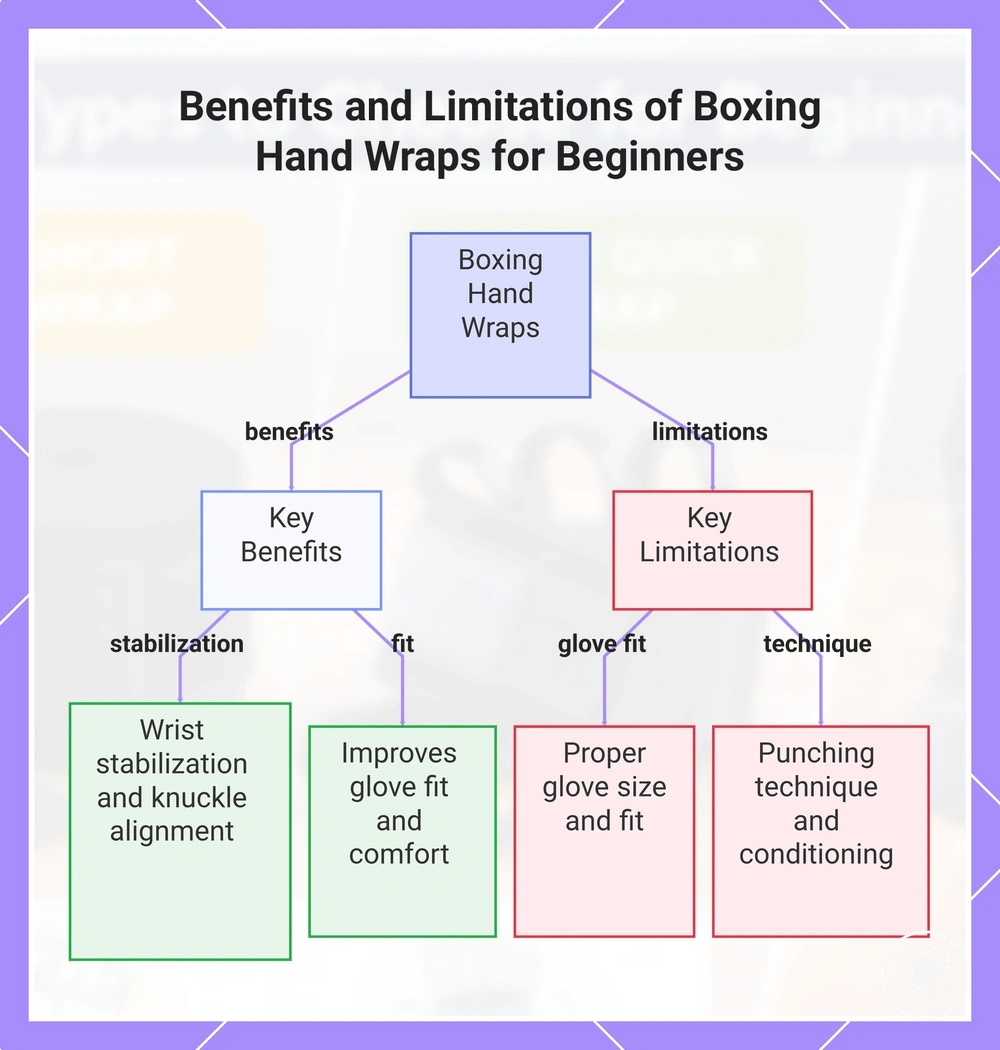
For a beginner home setup, boxing hand wraps provide specific benefits but do not replace proper glove fit, good technique, or hand conditioning.
Helps with:
- Wrist stabilization during punches
- Knuckle padding and comfort
- Reducing glove movement on the hand
- Absorbing sweat inside the gloves
Doesn't replace:
- Proper glove size and fit
- Good punching technique
- Hand conditioning over time
This chart shows the key benefits of boxing hand wraps for beginners and what they do not replace.
When Beginners Should Use Hand Wraps for Boxing
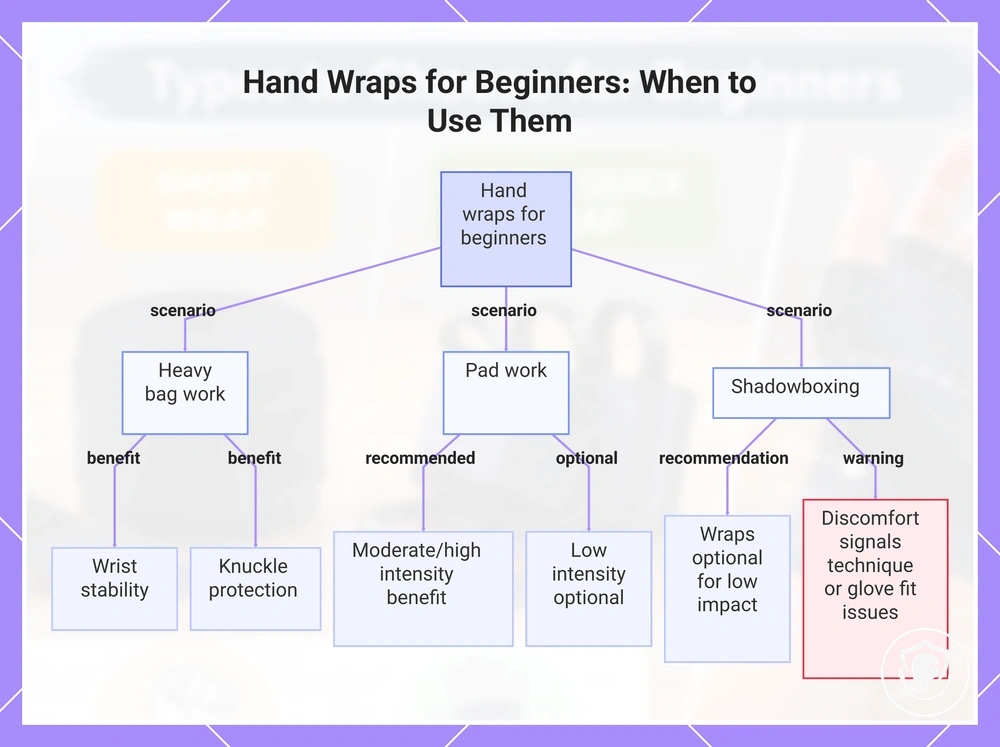
Beginners should use hand wraps for bag work and high‑intensity pad work, but wraps are optional for shadowboxing.
The impact and volume of training determine support needs. Heavy bag work benefits from the wrist stability that hand wraps provide. Pad work intensity varies, so your intensity level guides the decision.
- Heavy bag work – high impact; wraps recommended for wrist support and knuckle protection during frequent strikes.
- Pad work – moderate to high intensity sessions benefit from wraps; lower intensity may not require them.
- Shadowboxing – low impact; wraps optional. Often used for comfort and practice, but not necessary for protection.
However, discomfort may indicate technique or glove fit issues rather than a need for stronger wraps—referring to safety for hands and wrists can help distinguish between the two. Properly applied wraps should feel snug but not restrictive. Once you know whether wraps are needed for your training context, the next step is choosing the right material and length.
This chart shows when beginners should use hand wraps based on training activity and intensity.
Hand Wrap Types Beginners Use for Home Boxing Training
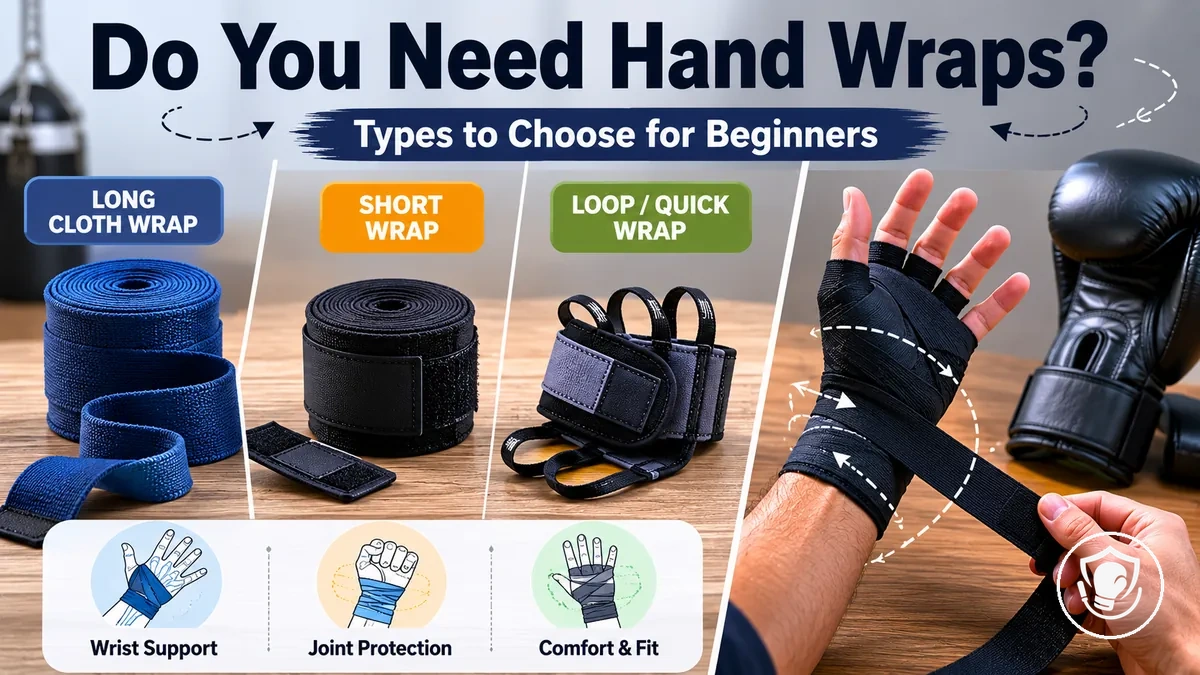
When starting home boxing training, beginners can choose among three main wrap categories: traditional wraps, quick wraps (also called inner gloves or glove liners), and gel wraps or knuckle pads. The choice depends on how much you value support, convenience, bulk, and maintenance. These trade-offs help you decide which type fits your gloves and training schedule. The image below labels the hand wrap types beginners use and shows how traditional wraps offer adjustability and more bulk, while quick wraps and gel wraps trade support for convenience.
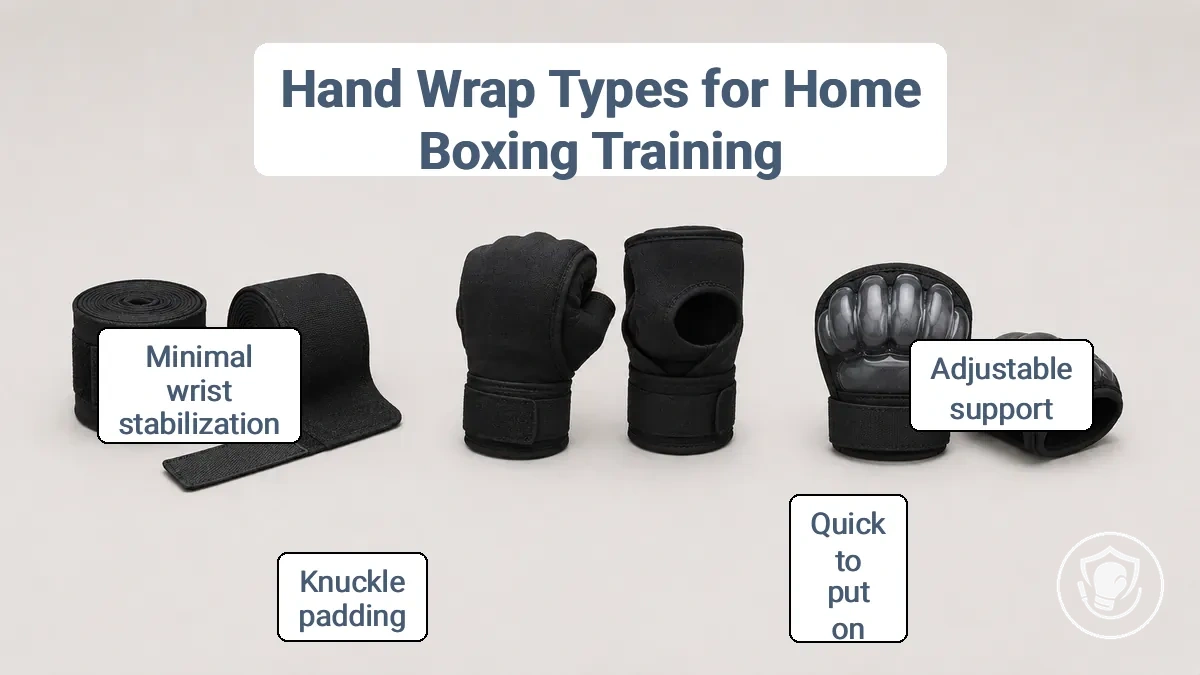
A common decision for beginners is quick wraps versus traditional wraps, since these two types differ most in time and support.
- Traditional wraps — More adjustable support for wrist and knuckles; requires several minutes to wrap; adds moderate bulk under gloves; typically needs to be air dried after each use.
- Quick wraps / inner gloves — Fast to put on (typically around 30 seconds); consistent fit with less custom tension; bulkier under tight gloves; machine-washable but may lose elasticity over time.
- Gel wraps / knuckle pads — Extra padding concentrated on knuckles; minimal bulk; no wrist stabilisation; can shift during intense sessions; can be used for light bag work with loose-fitting gloves.
For example, if you train three times a week with snug competition gloves, traditional wraps can give you the adjustability to manage pressure points. If your sessions are short and you change gloves often, quick wraps save time and provide a consistent fit. Those who only shadow box or hit pads lightly may find gel knuckle pads sufficient, though they lack the wrist support needed for heavy bag work.
Traditional Long Hand Wraps
Traditional long hand wraps are a highly adjustable option for distributing wrist and knuckle support under boxing gloves. Their extended length allows independent tension control, enabling targeted support without bulk. However, wrapping too tightly restricts circulation and causes numbness; even tension ensures comfort.
Check these attention points for long wraps: tension, bulk, thumb loop, closure, and comfort — for technique guidance, the hand wrap method step by step explains each layer.
- Tension: Adjust wrap tightness around the wrist and knuckles separately to avoid over-compression.
- Bulk: Extra length adds layering; distribute wraps evenly to prevent glove fit issues.
- Thumb loop: Use the built-in thumb loop to anchor the wrap and maintain consistent tension from the start.
- Closure: The hook-and-loop tab should lie flat on the wrist without overhang to stay secure during movement.
- Comfort signals: Check for tingling or numbness after the first round; loosen and re-wrap if needed.
Quick Wraps and Boxing Inner Gloves
Quick wraps and inner gloves are convenience-first hand protection options that reduce setup time but limit adjustability. They slip on quickly with built-in padding and a wrist strap, removing the need to wrap long bands. However, their preset tension and padding placement cannot be fine-tuned like traditional wraps. The added bulk from the padding can also make snug boxing gloves feel tighter. They suit boxers who prioritize convenience and speed over custom adjustability.
A good fit feels secure without excessive pressure. Use these fit checks:
- Finger length: the wrap should not restrict finger movement or extend beyond the fingertips.
- Strap security: the wrist strap should hold the wrist firmly without cutting circulation or slipping loose.
- Fist closure: when making a fist, the padding should stay in place and not bunch unevenly.
- Glove tightness: the outer glove should fit over the wrap without forcing the hand into an uncomfortable position.
- Thumb comfort: the thumb loop or opening should not chafe or pull during movement.
Bulk varies by model and glove size; the glove tightness check in the list helps confirm compatibility. Choosing thinner wraps or a larger glove size can reduce bulk issues if needed.
Gel Wraps and Knuckle Pads as Hand-Wrap Alternatives
Gel wraps and knuckle pads are padding-focused accessories that cushion the knuckles during punching but do not automatically solve wrist stability needs. The list separates padding benefits from wrist-stability limits because wrist support typically requires a wrap or strap structure that can be tightened around the joint.
- Helps with
- Adds gel padding over knuckles, cushioning impact during bag work.
- May reduce knuckle soreness by distributing force across the padded area.
- Limits
- Does not provide wrist support.
- Increased bulk can make glove fit tighter, potentially reducing hand mobility.
Elastic vs Cotton Hand Wraps for Beginners
Elastic hand wraps stretch during wrapping, offering a snug, conforming fit, while cotton hand wraps provide a rigid feel with consistent tension and less give. Your choice depends on feel, tension control, and the amount of bulk they add inside your gloves. The image shows the texture difference between elastic and cotton hand wraps to help you identify the material type before choosing.
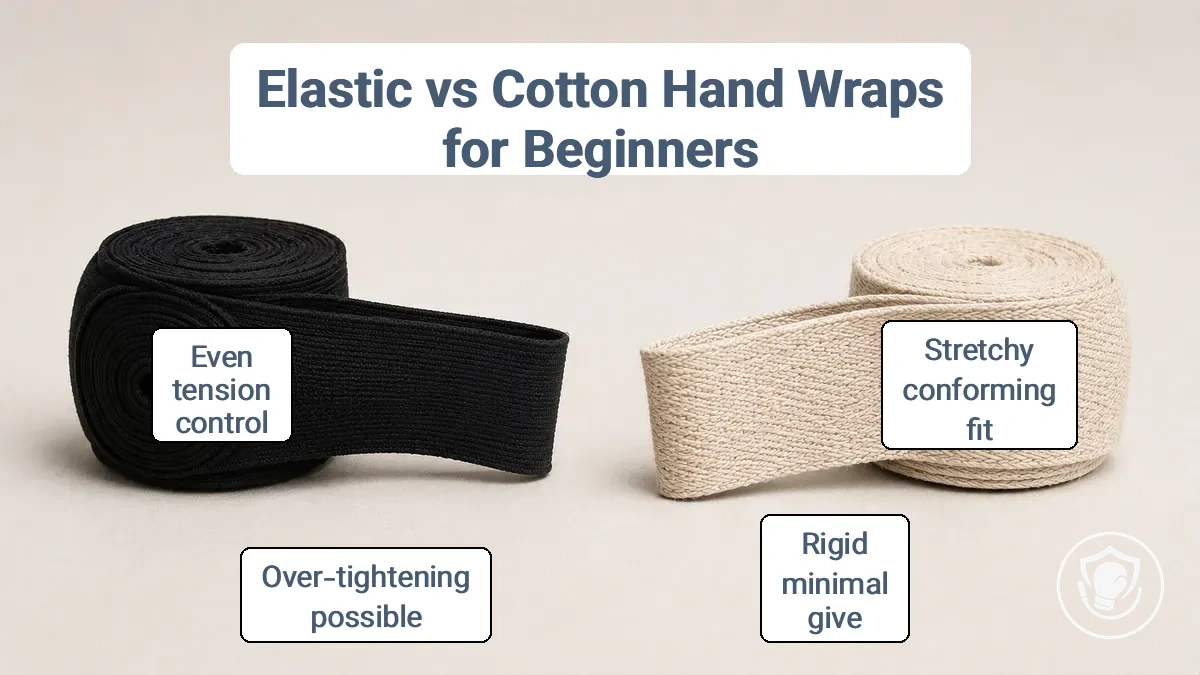
The material type directly influences tension control. The table compares elastic and cotton hand wraps for beginners across stretch, feel, tension control risk, and typical fit. These differences can guide your choice depending on your training conditions.
| Material | Stretch/Feel | Tension control risk | Typical beginner fit |
|---|---|---|---|
| Elastic hand wraps | Stretchy, conforms to hand shape | Over-tightening possible; requires careful wrapping | Forgiving of slight wrapping errors |
| Cotton hand wraps | Rigid, minimal give | Even tension but less adjustability | Consistent fit but less forgiving if too tight/loose |
For sweaty hands, cotton's absorbent fabric can become heavy, while elastic wraps tend to breathe better. When gloves are already tight, bulk matters—cotton wraps tend to be thicker. For sensitive wrists, elastic wraps allow easier adjustment of wrist support. After you choose between elastic and cotton, wrap length is the next factor, affecting how much coverage you can achieve.
Choosing Hand Wrap Length for Beginners
The hand wrap length you need depends on your hand size, the coverage you prefer, and how much bulk your gloves can accommodate comfortably. A common comparison is between 120-inch and 180-inch wraps, but the appropriate length is the one that provides enough support without making your glove fit too tight.
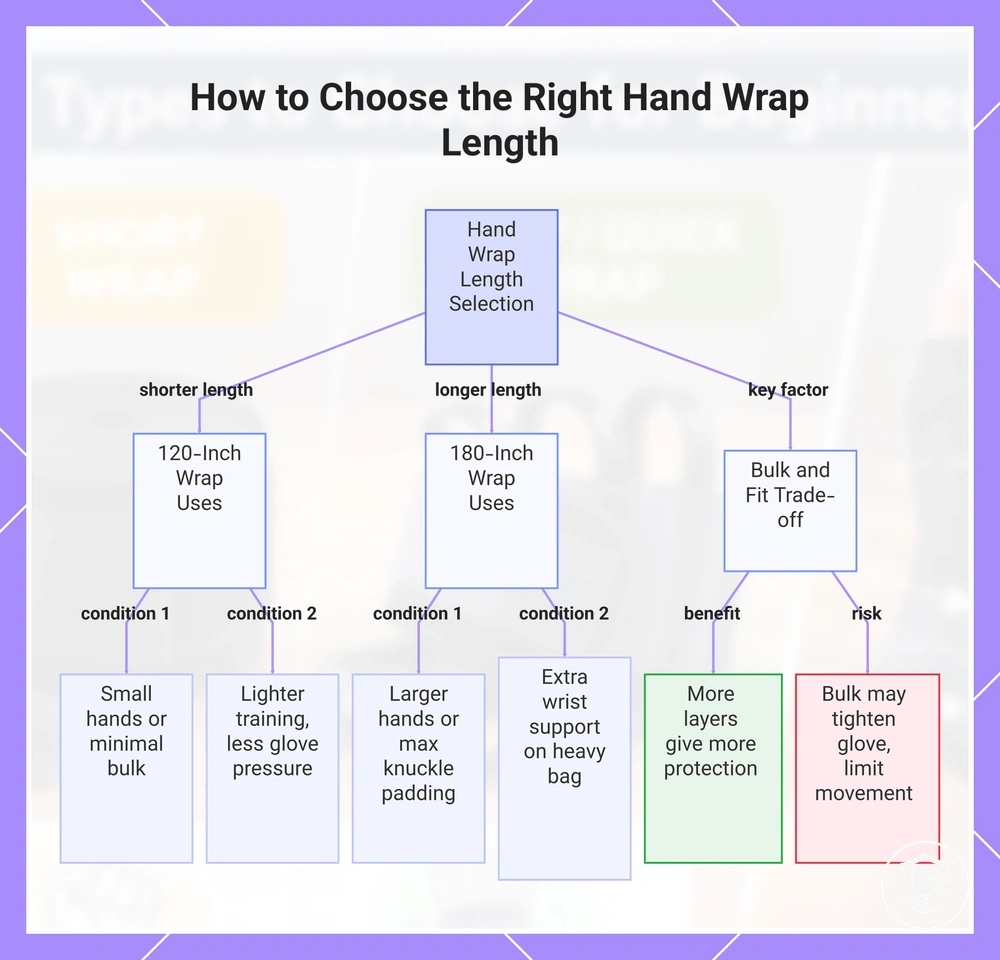
Wrap length directly affects how many layers you can build over your knuckles and around your wrists. More layers offer more protection but also add bulk, which can make gloves feel tighter and limit movement. Use the checklist below to match your goal with the recommended length:
- Small hands or minimal bulk: shorter wrap (120 inches)
- Larger hands or maximum knuckle padding: longer wrap (180 inches)
- Extra wrist support during heavy bag work: longer wrap (180 inches)
- Lighter training with less glove pressure: shorter wrap (120 inches)
Choose the length that gives the coverage you need without overcrowding the glove interior.
This chart helps beginners select between 120-inch and 180-inch hand wraps based on hand size, training goal, and the trade-off between protection and glove fit.
120-Inch vs 180-Inch Hand Wraps
120-inch wraps wrap faster and add less bulk, while 180-inch wraps offer greater coverage and adjustability for wrist and knuckle support. Your decision comes down to whether you prioritize glove tightness or extra protection layers. The two lengths differ in coverage and glove tightness:
- 120-inch wraps — Provide less material, resulting in a slimmer wrap that takes up less space in snug gloves and is lighter, which may suit lighter workouts or smaller hands. It limits how many layers you can add, so coverage on knuckles and wrist is more constrained.
- 180-inch wraps — Provide more fabric for additional wrist passes and knuckle padding, useful for those who want extra wrist stabilization or thicker knuckle layering. It can add noticeable bulk inside the glove and take slightly longer to wrap compared to the shorter length.
For further guidance on matching wrap length with glove size, see the glove-fit considerations.
Hand Wrap Fit and Comfort Inside Boxing Gloves
Good hand wrap fit inside boxing gloves means stable alignment without numbness, pinching, or restricted fist closure. Hand wrap fit and comfort inside boxing gloves—use the fit-check checklist to confirm correct tension and bulk.
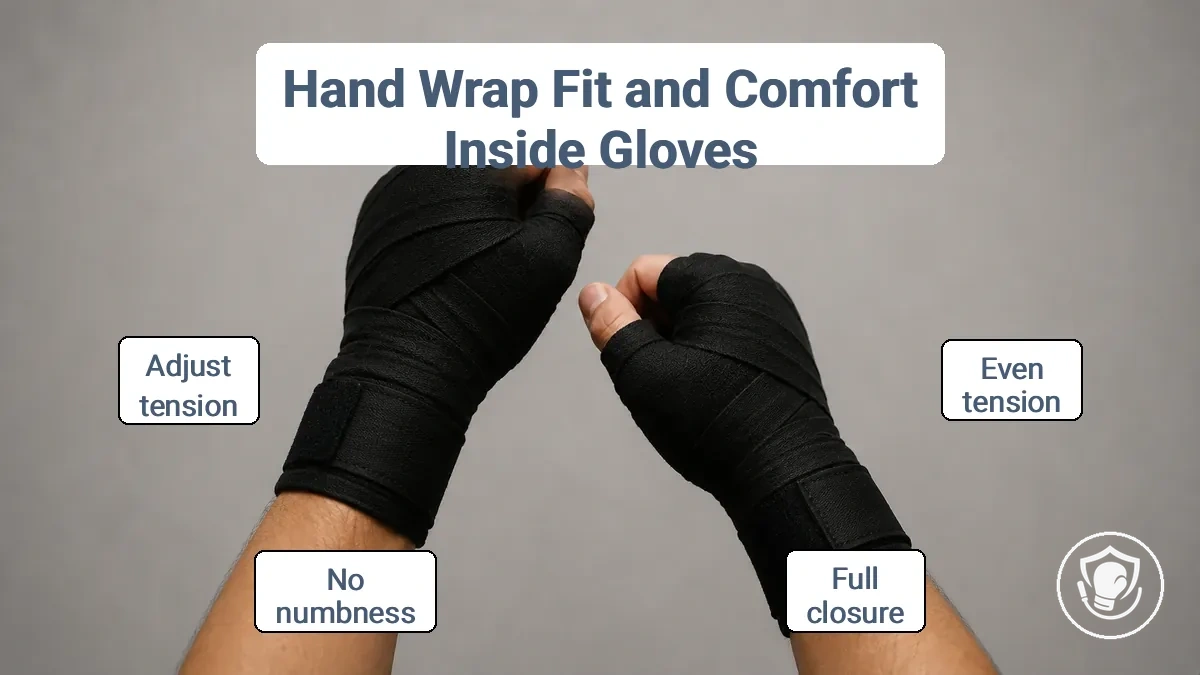
Hand Wrap Fit Checklist
- Good signs:
- Even pressure across the wrist and knuckles
- Full fist closure without resistance
- No numbness or tingling in the fingers
- Wrist feels supported but not constricted
- Glove fits snugly without extra bulk
- Fix signs:
- Numbness or pinching → usually too tight; re-wrap with lighter tension
- Loose wrap after a few rounds → usually too loose; re-wrap with tighter initial turn
- Excess fabric bunched in palm → adjust length or wrap method
Numbness or pinching usually signals excessive compression; a wrap that loosens after rounds indicates insufficient tension. Both compromise glove fit and fist closure. Adjust by rewrapping with even tension, keeping the wrist secure without compressing the hand.
Persistent wrist pain during or after training may involve technique issues, glove fit problems, or training load rather than wrap tension alone. If symptoms continue, check glove size and punching form before changing wrap method. For a deeper look, see fix wrist pain causes. When choosing hand wraps, consider length, material, and closure style to match your hand size and training needs.
Selection criteria that matter most for beginner hand wraps
Four key criteria determine beginner hand wrap selection: wrist support goal, glove fit, convenience, and upkeep. These priorities help you avoid fit mistakes and match wraps to your training needs. The table organizes these criteria into actionable choices.
| Criterion | What to look for | Trade-off | Best for |
|---|---|---|---|
| Wrist support goal | Customizable tension around knuckles and wrist; pre-formed padding | More adjustable wraps require practice to apply; pre-formed wraps are quicker but may offer less wrist stability | Traditional wraps for heavy bag work; gel or quick wraps for lighter sessions |
| Glove fit | Wrap thickness and bulk relative to glove size | Thicker wraps can make gloves feel tight or require a larger glove size | Thinner cotton wraps or semi-elastic blends when glove size is fixed |
| Convenience | Application time and ease of use | Quick and gel wraps save time but may reduce wrist support compared to traditional wraps | Short classes or frequent transitions between drills |
| Upkeep | Washability, drying time, and durability | Cotton wraps need regular washing and air drying; some quick wraps may lose elasticity faster | Regular training benefits from durable, washable wraps |
For wrist support, customizable tension provides more stability for heavy bag work, while pre-formed wraps may suit lighter sessions. Glove fit depends on wrap bulk; thicker wraps can make gloves feel tight, so check thickness against glove size to avoid discomfort.
Convenience matters when you train frequently or need to wrap quickly. Quick and gel wraps apply in seconds but may trade off wrist stability. Upkeep varies: traditional wraps need air drying and regular washing, while some quick wraps are machine-washable but may lose elasticity faster. Occasional trainers prioritize convenience; regular trainers focus on durability and support.
Avoid thinking about 'best wraps'—instead, map your priorities to wrap type, material, and length. Wrist support goals favor longer traditional wraps; convenience favors quicker options. Material and length affect fit and coverage.
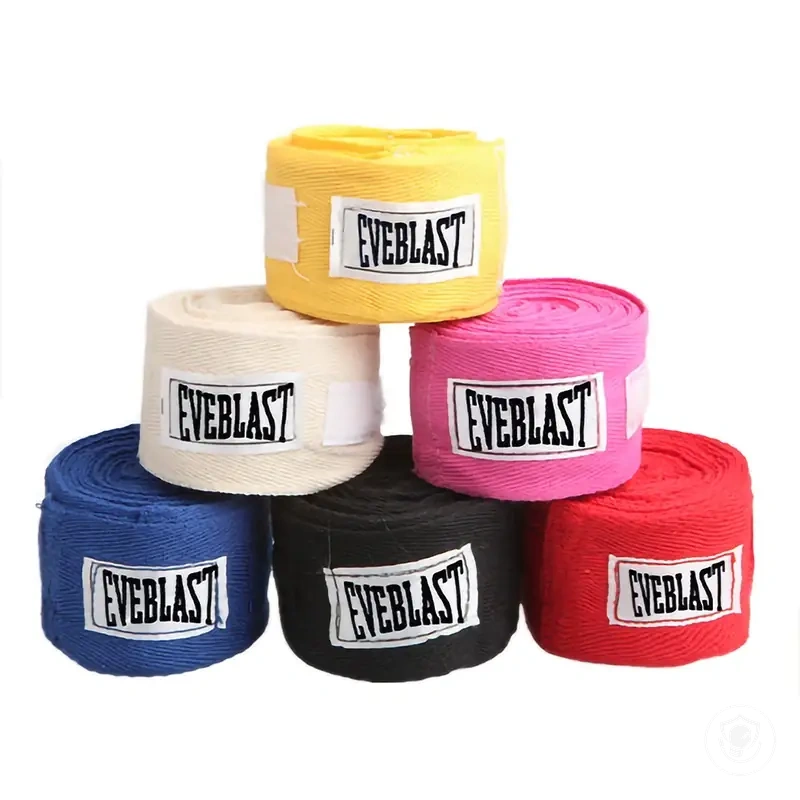
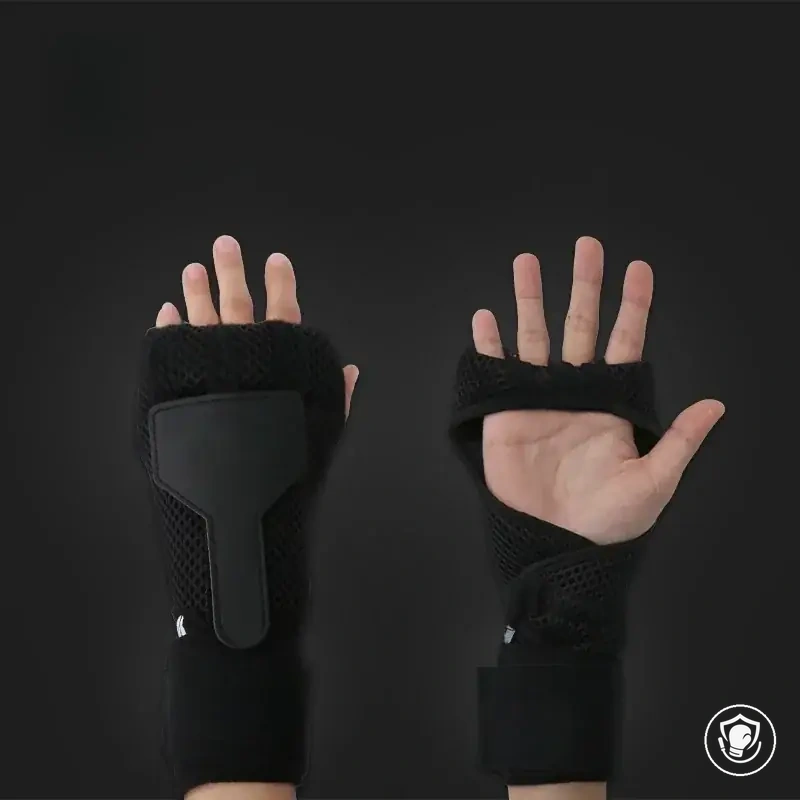
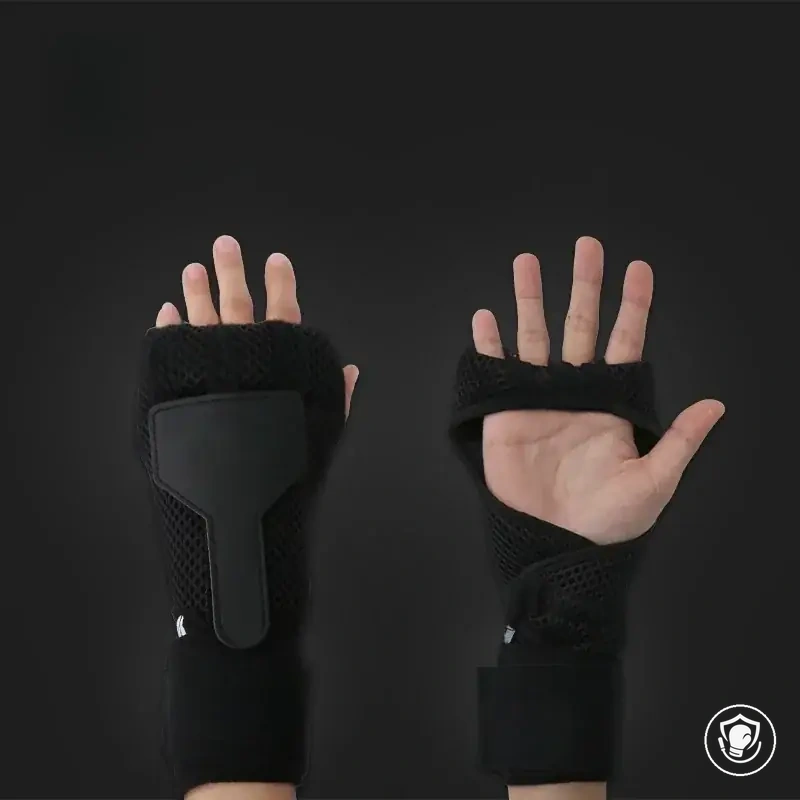
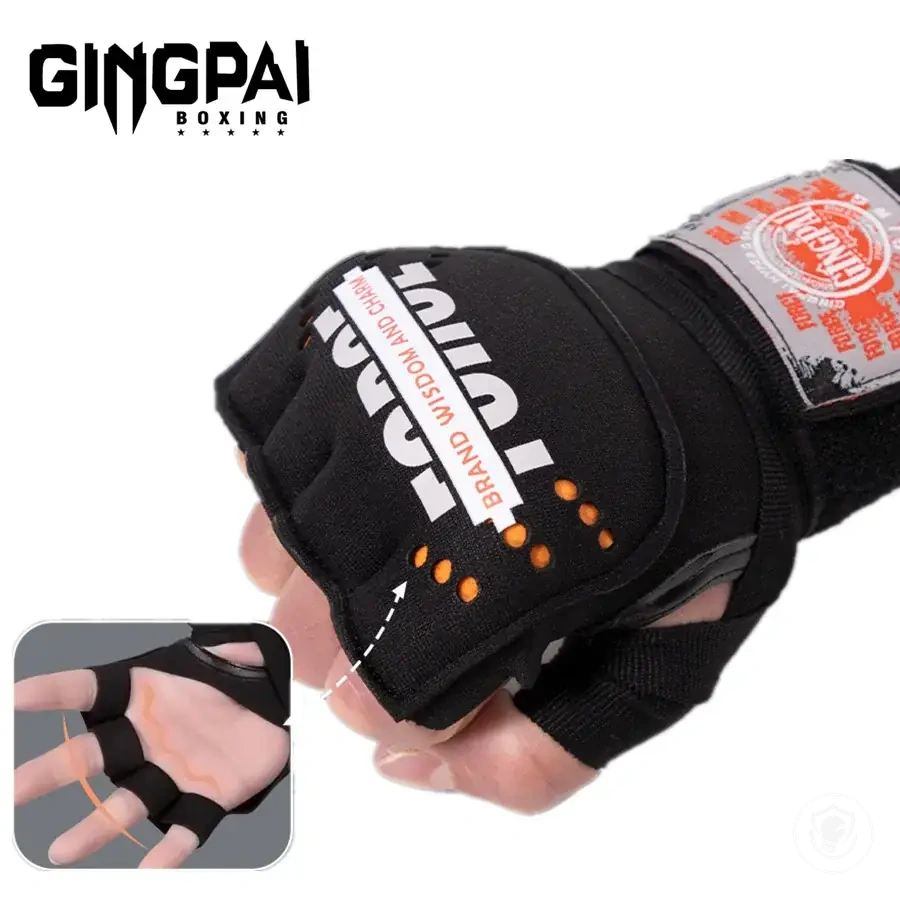
Here are product examples that may make comparison easier. Before buying, always review the compatibility criteria, essential features, and product details.
Wrist Support vs Knuckle Cushioning Trade-Offs
More wrist support often adds bulk around the wrist, while more knuckle cushioning adds thickness across the knuckles, each affecting glove feel differently. If the glove is already tight, extra bulk from either priority can make it feel restrictive. Choose your priority based on how you want the glove to feel:
- Support-first
- Focuses on wrist stabilization using longer wraps or tighter closures
- Adds bulk around the wrist, which can reduce glove feel there
- Best for when wrist fatigue or alignment matters most
- Cushioning-first
- Focuses on knuckle padding with thicker wraps or built-in gel layers
- Adds thickness across the knuckles, making the glove feel tighter
- Best for when knuckle soreness from impact is the primary concern
Closure Style, Thumb Loop Feel, and Stretch Control
Closure style, thumb loop feel, and stretch control affect how consistently a wrap stays in place and how comfortable it feels during use. A secure and comfortable wrap should feel snug without cutting off movement or causing irritation. The checklist below helps verify these usability features:
- Hook-and-loop closure: Check that the strap holds firmly without loosening during movement. A weak or poorly placed closure can cause slipping and require readjustment.
- Thumb loop feel: Check that the loop sits comfortably at the base of the thumb without digging in or sliding off. An uncomfortable thumb loop can cause irritation and discourage proper wrapping.
- Stretch control: Check that the wrap has enough give to conform to the hand but does not overstretch and lose tension. Excessive stretch can lead to loose wrapping and reduced wrist stability.
- Closure placement: Check that the fastening area does not press against the wrist bone. Poor placement can cause pressure points and discomfort during extended use.
- Thumb loop material: Check that the loop is soft and does not chafe. Rough edges can cause skin irritation over time.
- Stretch recovery: Check that the wrap returns to shape after being stretched. Poor recovery can cause the wrap to sag and require frequent tightening.
For example, a loose hook-and-loop closure and stiff thumb loop may feel secure initially but slip after minutes, forcing rewrapping and reducing wrist support.
Washing, Drying, and Replacing Boxing Hand Wraps
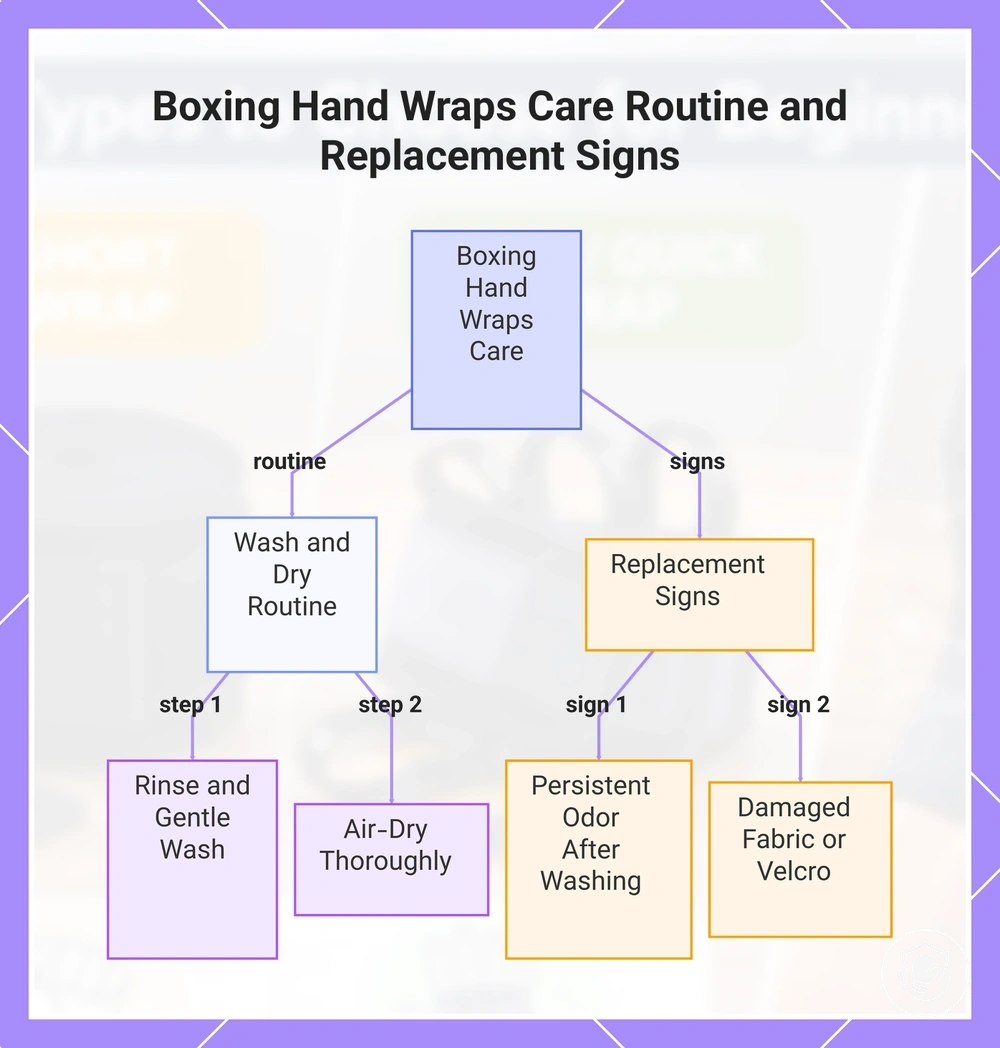
Boxing hand wraps need regular washing and thorough drying to control odor and keep them in good condition. Skipping this routine can allow sweat and bacteria to contribute to fabric deterioration, leading to reduced elasticity and faster wear over time. Use these steps to wash and dry most wraps properly and preserve fit and support.
Follow these steps after each session:
- Rinse the wraps under lukewarm water immediately after use to remove sweat and salts.
- Close the Velcro strap onto itself to prevent snagging, then place the wraps in a mesh laundry bag.
- Wash on a gentle cycle with cold water using a mild detergent; avoid bleach or fabric softeners.
- Air-dry the wraps flat or hanging in a well-ventilated area away from direct heat; avoid using a dryer.
- Ensure the wraps are fully dry before rolling or storing to prevent mildew growth.
If you use quick wraps or inner gloves, allow extra drying time since they tend to retain moisture. This routine helps maintain the elasticity and closure strength that protect your wrists and knuckles.
Even with regular washing, hand wraps eventually wear out. Look for these signs regularly:
- Persistent odor that remains after washing
- Stretched or frayed fabric that reduces support
- Velcro that no longer holds securely
- Loose threads or torn seams
- Loss of elasticity—wraps feel loose when wrapped
- Stiff or hardened sections that do not soften after washing
- Visible discoloration or spots that indicate deep-set grime
Inspecting your wraps after each wash helps you spot replacement signs early and replace them before they compromise performance.
This chart shows the essential steps for washing and drying hand wraps and the key signs that indicate when they need to be replaced.
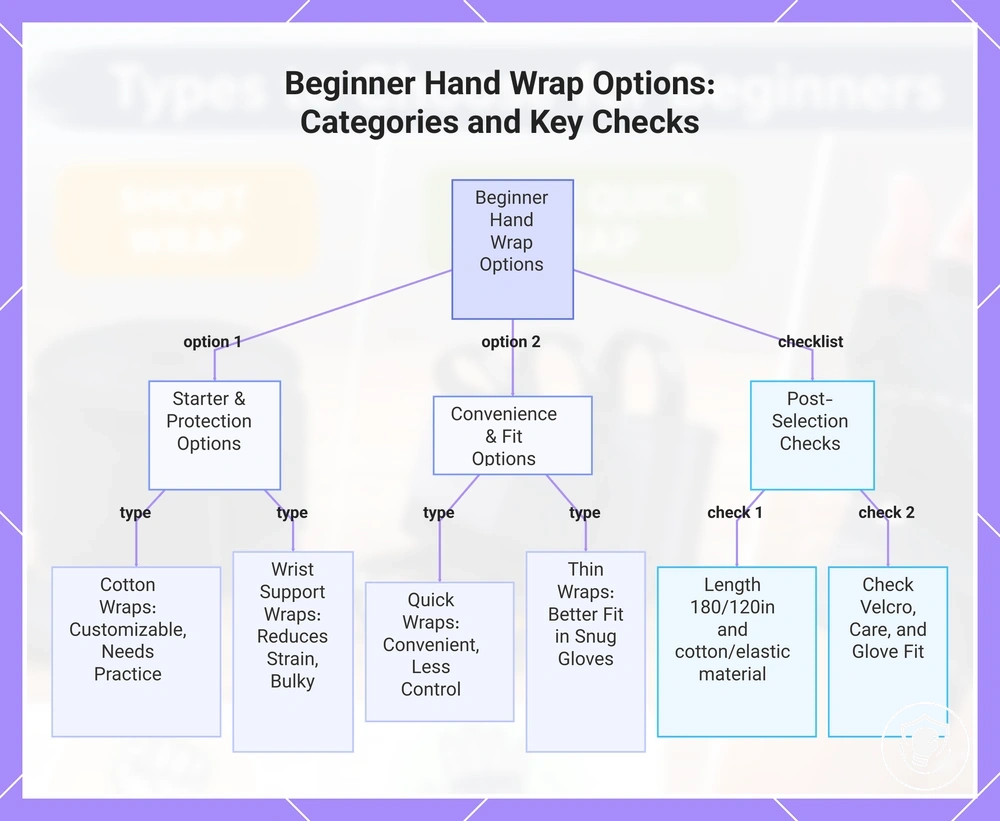
Beginner Hand Wrap Options to Price-Check
Translating a beginner's training goals into wrap categories worth price-checking simplifies selection. Each category addresses a specific need: a balanced starter for all-around training, extra wrist support for heavier impact, fast setup for convenience, and tight-glove compatibility for precise fit. The following groups map these needs to wrap categories with typical trade-offs.
- Balanced starter – traditional cotton wraps, typically 180-inch for most adults or 120-inch for smaller hands. Trade-off: requires practice to wrap correctly but offers customizable support and durability.
- Extra wrist support – wraps with integrated wrist padding or a semi-rigid splint, such as gel-type quick wraps. Trade-off: reduces wrist strain but may feel bulkier inside gloves.
- Fast setup – slip-on quick wraps made of elastic polyester, secured with velcro. Trade-off: convenient and easy to remove, but offers less control over tension and fit.
- Tight-glove friendly – thinner wraps or shorter lengths that minimize bulk. Trade-off: less overall padding, but a better fit when gloves are already snug.
Confirm these attributes when price-checking to ensure wraps match your gloves and training habits.
Confirm the correct length (180-inch for most adults, 120-inch for smaller hands). Choose between cotton and elastic based on preferences. Most wraps rely on velcro; ensure it is secure and durable. Cotton wraps are often machine washable; elastic quick wraps may require air drying. Re-evaluate glove size after choosing wraps, as wraps add volume; if gloves are snug, a thinner wrap may be necessary.
Here are product examples that may make comparison easier. Before buying, always review the compatibility criteria, essential features, and product details.
This chart shows the main wrap categories for beginners and the essential attributes to verify when price-checking.