
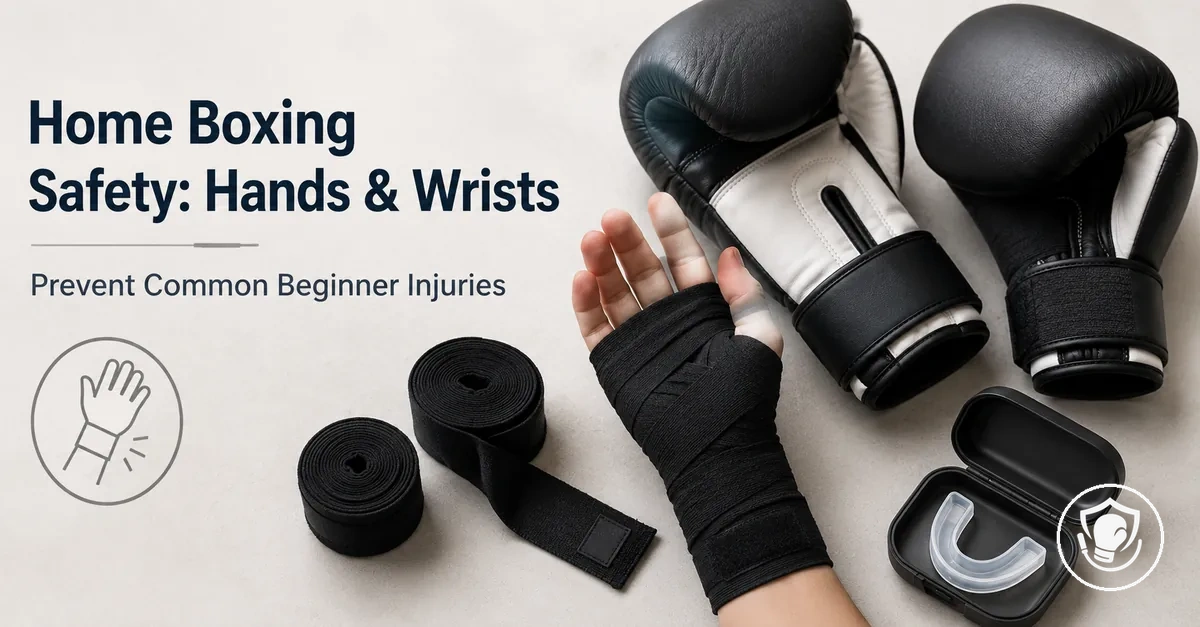
Home Boxing Equipment for Beginners Safety Basics for Hand and Wrist Injury Prevention
Beginner home boxing equipment safety for hand and wrist injury prevention starts with understanding how your protection layers work together as a system rather than as separate items. This section focuses on equipment fit and the protection stack, not on detailed technique coaching or medical advice.
The protection stack for home boxing consists of three layers:
- Hand wraps: provide wrist stability and knuckle padding when tension is correct.
- Glove wrist support: the glove's cuff and closure system add another layer of wrist support.
- Impact surface: the surface you strike—whether a heavy bag, focus pad, or wall-mounted target—has its own density and rebound characteristics that affect how force travels back through your hands and wrists.
A mismatch between any of these layers can create discomfort or injury risk, especially for beginners learning how their home setup interacts with their body.
Checking your current equipment fit and spotting early signs of protection-stack imbalances can help prevent pain. Recognizing how these mismatches lead to injury can help you make safer choices for your home boxing setup. beginner home boxing equipment hub
How Hand and Wrist Injuries Happen in Beginner Home Boxing Setups
A beginner home boxing setup commonly places stress on the hand and wrist when a mismatch between the equipment or impact surface and the user's conditioning combines with overload from volume or fatigue. When glove fit, wrap tension, or bag hardness does not suit the user, the hand absorbs force unevenly, leading to concentrated stress on the knuckles and wrist.
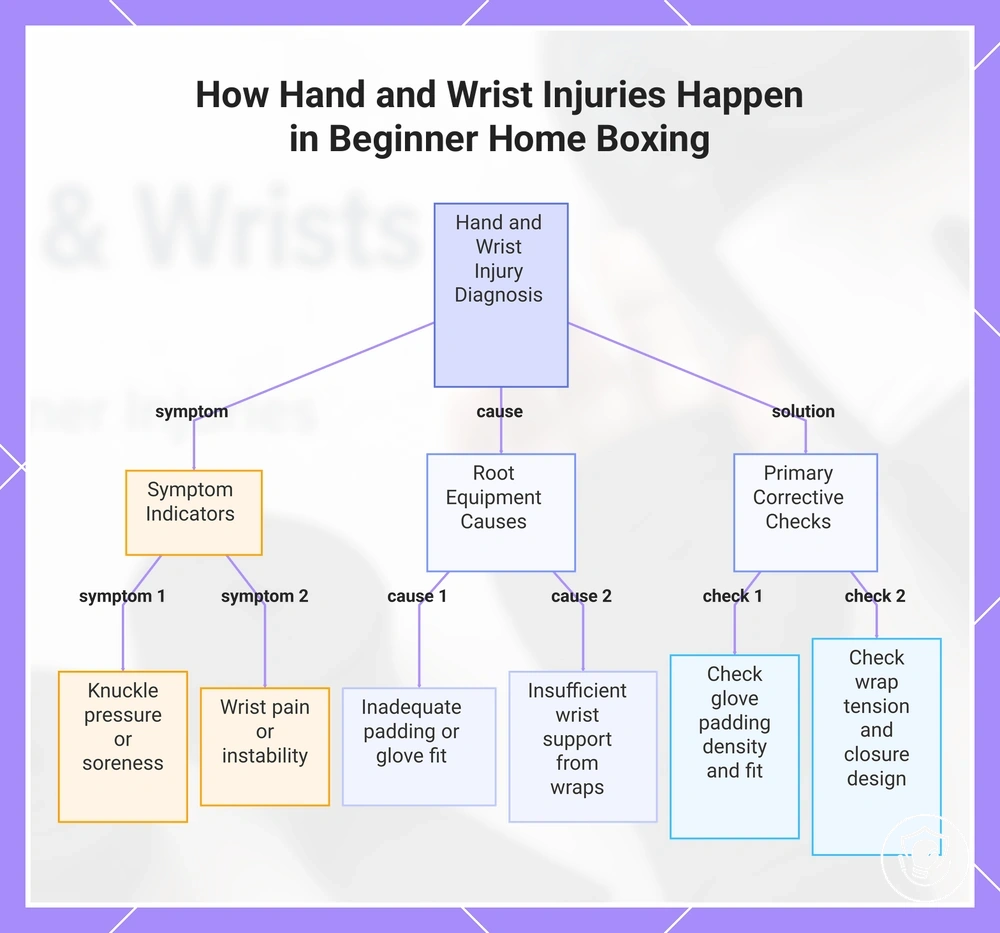
Knuckle pressure or soreness often indicates inadequate padding or a poor glove fit. Wrist pain or instability during or after a session may point to insufficient wrist support from wraps or a glove that allows too much flexion on impact. Addressing these equipment issues reduces the risk of persistent discomfort.
Take a typical home setup: a heavy bag that is too firm or mounted on a rigid stand, paired with bag gloves that offer minimal wrist closure. After a few rounds, the boxer may feel sharp pressure across the knuckles and a sense that the wrist buckles on each punch. The first thing to check is not technique but whether the glove provides enough padding and the wraps stabilize the wrist against the bag's rebound.
- Impact concentration on knuckles → check glove padding density and fit → likely effect: reduced knuckle soreness
- Wrist alignment loss on impact → check wrap tension and wrist closure design → likely effect: improved wrist stability
- Fatigue-driven form breakdown → check bag surface hardness and training volume → likely effect: less overload on joints
- Surface mismatch (bag too hard or too light) → check bag fill and mounting flexibility → likely effect: more forgiving rebound
- Glove misfit (too loose or too tight) → check glove size and closure system → likely effect: even force distribution
The focus here is on equipment-driven risk; technique can contribute, but the purpose is to reduce the setup-related factors that make injuries more likely.
This chart shows common symptoms, their likely equipment-related causes, and the primary checks to reduce injury risk in home boxing setups.
Equipment-related causes vs technique-related causes of hand and wrist pain
Hand or wrist discomfort during training typically stems from equipment mismatch or technique factors. Recognizing which category fits helps prevent overcorrecting the wrong cause.
| Symptom | More likely equipment-driven | More likely technique-influenced |
|---|---|---|
| Knuckle hotspot | More likely equipment-driven: tight glove fit or compressed padding. Quick check: verify glove size and padding condition; adjust if needed. | More likely technique-influenced: excessively tight grip or misaligned fist. Quick check: observe grip tension and wrist alignment; adjust glove fit or wrist support if needed. |
| Wrist wobble | More likely equipment-driven: inadequate wrist support or loose glove. Quick check: check wrist strap tension and glove closure; adjust strap tension or glove fit if needed. | More likely technique-influenced: wrist not kept straight during impact. Quick check: review wrist position while punching; adjust glove fit or wrist support as needed. |
| Numbness or tingling | More likely equipment-driven: glove or wrap compresses the wrist area, especially if fit feels tight across the palm. Quick check: adjust wrap tightness or glove fit as needed. | More likely technique-influenced: prolonged wrist flexion or extension during repetitive movements. Quick check: monitor wrist angle during activity; adjust glove fit or wrist support if needed. |
| Glove slippage | More likely equipment-driven: incorrect glove size or worn closure system. Quick check: confirm glove size and closure integrity; adjust size or replace closure if needed. | More likely technique-influenced: hand not fully inserted or inconsistent grip. Quick check: ensure hand is seated fully and grip is stable; adjust glove fit or hand insertion as needed. |
| Persistent ache in the palm | More likely equipment-driven: insufficient or worn padding, especially if impact is concentrated. Quick check: inspect padding and consider replacement; adjust padding or replace gloves as needed. | More likely technique-influenced: hand not properly aligned during impact or excessive force. Quick check: review punching form and force distribution; adjust glove fit or wrist support if needed. |
Early warning signs that your hand or wrist protection is mismatched
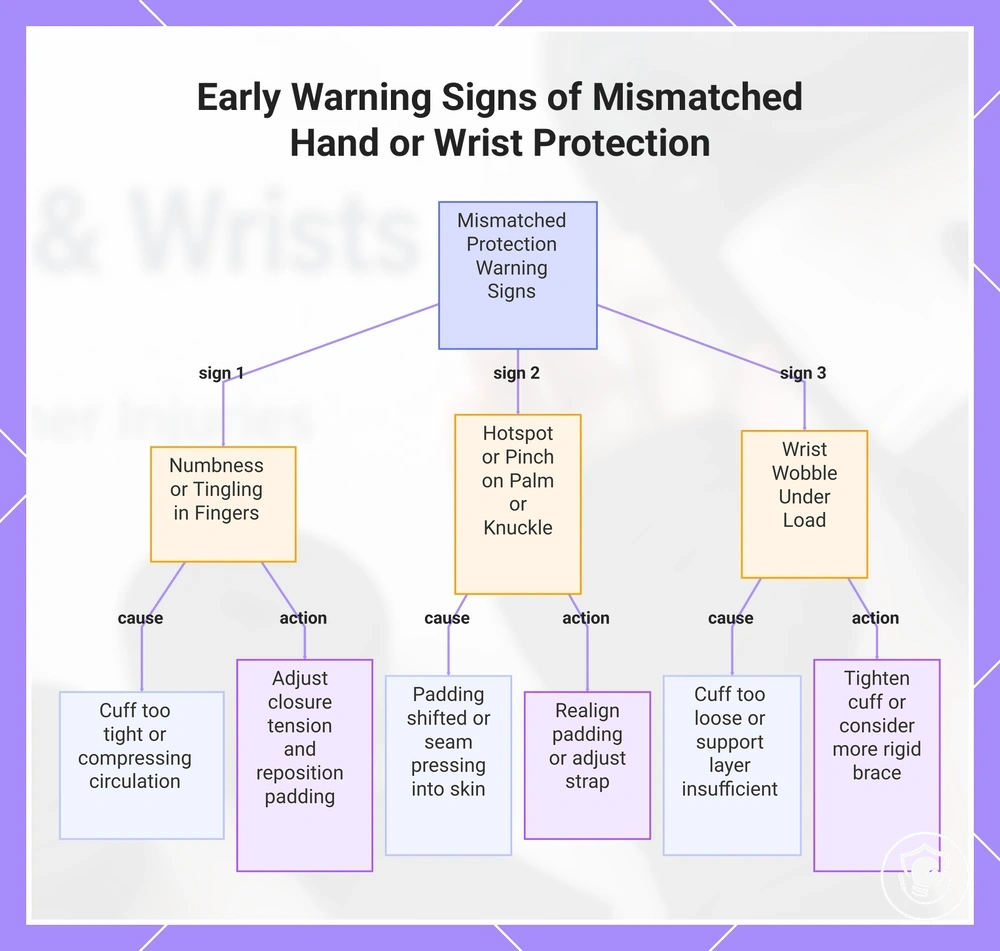
Early warning signs of mismatched hand or wrist protection include numbness or tingling in the fingers, a noticeable pressure point on the palm or knuckle, or wrist wobble during movement.
These cues point to misaligned fit, tension, or support layers. If you notice any, re-check your stack early by adjusting closure tension, repositioning padding, or swapping components before restricted circulation or instability develops. Persistent or worsening pain despite these adjustments belongs in wrist pain troubleshooting rather than being solved by tightening everything.
- Numbness/tingling in the fingers that appears after tightening the closure → likely indicates the cuff is too tight or the wrist opening is compressing circulation → first check closure tension and reposition the padding.
- Hotspot or pinch on the palm or knuckle → often means padding has shifted or a seam is pressing into the skin → first re-align the padding or adjust the strap.
- Slippage during movement → usually points to a closure that is not secure or an oversized glove → first re-tighten the strap or try a smaller size.
- Wrist wobble under load → suggests the cuff is too loose or the support layer is insufficient → first tighten the cuff or consider a more rigid brace.
- Swelling after removal → can occur when a pressure band is too tight or worn too long → first loosen the tension and allow circulation breaks during use.
- Fingers turning pale or cold → a circulation cue that the fit is too tight in the wrist region → first loosen or remove the protection temporarily.
- Pain at a specific pressure point during use → may indicate missing padding in that area → first check for inadequate cushioning or a misaligned seam.
This chart shows three common early warning signs of mismatched hand or wrist protection, along with their likely causes and recommended first actions.
The Hand-and-Wrist Protection System: Wraps, Gloves, and Impact Surface
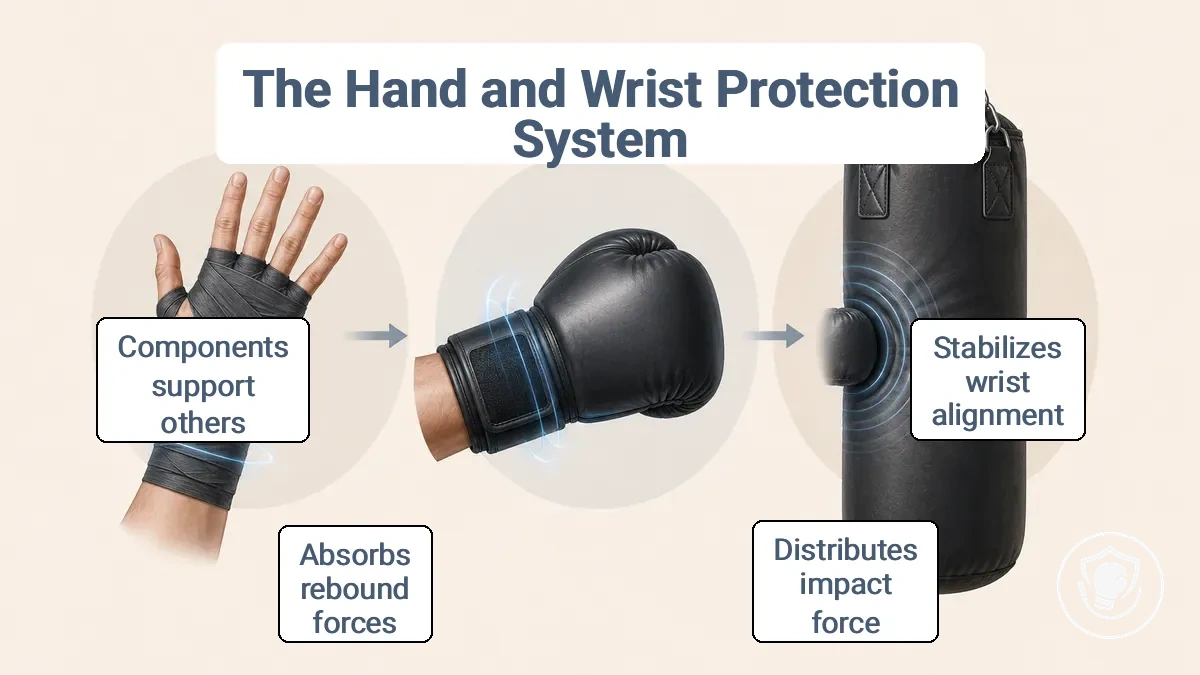
A hand-and-wrist protection system is a coordinated stack that helps stabilize the wrist and spread impact across the hand through three interacting layers: hand wraps, training gloves, and the impact surface (heavy bag or pad). Each layer manages a distinct aspect of force distribution and alignment.
When any layer is weak or mismatched, the protective function can break down. The layers work in sequence: wraps stabilize the wrist, gloves distribute force, and the surface absorbs energy.
The system works best when each component supports the others. Training without one layer may shift stress elsewhere.
The diagram shows how each layer reduces a different risk: wraps control wrist tension, gloves distribute impact across the glove surface, and the impact surface density affects rebound forces.
- Wraps
- Job: Tends to stabilize the wrist and metacarpal alignment through tension across the palm and wrist. Proper wrap tension helps reduce unwanted joint movement during impact.
- Misuse consequence: Wrapping too loosely can allow wrist flexion on impact, redirecting force into the ligaments. Wrapping too tightly may restrict circulation and reduce hand awareness.
- Gloves
- Job: Tends to distribute impact force over a larger area through layered padding and tends to support the wrist via the cuff and closure system. A well-fitted glove tends to support neutral alignment.
- Misuse consequence: Oversized gloves can create internal dead space that allows the hand to shift inside, leading to poor fist alignment. A glove with inadequate closure may not maintain cuff stability during repeated strikes.
- Impact surface
- Job: Tends to provide a consistent density and rebound that allows the glove's padding to decelerate the strike progressively. A surface with moderate give can reduce peak forces transmitted to the hand.
- Misuse consequence: A surface that is too hard or too worn can increase rebound forces, forcing the hand and wrist to absorb more shock than the padding can manage.
More padding in a glove does not automatically mean more stability; alignment and fit often matter more for consistent protection. A safe setup supports alignment and comfort under realistic session volume, meaning the system works when every component is suited to the athlete's hand shape, training intensity, and surface type.
What Changes When One Protection Layer Is Missing or Poorly Fitted
A missing or poorly fitted protection layer increases peak pressure on the wrist and reduces stability. Compensation behaviors, like gripping tighter or overtightening a loose layer, create new stress points instead of restoring protection.
- A missing/loose hand wrap layer can reduce wrist alignment and increase wobble during impact → check wrap length and tension.
- A loose glove layer can increase slippage and shift pressure to a single point → check closure system and palm fit.
- A missing/loose padding layer on the target surface can increase rebound force on the knuckles → check bag or pad condition.
- A missing/loose layer in the protective stack can shift load to adjacent joints → check for discomfort in shoulders or elbows.
Wrap-based wrist support for beginners: stability goals and safe tension
Safe wrap tension and coverage improve wrist alignment and knuckle comfort without restricting circulation or preventing full fist closure. The image shows the ideal wrap coverage for stable wrist support and safe circulation.
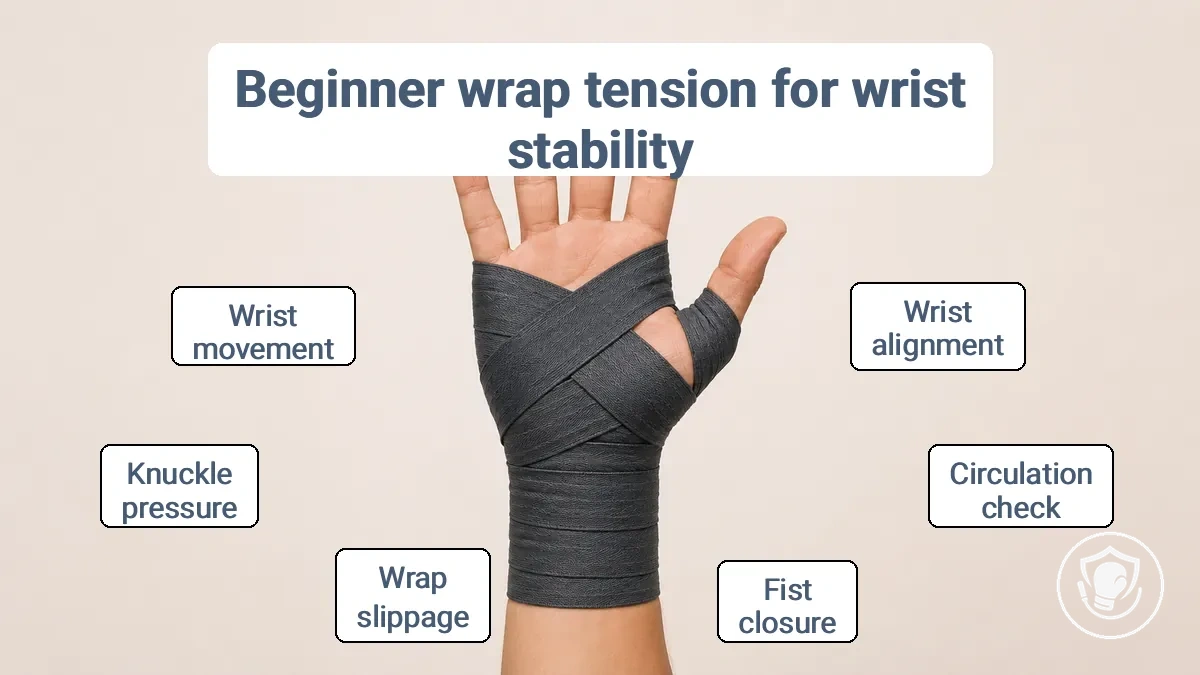
Too tight a wrap can pinch the skin, cause tingling or numbness, and restrict circulation—signals that the wrap needs loosening. Too loose a wrap may allow the wrist to wobble or the wrap to slip, reducing the support you need. Both extremes compromise stability and comfort. To confirm safe tension and stability, run through these checks during training. For comfort-first training, a slightly looser wrap may feel better; for stability-first sessions, a firmer fit is often preferred. For specific wrapping techniques, see our guide on how to wrap hands correctly.
- Wrist alignment when making a fist – pass: wrist stays in line with forearm; fail: wrist bends backward or forward – adjust tension to bring wrist to neutral.
- Circulation – pass: no numbness, tingling, or discoloration in fingers; fail: any of these signs appear – loosen the wrap slightly and recheck.
- Fist closure – pass: you can fully close your hand without extra pressure; fail: fingers cannot curl completely – reduce wrap tension over the palm area.
- Wrap slippage – pass: wrap stays in place through a few practice punches; fail: wrap shifts or loosens – tighten the wrap or reposition starting anchor.
- Knuckle pressure – pass: even pressure across knuckles, no pinch points; fail: sharp pressure or folding of wrap material – rewrap with smoother passes over the hand.
- Wrist movement – pass: wrist can flex and extend slightly but not hyperextend; fail: wrist feels locked or wobbly – adjust tension toward the tighter side for stability or looser for mobility.
Boxing hand wraps for wrist support: what to look for in support and comfort
Material stretch, wrap length, and breathability are the main selection filters for wrist support and comfort — the hand wraps selection for beginners guide covers these filters. The key trade-off is between stretchy wraps (snug comfort) and non-elastic wraps (firmer stability with a learning curve).
- Elastic wraps conform closely to hand shape for a snug fit and comfort, but they may offer less rigid wrist support.
- Non-elastic wraps deliver stable support and consistent compression for joint stability, but they are less forgiving during initial wrapping.
- Longer wraps allow more layers, increasing support and padding, but they add bulk that may affect hand mobility.
- Shorter wraps reduce bulk and feel less restrictive, but they may not provide enough coverage for adequate wrist support, especially for larger hands.
- Wider wraps distribute pressure more evenly across the hand, improving comfort during repeated impacts, while narrower wraps may dig in or shift more during use.
- Open-weave cotton reduces sweat buildup for comfort, but it may stretch faster over time.
When choosing, keep in mind that consistent snugness (even pressure throughout a workout) and full hand function (making a fist without restriction) matter more than pulling the wrap as tight as possible.
When a boxing wrist support brace makes sense instead of wraps
User constraints such as limited setup time, prior wrist discomfort, or difficulty achieving consistent tightness can make a wrist support brace a practical alternative when wraps are impractical. It provides a quick, consistent support level without the technique required for traditional hand wraps.
Braces provide a reliable stability aid, but they also limit range of motion and can create pressure points that affect glove compatibility. Over‑reliance on a brace may reduce the protective layering that wraps offer, so wraps still matter for complete hand protection. Loosen the brace or reassess its fit immediately if numbness, pinching, or restricted motion appears.
A wrist brace can be useful when the following conditions apply to your training:
- User constraint: limited setup time before training. Brace fit should allow the support sleeve to slide on and secure within seconds. Stop/adjust cue: if the brace shifts during movement, adjust the strap or try a different size.
- User constraint: recurring wrist discomfort during bag work. Brace fit should limit wrist extension without blocking natural punching motion. Stop/adjust cue: if discomfort persists even with the brace, seek guidance from a qualified professional.
- User constraint: difficulty achieving consistent tightness with wraps. Brace fit should hold a consistent support level throughout the session. Stop/adjust cue: if you have to tighten it repeatedly, the size or model may not be right.
- User constraint: hand mobility issues that make traditional wrapping hard. Brace fit should allow easy independent application without requiring extra assistance. Stop/adjust cue: if the brace digs into skin or bunches up, adjust the padding or remove it.
- User constraint: need for a support level that is easy to replicate daily. Brace fit should feel identical each time you wear it. Stop/adjust cue: if you consistently need more or less tension, the fit is likely off.
Boxing Glove Wrist Support Features That Matter for Beginners
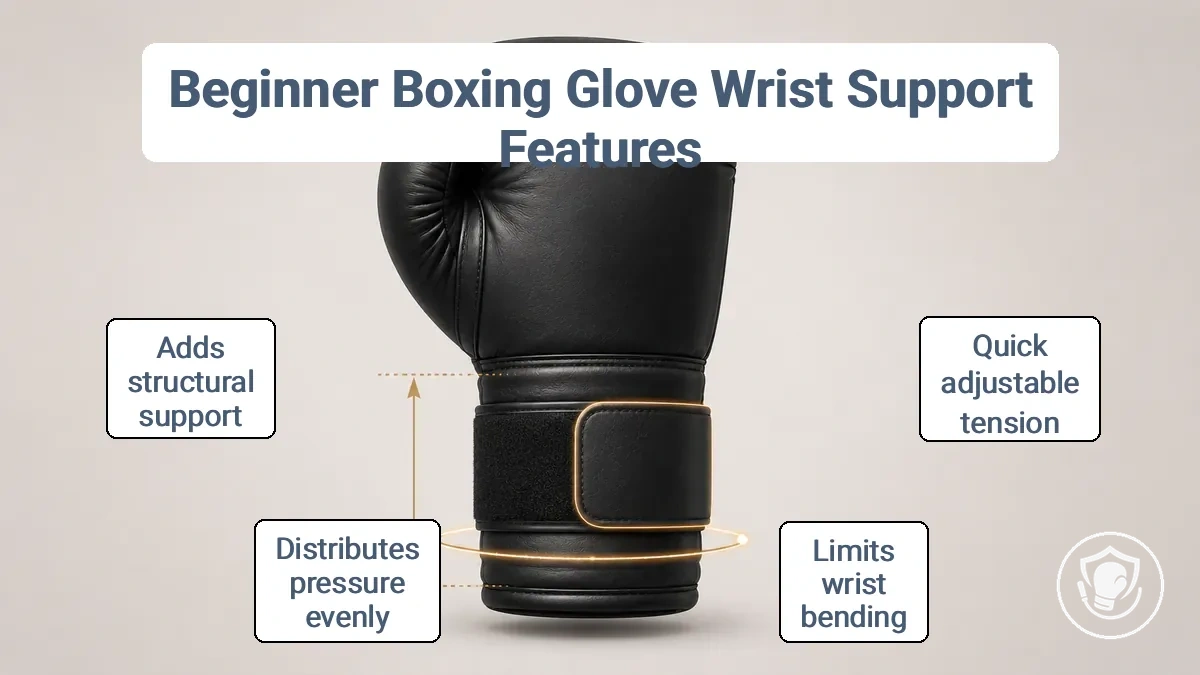
The glove features that most affect wrist stability in beginners are closure type, cuff height and rigidity, and strap width. A hook-and-loop strap enables quick adjustment and consistent tension, while a more rigid cuff helps maintain wrist alignment during impact. A wider strap can distribute pressure across the wrist, reducing slippage and improving stability.
These features do not act in isolation; their effectiveness depends on how the glove fits around the hand and how hand wraps occupy internal space. For example, a stiff cuff can improve support measurements but can feel restrictive if wraps add bulk. For a broader view of hand protection, see glove protection basics.
The following table compares key glove features for wrist stability, along with their beginner benefits and common trade-offs.
| Feature | What it does for wrist stability | Beginner upside | Common trade-off |
|---|---|---|---|
| Hook-and-loop closure | Allows adjustable tension around the wrist | Easy to tighten independently; quick to remove | Can loosen over time; can be less secure than lace-up systems |
| Cuff height and rigidity | Limits unwanted wrist bending during punches | Provides a stable platform for learning proper alignment | A taller cuff may restrict mobility if not matched to arm length |
| Strap width at wrist lock | Distributes pressure across a larger wrist area | Reduces concentrated pressure points | Bulkier strap can increase internal heat and feel less breathable |
| Wrist reinforcement panel | Adds structural support to the outer wrist area | Helps maintain alignment even with less-than-perfect form | Adds stiffness that may feel uncomfortable until broken in |
The labeled diagram shows the strap, cuff height, and wrist line on a typical training glove, indicating which parts contribute to wrist stability.
Closure stability, cuff structure, and fit interactions with wraps
The closure system and cuff design control wrist wobble and glove slippage under impact. Wrap bulk interacts with glove space in ways that can create pressure points or looseness. Common fit interactions to check:
- Wrap bulk + glove space interaction can lead to finger numbness after tightening; check if interior volume is too small for the wrap thickness.
- Strap tension interaction with slippage can cause the glove to rotate during impact; check strap alignment and re-tension if wrist movement is felt.
- Cuff height + alignment interaction may create a pressure point at the forearm or a gap at the wrist; check cuff position relative to the wrist crease and adjust wrap layering.
- Wrap bulk + pressure point interaction can lead to localized soreness after repeated strikes; check for concentrated wrap buildup over the back of the hand.
Knuckle Pain Prevention with Add-On Hand Protection Inside Gloves
Add-on protection can reduce localized knuckle pressure, but it may also change glove fit and wrist alignment. The extra bulk inside the glove can shift hand position, alter alignment, and create new discomfort if it does not match the glove’s internal volume.
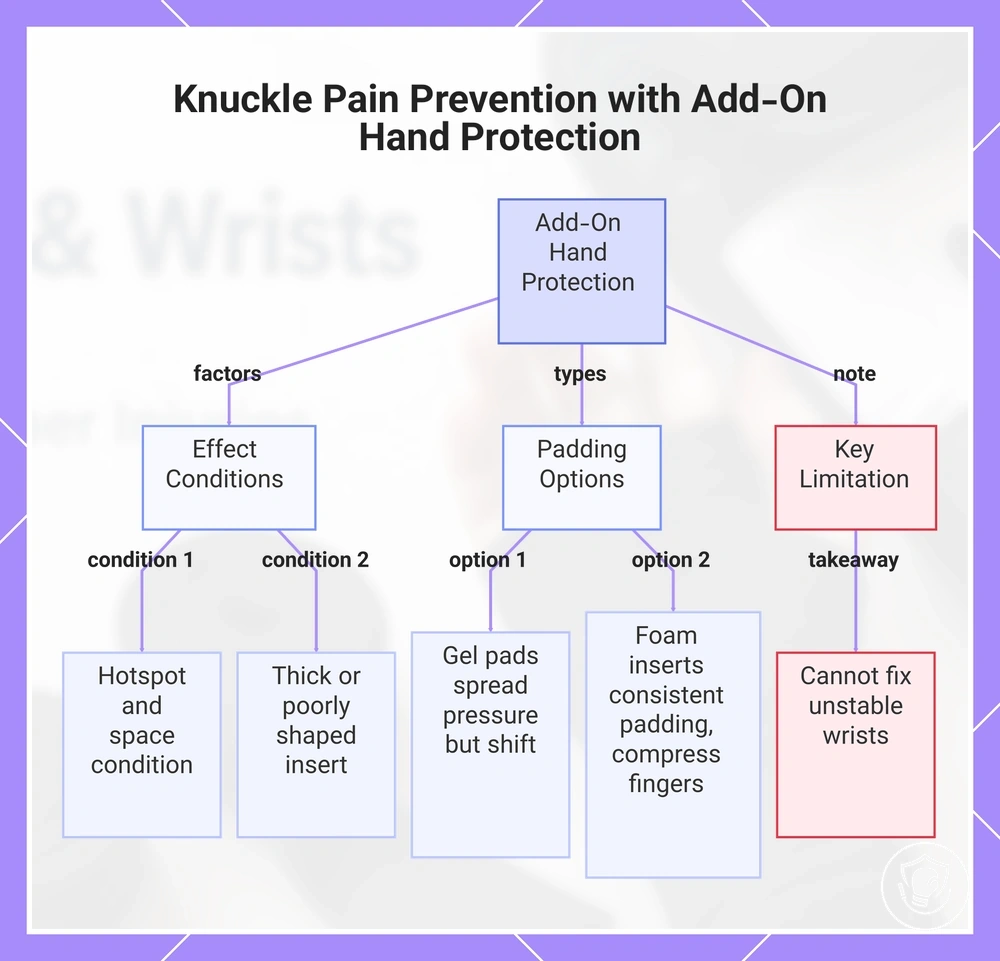
Add-on padding may help if the knuckle pain comes from a concentrated hotspot and the glove interior has enough space to accommodate the extra material without compressing the fingers or wrist. It may worsen fit and alignment if the insert is too thick or poorly shaped, causing the hand to sit improperly inside the glove. If soreness persists after adjusting padding, it likely signals a need to reassess the bag or mitts' surface density and total session volume, rather than adding more layers.
When selecting add-on padding, consider how each option influences pressure distribution, glove fit, and wrist alignment:
- Thinner gel pads can help spread pressure more evenly and add minimal bulk, but may shift during impact and create new hotspots if not anchored securely.
- Foam inserts can provide consistent padding over the knuckles, though extra thickness can compress the fingers inward and reduce glove space for proper fist formation.
- Rigid guards can protect the knuckle ridge, but their stiffness may limit finger flexion and pull the wrist out of neutral alignment if the glove lacks depth.
- Layered fabric wraps over the knuckles allow customized fit, yet too many wraps can increase overall bulk and make the glove feel tighter, affecting blood flow and comfort.
- Pre-shaped silicone pads often conform to the hand and stay in place, but their fixed curvature may not match every glove shape, leading to pressure points on the sides of the fingers.
Add-ons help diffuse hotspots but cannot fix unstable wrists.
This chart shows how add-on hand protection conditions affect knuckle pain, compares two padding options, and notes a key limitation.
Gel knuckle guards boxing: when they help and when they create fit problems
Gel knuckle guards can reduce knuckle hotspots on heavy bags when the hotspot is localized and glove space is sufficient, but they can also create fit problems when their thickness and coverage crowd the glove space. If a gel guard shifts or adds too much bulk, it may alter wrist alignment and reduce comfort. Reassess fit if the guard feels tight or causes new pressure points after wrapping.
- Pro: Added cushioning can reduce impact on knuckle hotspots, allowing longer training sessions without skin tears or bruising.
- Pro: Gel material can conform to the hand shape, providing targeted relief when positioned correctly over the knuckles.
- Pro: Extra padding may fill loose glove space, improving overall fit and reducing hand movement inside the glove.
- Con: Increased thickness can crowd the glove interior, creating pressure points that make the fist feel cramped.
- Con: Bulk from the guard can push the hand forward, altering fist alignment and potentially straining the wrist or reducing punch accuracy.
- Con: If the guard shifts during punching, it may cause uneven support and increase the risk of hand irritation or misalignment.
Gel guard thickness and coverage affect fit condition and comfort outcome, so when glove space is limited, thinner guards or none at all may be preferable to avoid alignment side effects.
Boxing Hand Protection Inserts: Pressure Distribution and Glove Fit Trade-Offs
Boxing hand protection inserts alter the internal geometry of a glove and can shift pressure beyond the knuckle area, often through padding placed over the knuckles or along the back of the hand. By redirecting impact force across a broader surface, inserts may reduce hotspot pressure on individual knuckles when the internal fit still allows full fist closure.
However, most insert designs carry a trade-off between pressure distribution and dexterity. A thick or misplaced insert crowds the internal fit, creating pressure points elsewhere and restricting fist closure. Poor fit often feels like the glove is tight in one spot and loose in another, or like you cannot form a full fist.
Use these checks to evaluate how insert geometry complements glove fit without sacrificing function:
- Check knuckle alignment: pass when the insert sits centered over the main knuckles; fail when it shifts off-center or bunches.
- Check fist closure: pass when you can close your fist fully without resistance; fail when the insert prevents full closure.
- Check pressure points: pass when no single spot feels overly tight; fail when you feel a hard ridge or edge.
- Check finger curl: pass when your fingers curl naturally inside the glove; fail when the insert forces your fingers to stay straight.
- Check overall volume: pass when the hand fills the glove evenly without excessive squeezing; fail when the insert leaves empty gaps or causes localized pinching.
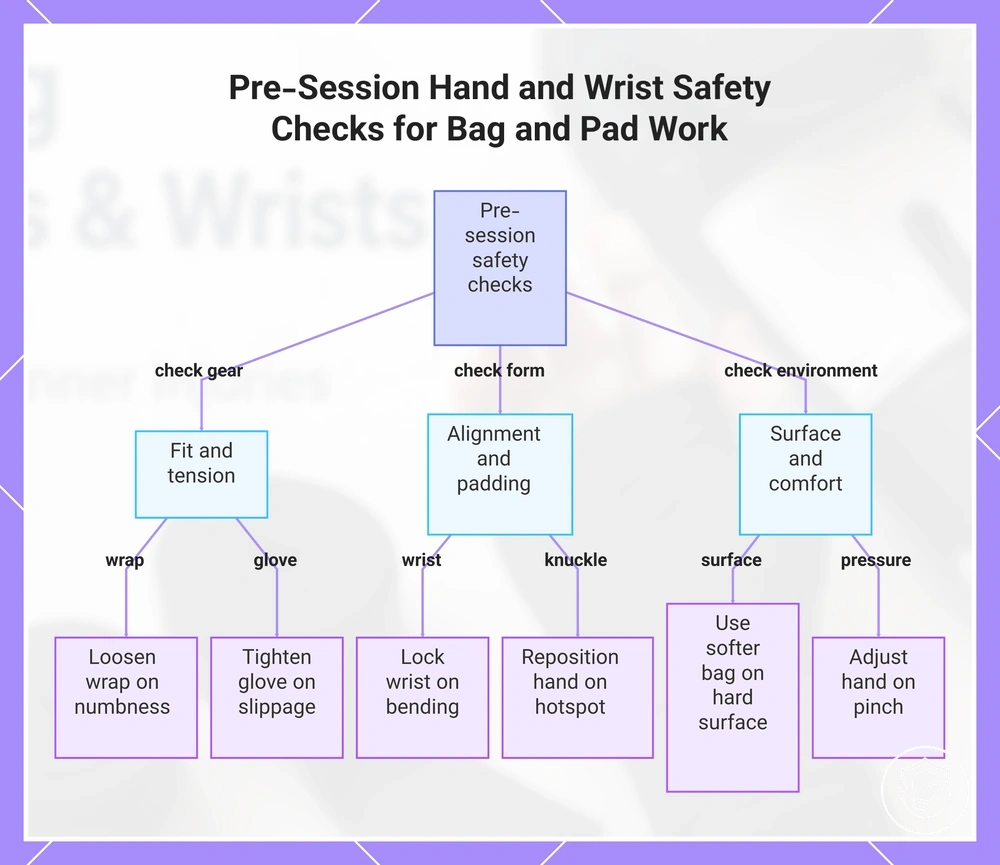
Beginner safety checks before bag or pad work to protect hands and wrists
Pre-session checks are a quick way to prevent avoidable hand and wrist strain before bag or pad work. A quick scan of your gear can reveal common issues such as inadequate wrap tension or a loose glove closure. Addressing them before you start reduces avoidable strain risk and improves comfort.
Even with quality wraps and gloves, small fit or surface problems can cause discomfort. These steps check key points and offer quick adjustments if needed.
- Wrap tension: Verify that wraps are snug but not cutting circulation. If you notice numbness or tingling, loosen and re-wrap.
- Glove closure: Check that the Velcro or strap holds the glove securely. If you notice slippage during movement, tighten the closure or adjust the strap position for better stability.
- Wrist alignment: Ensure the glove's wrist support keeps your wrist in a neutral line. If you notice your wrist bending on impact, adjust the closure to lock the wrist.
- Knuckle padding: Confirm that the padding covers your knuckles fully. If you notice a hotspot or direct pressure on a knuckle, reposition your hand inside the glove.
- Impact surface: Assess the bag or pad surface density. If the surface feels too hard or uneven, consider using a different bag or adding an extra layer of padding (like hand wraps).
- Pressure points: Scan for any points of discomfort on the back of your hand or thumb. If you notice pinching or rubbing, adjust your hand position or consider different gloves for better comfort.
Repeat these checks whenever you switch to new wraps, train on a different surface, or prepare for a longer session.
Here are product examples that may make comparison easier. Before buying, always review the compatibility criteria, essential features, and product details.
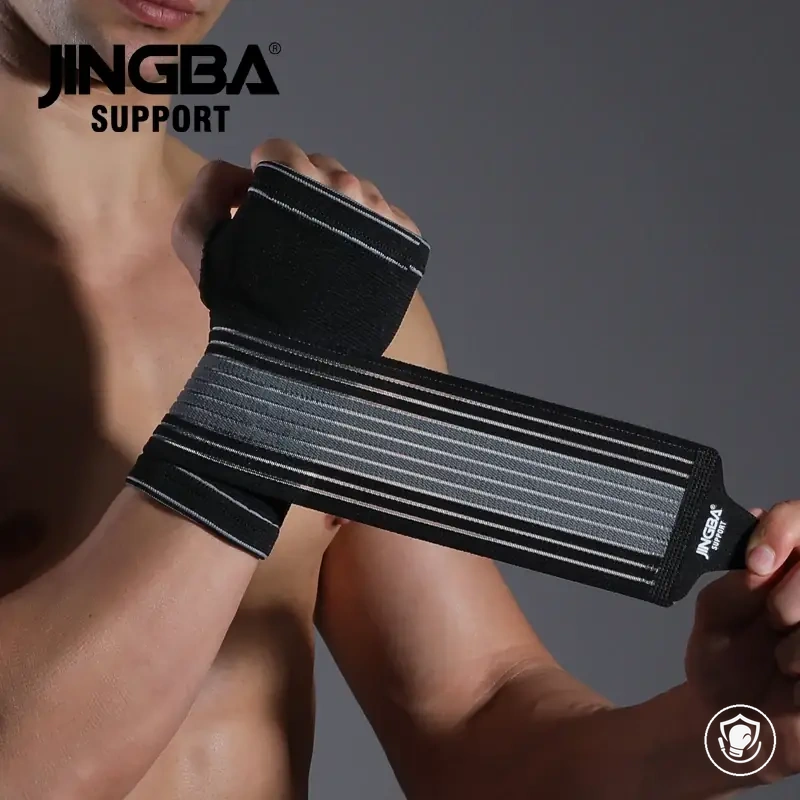
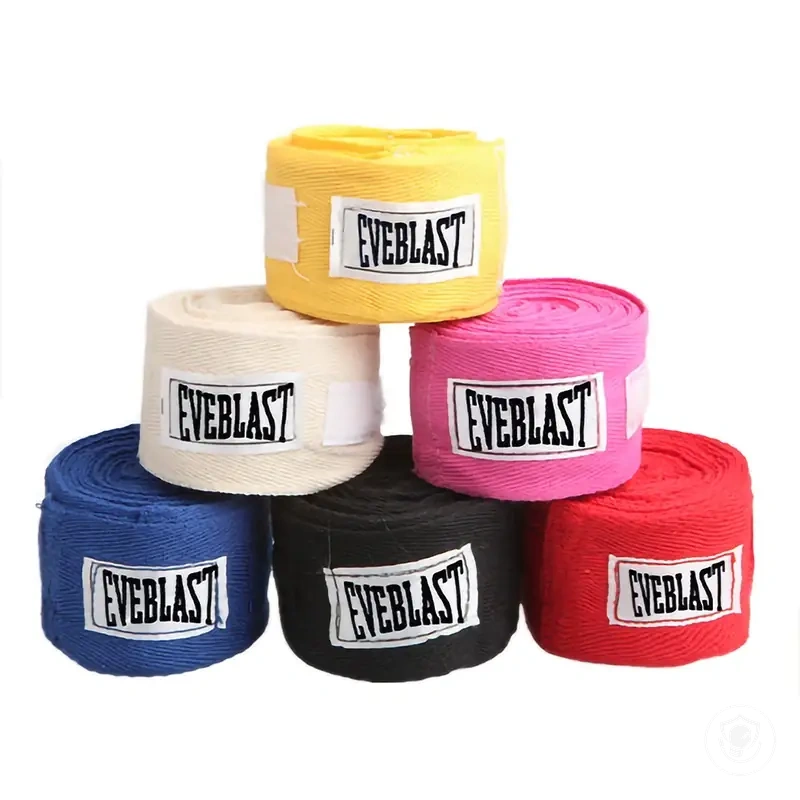
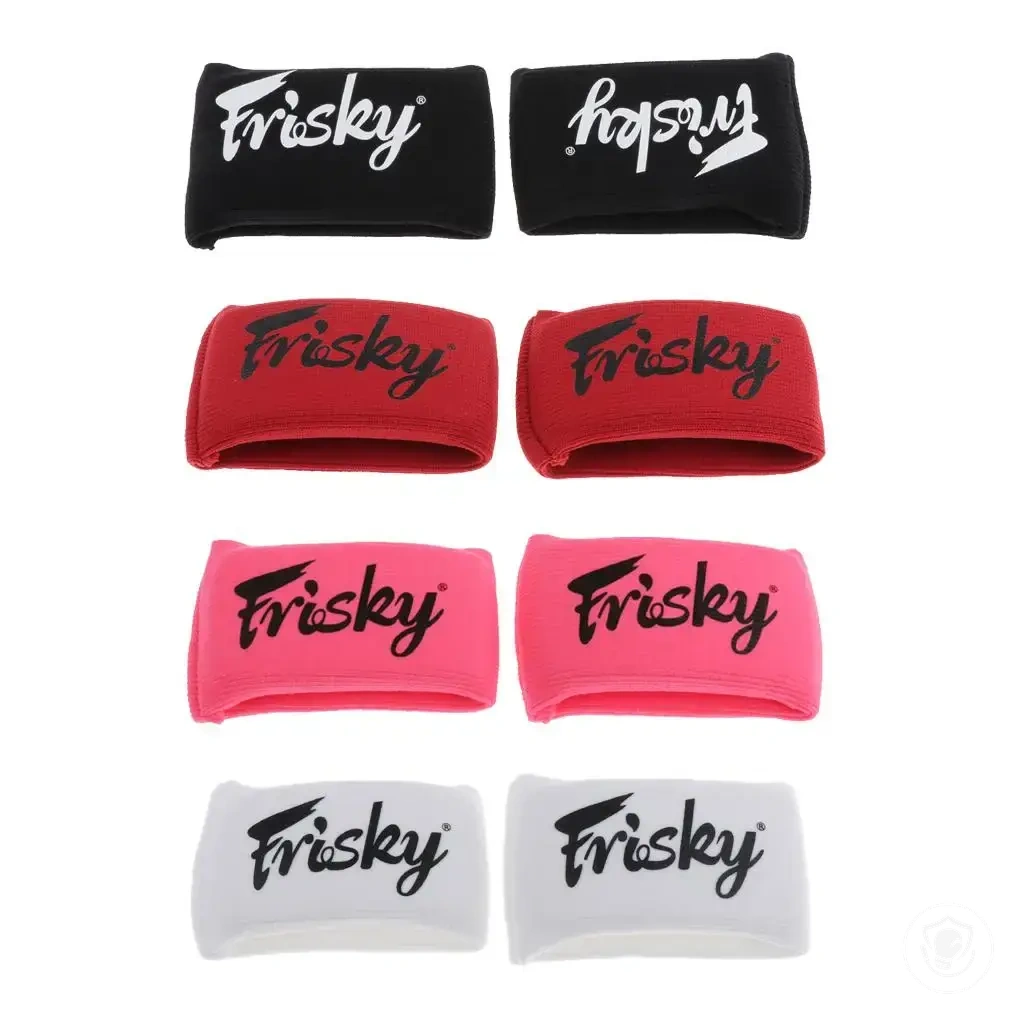
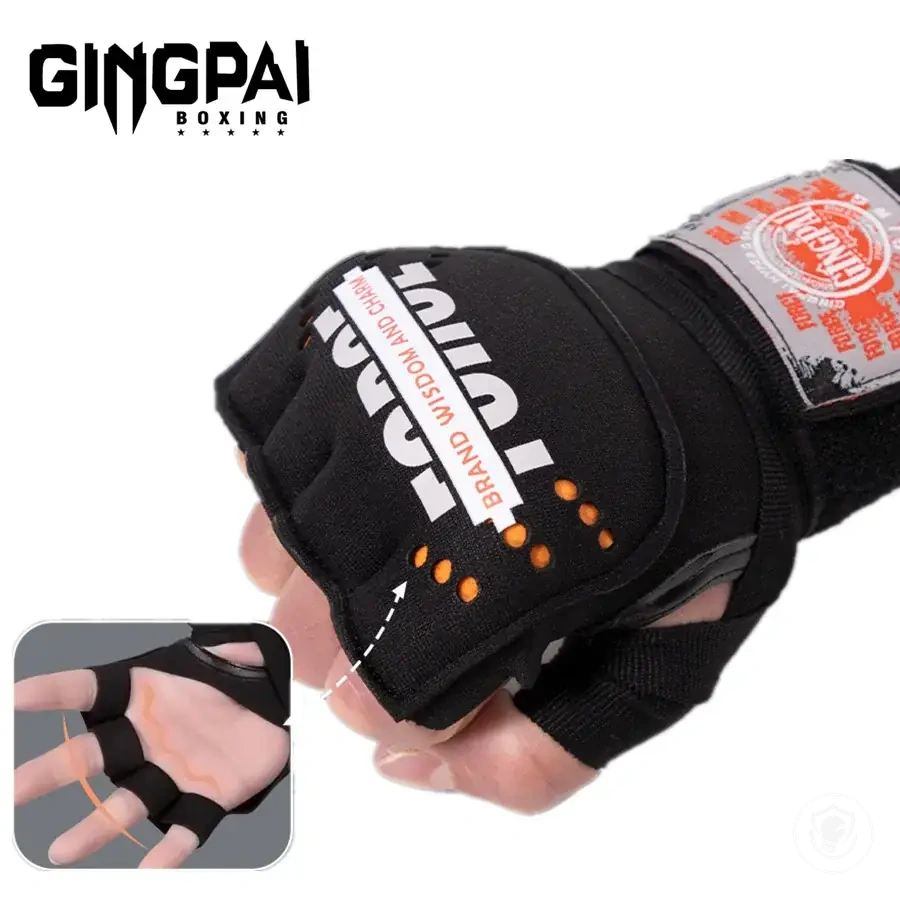
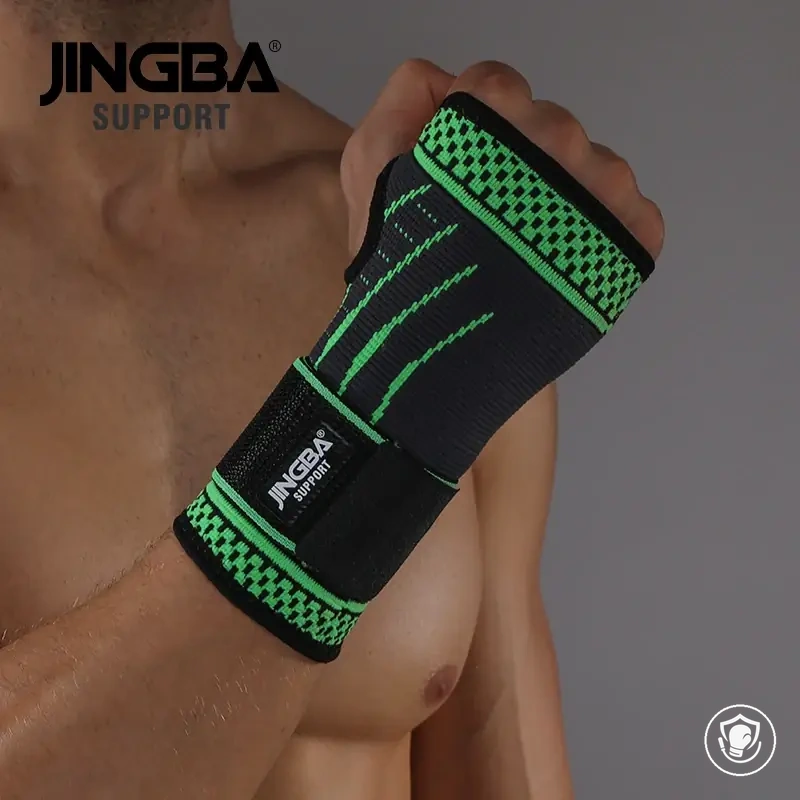
This chart shows the key pre-session checks and quick adjustments to protect hands and wrists during bag or pad training.
Surface and Target Choices That Increase Knuckle and Wrist Stress
Surface density, rebound, and target size influence how force is transmitted back to the knuckles and wrist. A denser surface deforms less, sending a larger portion of impact energy back into the hand, while a target with high rebound can produce a rapid return of force. Small target sizes concentrate that force into a narrower area, raising stress concentration on the knuckles.
For instance, striking a concrete wall or a metal pole creates a concentrated impact zone. This can increase stress concentration in the knuckles and wrist. The first step to reduce risk is to choose a softer striking surface or adjust the distance to allow more impact absorption.
The following surface and target patterns can increase knuckle and wrist stress:
- High-density surfaces with minimal give, such as a tightly packed heavy bag: the minimal deformation can concentrate stress on the knuckles. Switching to a bag with softer filling or using lower force can help.
- Very hard targets like a wooden beam or metal frame: little deformation can lead to a sharp wrist jolt. Avoid such surfaces or add padding to reduce stiffness.
- Small, rigid targets such as a tightly held focus mitt: the strike must be precise, concentrating force on a small knuckle hotspot. Using a larger target or relaxing the partner's hold can spread the impact.
- High-rebound surfaces like stiff wall pads: rapid force return can overload the wrist joint. Opt for a surface with lower rebound or slower energy return.
- Uneven or rigid surfaces like a concrete floor: unpredictable force distribution can cause soreness across the hand. Train on a padded mat or suspended bag to allow some absorption.
Session-volume ramp rules that reduce small-joint overload
Gradual increases in session volume can help protect small joints even when equipment fits correctly. The hands and wrists are particularly sensitive to rapid training changes because their small joints and connective tissues need time to adapt to higher loads or more repetitions.
Adjust one volume variable at a time while monitoring recovery and soreness signals.
- When increasing rounds per exercise, keep frequency and intensity unchanged. Increase rounds gradually in small increments only if comfort stays stable across sessions, allowing recovery and reducing overload in the small joints.
- When increasing weekly frequency, reduce per-session rounds to avoid cumulative stress. Reassess soreness before each session. If soreness is present, delay progression and allow extra recovery.
- When increasing intensity, maintain round count and frequency. Increase loads gradually when current loads feel manageable and joints feel rested; ignoring recovery often leads to pain signals, requiring a reduction.
- When combining changes — for example, more rounds and higher frequency — allow sufficient recovery between them. If pain increases, reduce the volume and reassess.
Protection-first starter priorities for a safer beginner home boxing kit
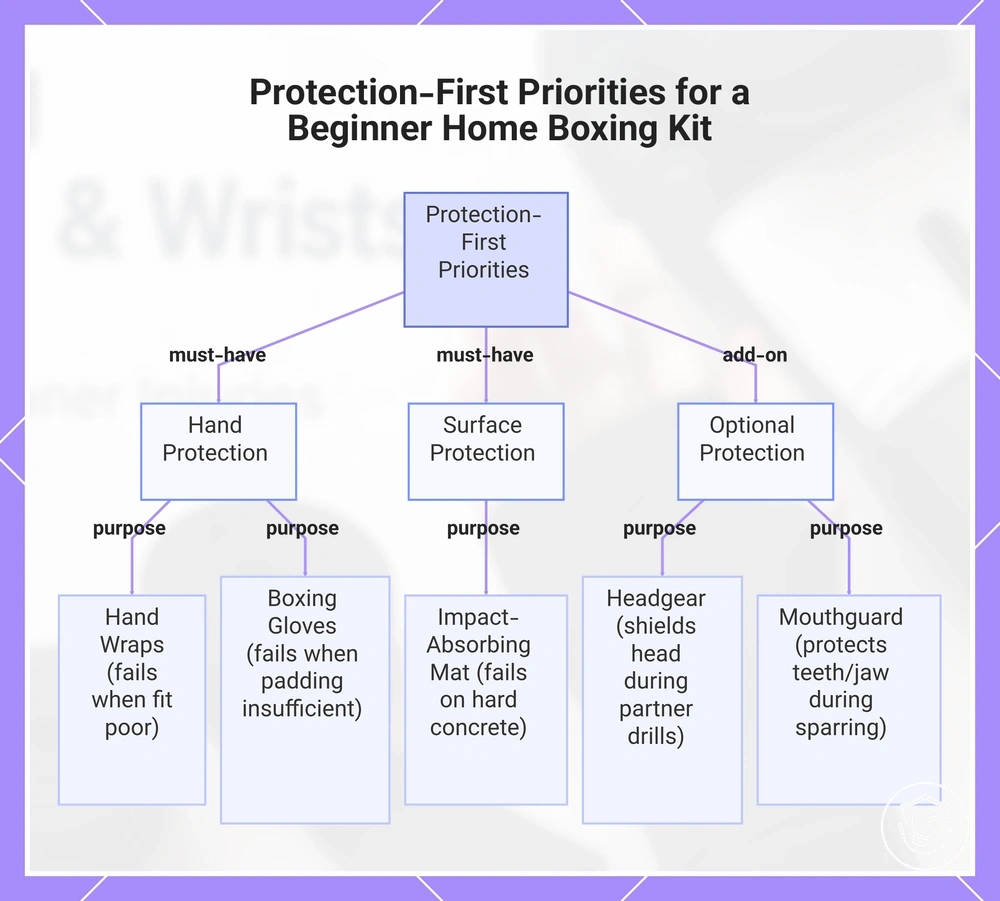
The top priorities for a safer beginner home boxing kit are hand wraps, boxing gloves with stable wrist support, and a training surface that absorbs impact, forming the baseline safety kit. Without these, even light workouts can cause unnecessary strain.
Protection layers divide into must-have items and optional add-ons, depending on their purpose and the risk if skipped.
Must-have layers- Protection layer (hand wraps) – matters because they protect knuckles and stabilize wrists; fails when fit is poor or wraps are loose.
- Protection layer (boxing gloves) – matters because they provide wrist support and knuckle padding; fails when fit is poor or padding is insufficient.
- Protection layer (training surface) – matters because it reduces joint stress; fails when training on hard concrete without a mat.
- Protection layer (headgear) – matters because it shields the head during partner drills; fails when not used for partner training.
- Protection layer (mouthguard) – matters because it protects teeth and jaw; fails when sparring starts later.
- Protection layer (groin guard) – matters because it protects against accidental hits; fails when training alone but becomes necessary with a partner.
Skipping hand wraps can increase stress on knuckles and strain on wrists, especially when glove fit is not ideal. Using gloves without adequate wrist support may lead to sprains during repeated punching. Training on an unsprung surface can transmit shock to elbows and shoulders, slowing recovery over time. These risks are fit- and volume-dependent, so adjustments in wrap thickness or glove weight can help.
For a beginner on a tight budget, prioritize hand wraps and a well-fitting pair of gloves; optional add-ons like headgear can wait until partner training. If glove fit is tight, reducing padding bulk—by choosing thinner wraps or a lower-ounce glove—may improve comfort more than adding extra padding.
Here are product examples that may make comparison easier. Before buying, always review the compatibility criteria, essential features, and product details.
This chart shows the must-have and optional protection layers for a safer home boxing kit, along with their key failure risks.
A minimal hand-and-wrist protection bundle for beginners
A minimal hand-and-wrist protection bundle provides a layered safety baseline for beginners training on an appropriate surface, where proper fit directly affects protection.
- Hand wraps act as a base layer, absorbing moisture and cushioning the knuckles and wrist. Fit note: wrap evenly across the knuckles and wrist for consistent coverage without bunching, and perform a comfort check to avoid loose folds. Common misuse: leaving loose folds that can cause blisters or reduce shock absorption.
- Wrist wraps offer adjustable tension to limit excessive wrist extension under load. Fit note: for smaller wrists, shorter wraps reduce excess looping and improve fit. Common misuse: keeping wraps overly tight between sets can restrict circulation; loosen them during rest.
- Stable training gloves improve hand stability through a secure wrist closure and padded palm. Fit note: the glove should feel snug around the hand without pinching or cramping the fingers. Common misuse: wearing gloves that are too loose can shift on impact, reducing protection.
- Integrated glove-wrist sets combine both layers into a single piece for convenience. Fit note: ensure the wrist closure is adjustable and the glove fits the hand shape closely. Common misuse: assuming a one-piece solution offers the same adjustability as separate layers; check that the integrated design still allows proper wrist tension.
Optional safety add-ons and when they are worth it, including beginner boxing mouthguard considerations
Optional safety add-ons are most practical when training intensity increases, when glove fit leaves room for movement, or when specific pressure points become noticeable during use. Each add-on adds bulk, which may crowd the glove interior, alter the fit, or create new pressure points if not matched properly.
- A mouthguard add-on may be worth it if you begin partner drills or sparring; it creates a buffer between your teeth and glove impact. The trade-off is added oral bulk that can feel restrictive and may interfere with breathing if not molded correctly.
- Knuckle gel pad add-ons may be worth it if you experience persistent knuckle soreness after heavy bag work; they fill empty space inside the glove. The extra layer adds to fit crowding, which can make the interior feel tighter and occasionally shift during impact.
- An additional wrist strap add-on may be worth it if your glove closure feels loose or you need more wrist support during fast combinations. The extra strap adds thickness around the wrist, which can limit mobility or cause chafing if over-tightened.
- A ventilated inner liner add-on may be worth it if you train multiple rounds and your gloves trap excessive heat; it improves airflow. The added liner takes up interior space, which can diminish the snug feel of a well-fitted glove.
- A thumb positioning strap add-on may be worth it if you find your thumb drifting outward when punching; it holds the thumb in a safer aligned position. The strap adds pressure on the thumb base, which can be uncomfortable for some hand shapes.
- Extra palm padding add-ons may be worth it if you notice impact pressure on the base of the palm during heavy bag sessions; it disperses force across a wider area. The additional foam reduces available glove depth, which may compress your hand against the glove wall.