14 oz vs 16 oz Boxing Gloves for Beginner Home Training
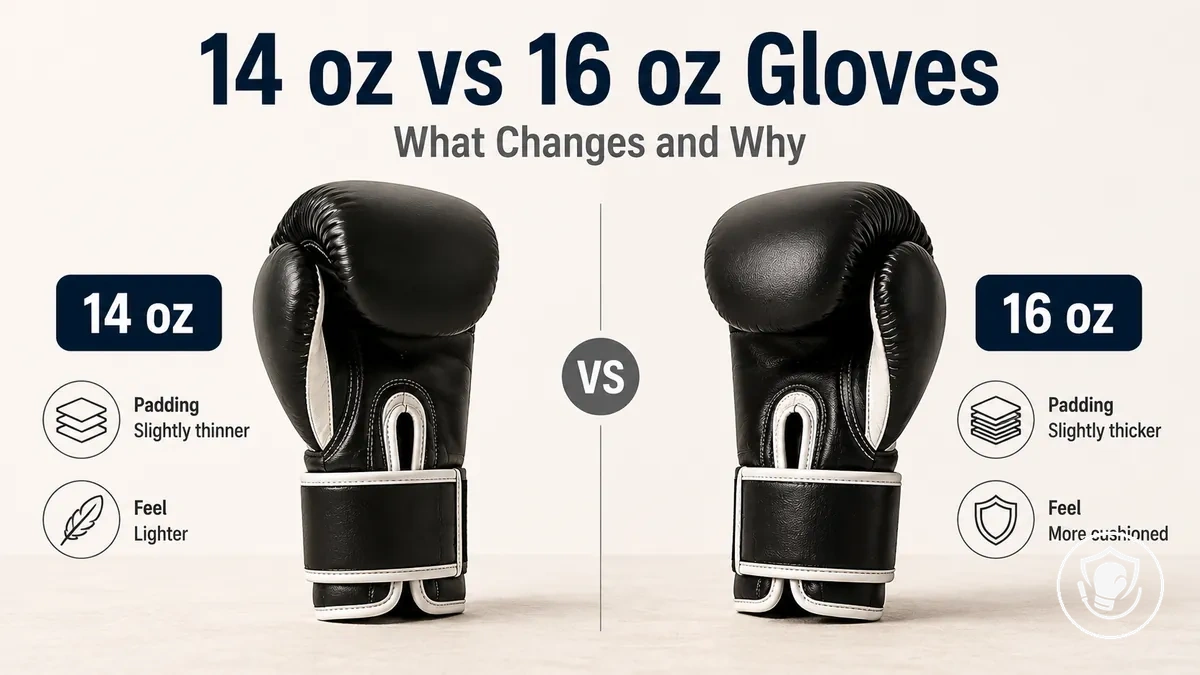
Choosing between 14 oz and 16 oz gloves for beginner home training depends on the type of work you plan to do. For pad work and speed drills, 14 oz gloves may feel more responsive and allow faster hand movement; for sparring or heavy bag rounds, 16 oz gloves are often the safer choice for both you and your training partner because they add protection and build fatigue resistance.
The main variables are use case, comfort, fatigue tolerance, and protection feel:
- 14 oz gloves: often preferred for pad work, speed drills, and light bag work due to lighter weight and better feedback.
- 16 oz gloves: typically used for heavy bag training, conditioning, and any form of sparring because the extra padding reduces impact and builds shoulder endurance.
But glove weight is only one factor—proper fit and technique are just as important for safe home training. beginner home boxing equipment hub
A common myth is that heavier gloves hit harder. In truth, 16 oz gloves add padding that spreads the force of your punches, making them feel softer on the receiving end. Understanding what the ounce rating actually tells you—padding volume, not hitting power—helps you choose based on what you value most in each training session.
What Glove Ounce Rating Represents and Why Brands Can Feel Different at the Same Oz
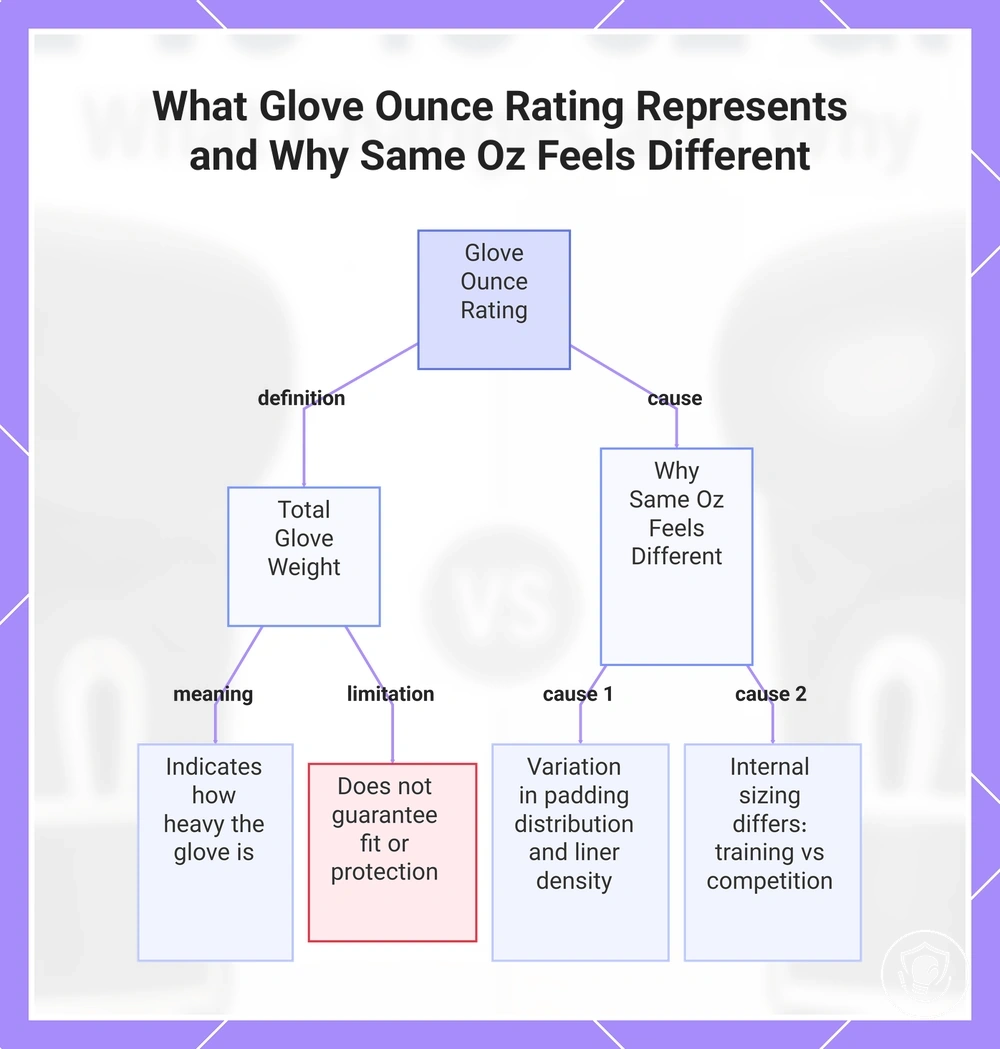
An ounce rating is the total weight of a boxing glove, not a measure of padding thickness or hand size. The labeled weight in ounces tells you how heavy the glove is, but it does not guarantee a specific fit, protection level, or padding distribution.
The same oz can feel different because padding distribution, liner density, and internal sizing vary across models and brands. One 14oz glove may concentrate more mass at the wrist, while another spreads it through the knuckle padding. Training gloves often have larger hand compartments to accommodate wraps, whereas competition-style gloves are tighter, so the same labeled ounces can produce a noticeably different fit and feel.
The ounce label helps you compare gloves by weight, but glove size and padding distribution determine actual fit. The next sections focus on how 14 oz and 16 oz gloves affect training performance, not on brand-by-brand reviews.
This chart explains what the ounce rating of a boxing glove actually measures and why the same ounce label can feel different across brands and models.
What Changes Between 14 oz and 16 oz in Real Training: Padding Feel, Protection, and Impact Feedback
The directional difference beginners notice when moving from 14 oz to 16 oz boxing gloves during home training is a shift in padding feel, protection feel, and impact feedback.
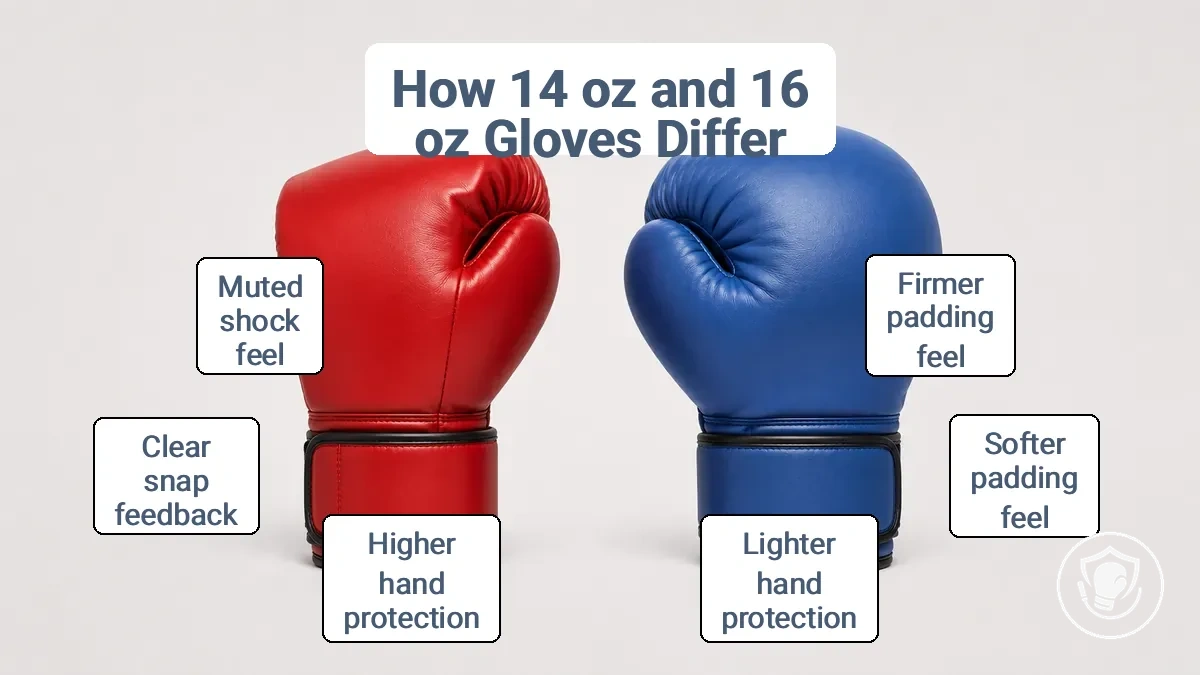
The table organizes typical shifts in padding feel, protection feel, and impact feedback between these weights during bag or pad drills.
| Attribute | 14 oz | 16 oz |
|---|---|---|
| Padding feel | Firmer, more direct | Softer, more cushioned |
| Protection feel | Lighter hand protection, less partner protection | Higher hand protection, better partner protection |
| Impact feedback | Clear snap feedback | Muted shock feel |
This trade-off affects both control and comfort. A 14 oz glove can give you sharper feedback on punch placement, which is useful for technique drills. A 16 oz glove may feel heavier on the hands but often reduces the shock transmitted to your training partner. That extra padding does not mean one weight is automatically safer; safety also depends on fit and foam quality (see glove protection differences).
For example, during heavy bag work, 14 oz gloves typically provide more immediate feedback on whether a punch lands cleanly. On focus pads, 16 oz gloves can feel less precise but add a conditioning load that builds shoulder endurance over several rounds. These session-level effects mean your choice often depends on whether you prioritise speed and feedback or partner safety and conditioning.
How the extra weight changes your session: speed, accuracy, and fatigue over rounds
A heavier glove typically reduces hand speed and punch accuracy in early rounds, while fatigue builds faster in later rounds, changing how your session feels from the first round to the last.
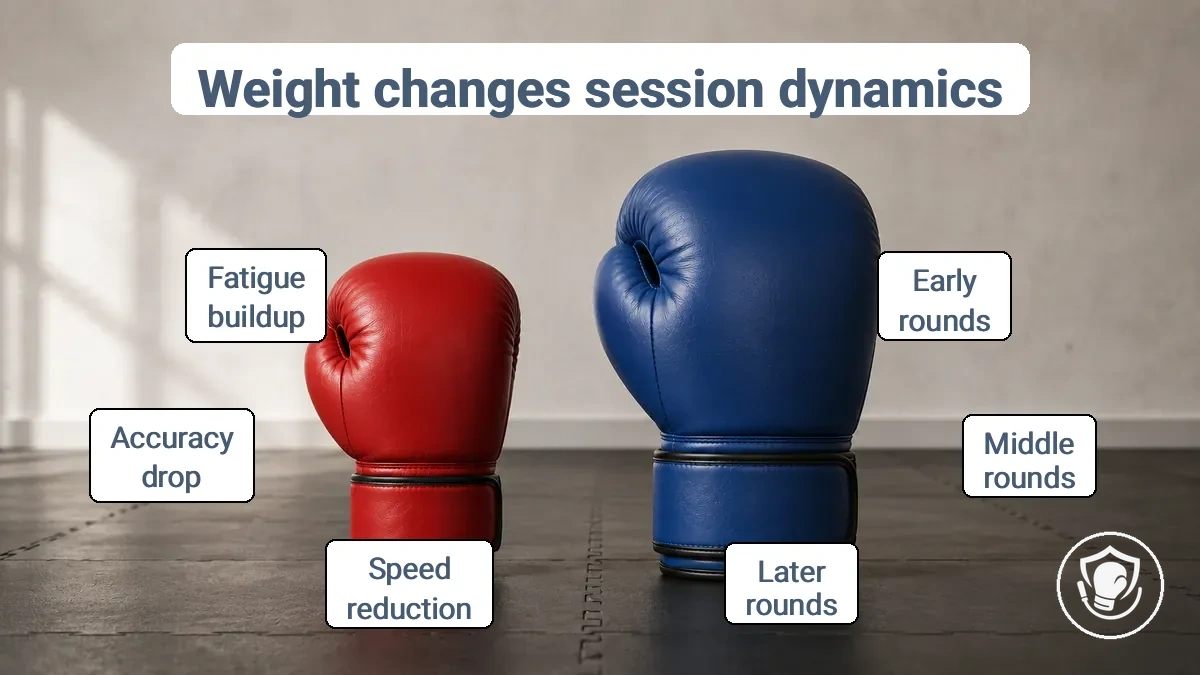
The effects split into two types: immediate and cumulative. Right away, the extra weight may alter your pacing and technique feedback; over time, fatigue can compound and reduce accuracy and form.
Round by round, speed, accuracy, and fatigue typically change in these ways:
- In early rounds, heavier gloves can reduce hand speed and punch accuracy as your arms adjust to the extra load.
- By middle rounds, fatigue may start to build, affecting reaction time and technique feedback.
- In later rounds, cumulative fatigue can significantly drop both speed and accuracy, making it harder to maintain good form.
When fatigue reduces your technique feedback in the later rounds, a lighter glove often becomes the more appropriate choice for maintaining quality work.
For conditioning, the heavier glove may add volume but reduces speed and accuracy in later rounds.
Choosing the Right Weight by Home Training Use Case
For home training, base your glove weight on your main activity: heavy bag training prioritizes protection and impact absorption, while pad work calls for speed and feedback. These categories (heavy bag, pads, mixed sessions, beginner sparring) form the use-case framework guiding 14 oz vs 16 oz selection.
The use-case matrix organizes glove weight by training target and impact type, comparing 14 oz and 16 oz tendencies for each home training scenario.
This image visualizes the home training use-case matrix at a glance, mapping each activity to 14 oz and 16 oz tendencies.
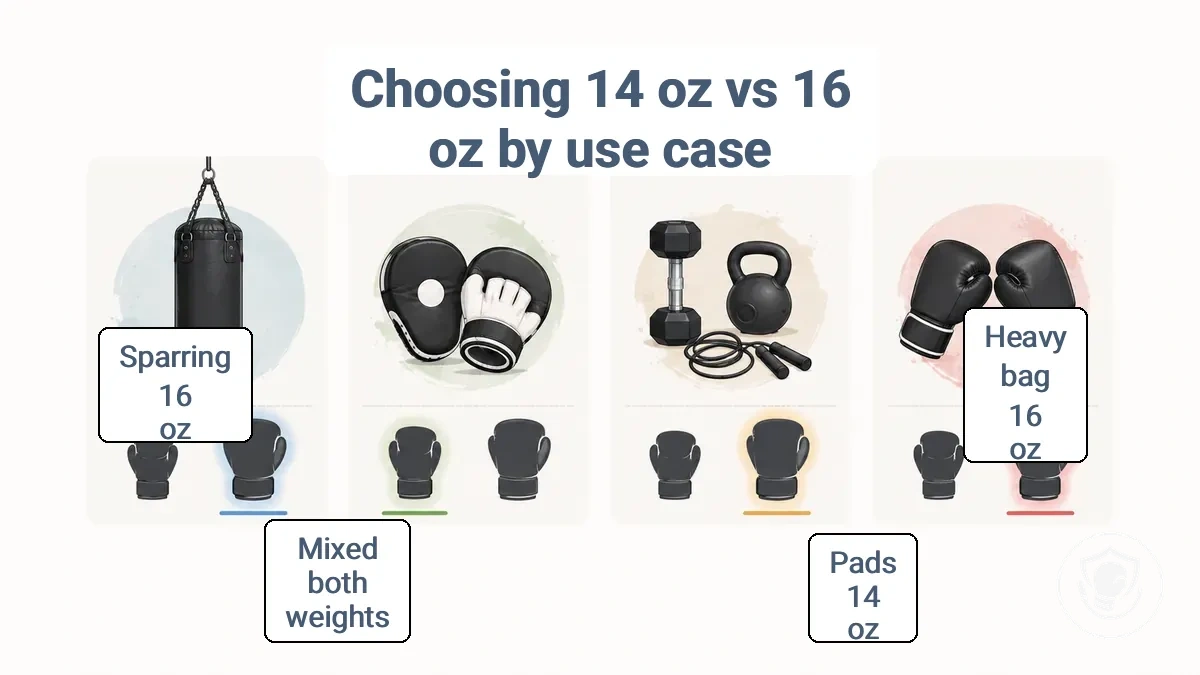
| Home use case | What you prioritize | 14 oz tendency | 16 oz tendency | Notes/limits |
|---|---|---|---|---|
| Heavy bag | Protection and impact absorption | Often less preferred due to lighter mass; used for speed drills | Tends to be a common pick; provides a protection feel and dampens shock | Weight choice also depends on bag density and training volume |
| Pads | Speed and feedback | Typically favored for quick feedback and wrist mobility | Can be used but may slow movement; tends to reduce feedback | 14 oz is typical for pad sessions |
| Mixed sessions | Versatility across drills | Tends to work for slower bag work; better for fast combos | Better for heavy bag rounds; still functional on pads | Some keep both weights available |
| Beginner sparring/partner drills | Partner safety | Less common; higher risk for partner | Typically recommended for safety; extra padding absorbs impact | Sparring rules vary by gym; this is a basic decision only |
16 oz gloves for heavy bag work and higher-impact conditioning
16 oz gloves are typically preferred for beginner heavy bag sessions when the goal includes higher-impact conditioning and volume. The extra weight adds resistance, which can speed up arm fatigue, but that trade-off can also help build stamina over longer bag rounds.
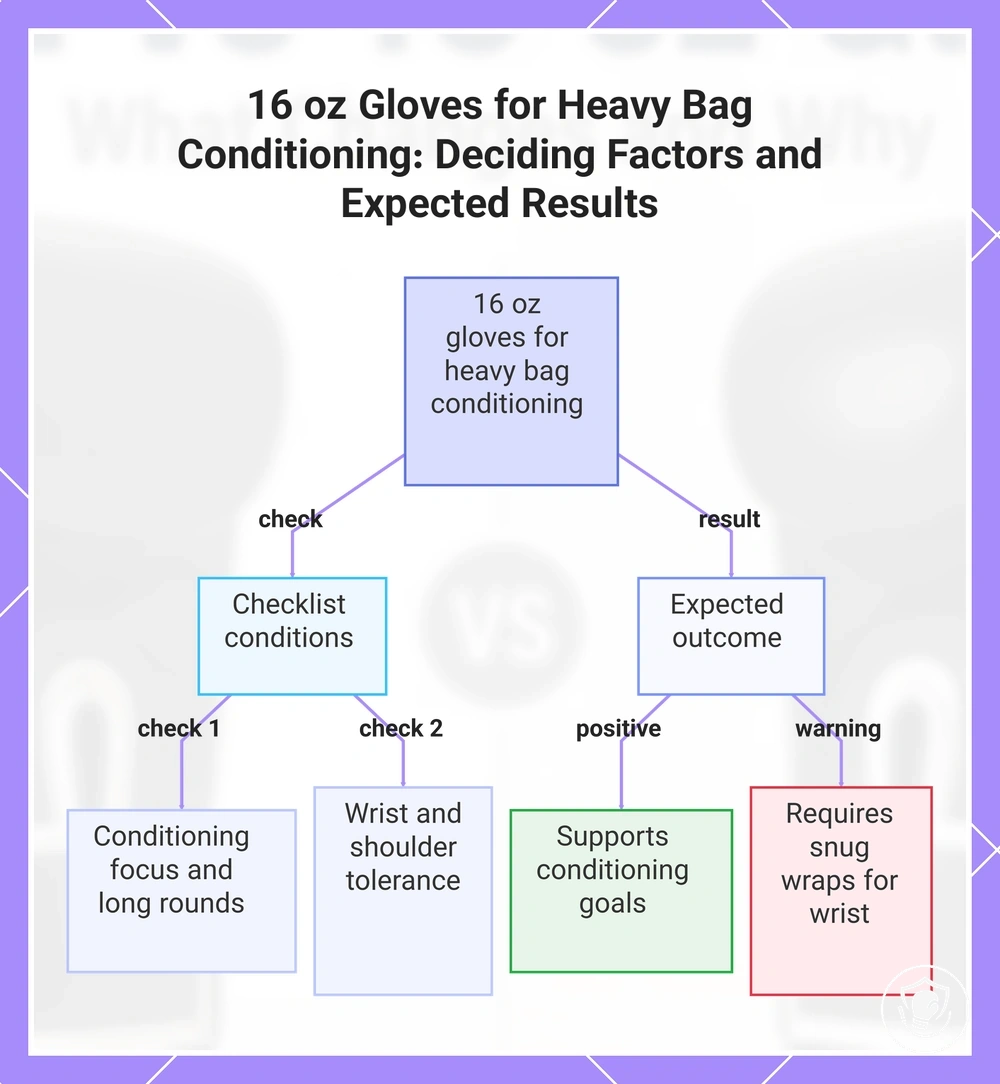
Check these points to see if 16 oz gloves for heavy bag work and higher-impact conditioning fit your session goal and tolerance:
- Is your bag work focused on conditioning and power rather than raw speed?
- Do you plan to complete 3-minute or longer rounds consistently?
- Are you comfortable with extra wrist load when using hand wraps for support?
- Do you want to build shoulder endurance through repetitive heavy bag punching?
- Are you willing to accept increased forearm fatigue during the session?
If most items apply, 16 oz can support your conditioning goals, but you may notice added fatigue and keep your wraps snug for wrist support.
This chart shows the key checklist points and expected outcomes when deciding to use 16 oz gloves for heavy bag conditioning.
14 oz Gloves for Pad Work and Technique-Focused Sessions
14 oz gloves are a common choice for pad work because firmer padding and lighter weight improve punch feedback and hand speed. The direct tactile response supports precision without the bulk of heavier gloves.
For pad sessions focused on precision, 14 oz gloves offer several benefits and a few limitations.
- Benefits: Better feedback on accuracy and punch placement; quicker hand speed for combination work; reduced wrist strain during controlled drills; comfort for repeated impact when pad holders absorb force well.
- Limits: Less padding can increase hand fatigue over longer rounds; limited shock absorption compared to heavier gloves, which may affect joint comfort if pad work is high-intensity.
Glove Weight Expectations for Sparring and Partner Drills in Beginner Contexts
Glove weight expectations for sparring and partner drills vary by gym and region, depending on gym rules and partner safety norms. Check with your coach for specific guidelines. The padding should match the agreed contact level.
These expectations also depend on factors like intensity and partner size. For beginner contexts, the contrast between light technical sparring and harder rounds helps organize glove weight recommendations:
- Light technical sparring: Lighter gloves (12–14 oz) are often preferred when speed and precision are the focus. Contact stays light, so extra padding is less critical.
- Lighter gloves allow a light touch during fast drills, reducing impact for your partner.
- Harder rounds: Heavier gloves (16 oz+) are common when sparring involves more force or uneven partners. The extra padding softens impact and aids control.
- Heavier gloves provide extra padding to help control impact over longer rounds.
Decision criteria that matter most for beginners: hand size, wraps, training intensity, and comfort
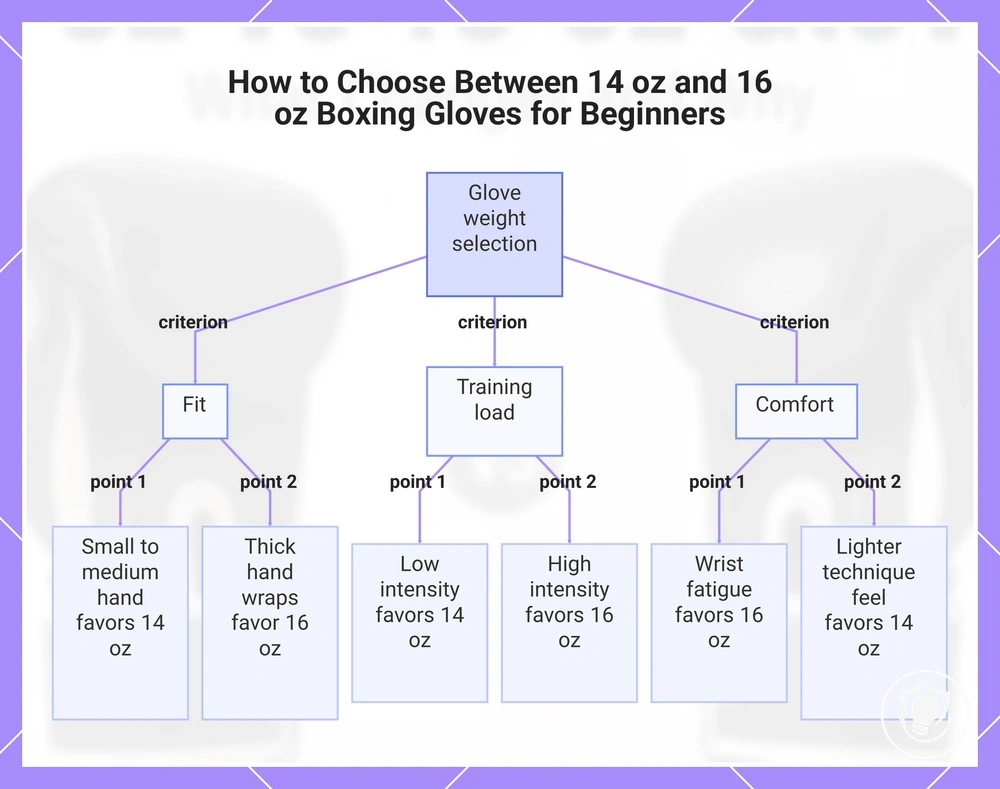
Four criteria typically decide whether a beginner needs 14 oz or 16 oz gloves: hand size, hand wrap thickness, training intensity, and comfort — each pointing toward one weight over the other. A checklist turns these personal factors into a weight choice.
The glove sizing and fit guide helps you find your correct size. The following checklist translates your hand size, wrap thickness, training intensity, and comfort into a glove weight choice.
- Fit: If hand size is small to medium, 14 oz often fits; if larger, 16 oz may be needed for proper wrap support.
- Fit: If hand wrap thickness adds bulk, 16 oz provides better closure support.
- Fit: If wrist support feel is a priority, a snug closure without over-tightening indicates the correct weight.
- Training load: If intensity is low (bag work or pad drills), 14 oz works; if high (sparring or heavy bag), 16 oz helps with fatigue.
- Training load: If training frequency or round volume is high, 16 oz may be preferable.
- Training load: If you prioritize mobility over weight, 14 oz offers more agility.
- Comfort: If you notice wrist fatigue during longer sessions, 16 oz provides extra padding and wrist support feel.
- Comfort: If you prefer a lighter feel for technique work, 14 oz gives more control.
- Comfort: If hand wraps are thick, 16 oz can help avoid pressure points and maintain comfort.
A beginner with average hand size and extra wrist wraps may feel more control with 16 oz during intense bag rounds but prefer 14 oz for lighter pad work. When training intensity is high or hand wraps add bulk, the heavier glove often wins for fatigue and comfort.
Because wrap thickness changes fit, run a final fit check after wrapping. If the glove feels too tight or the wrist closure strains, the larger weight is the safer choice.
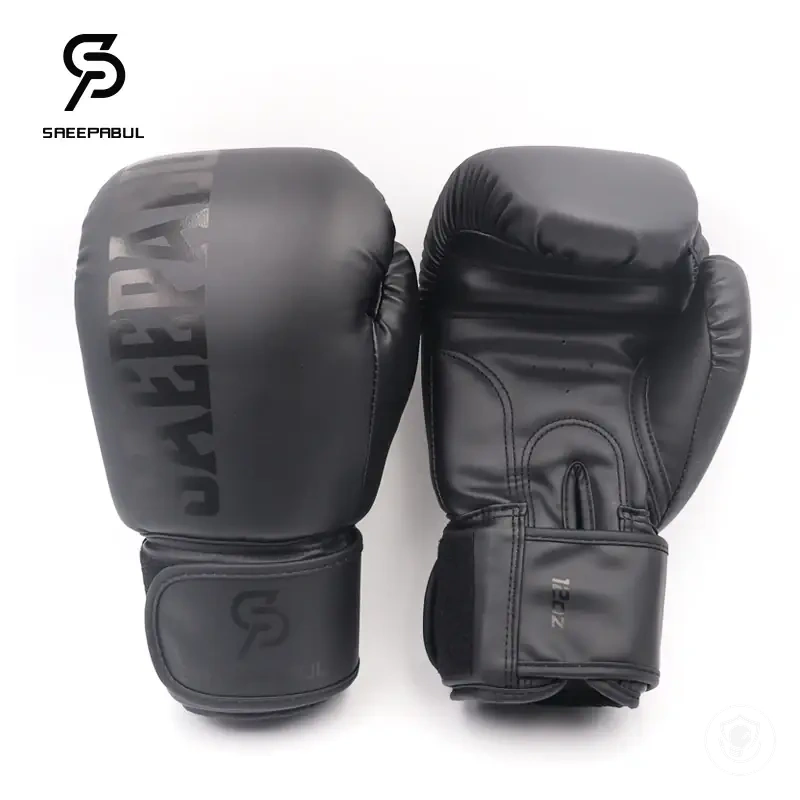
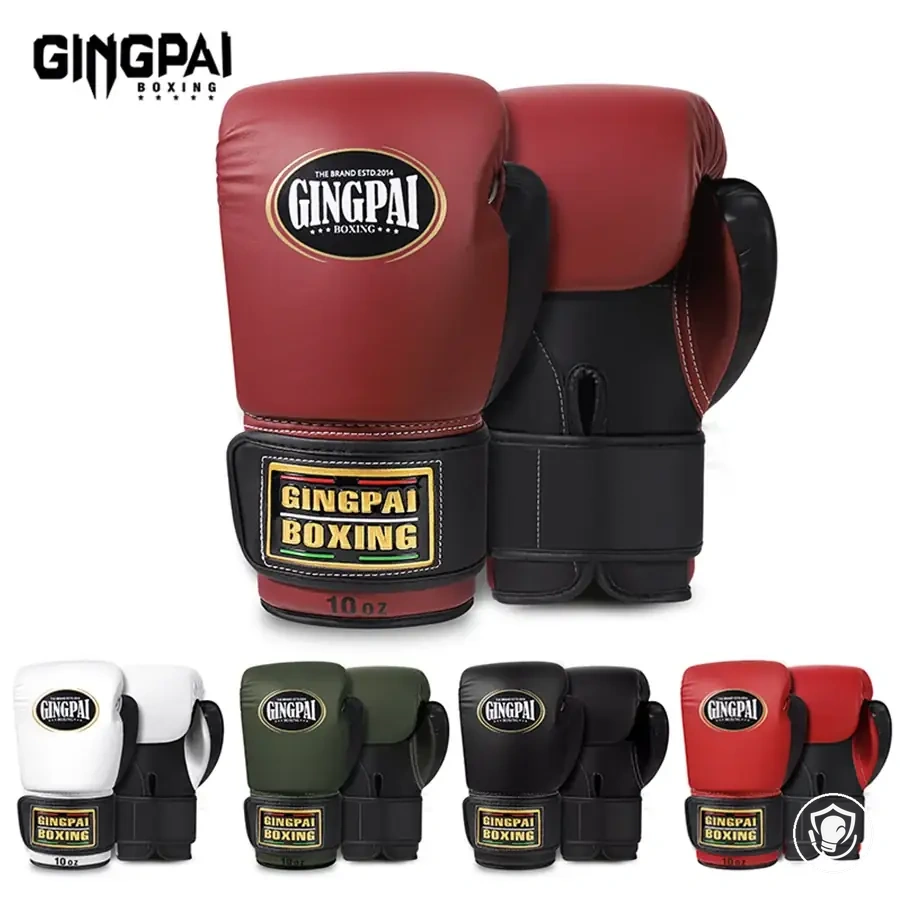
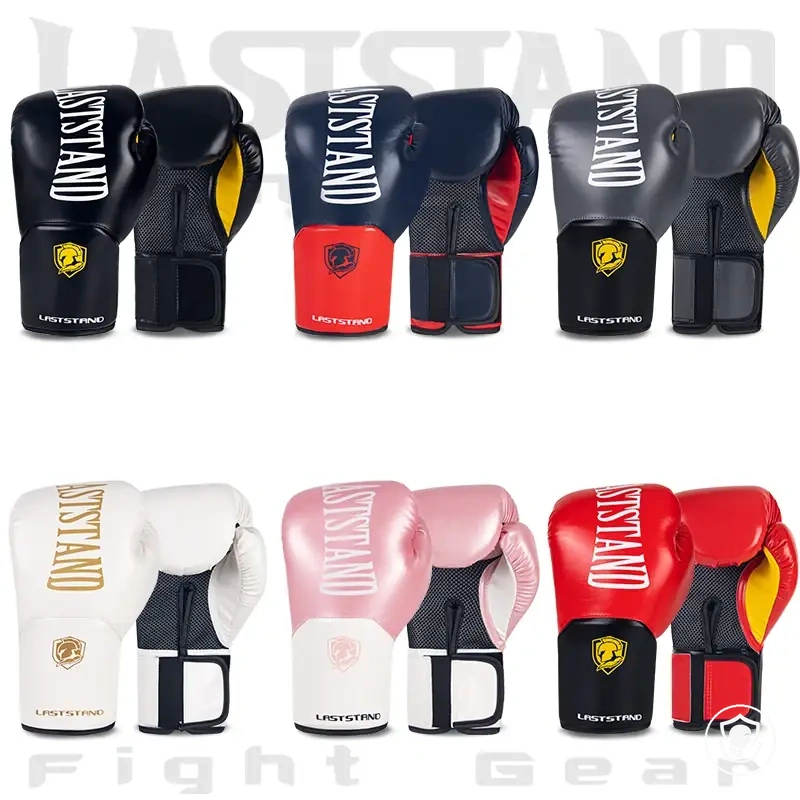
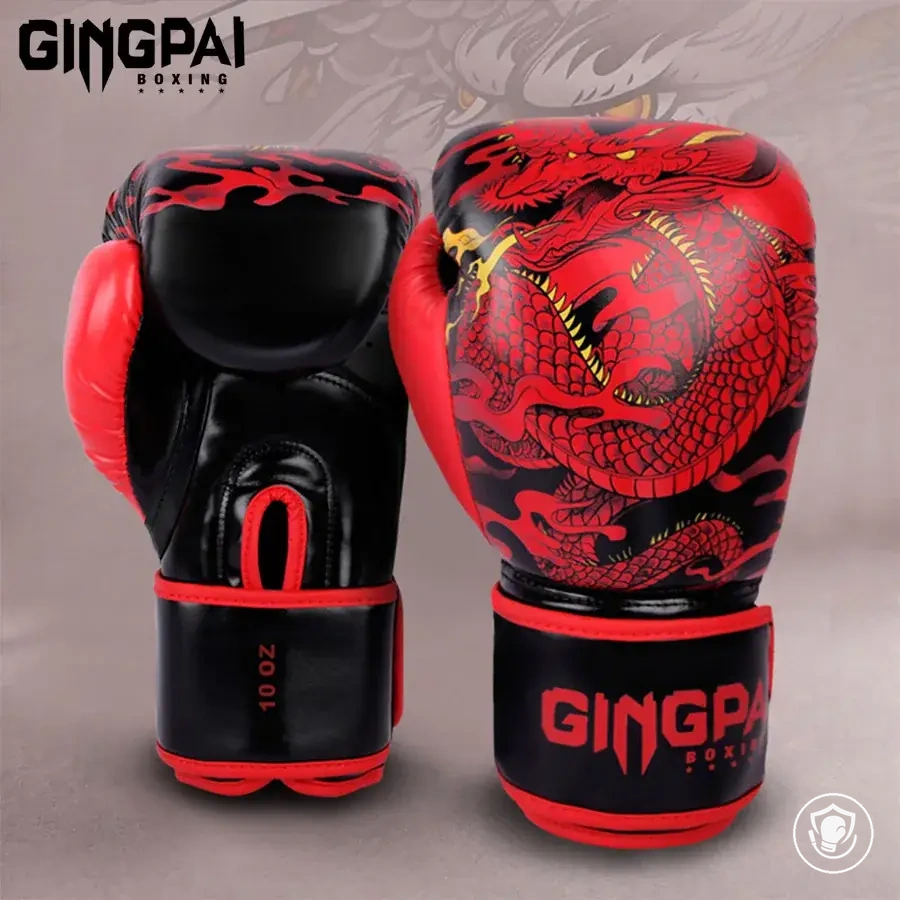
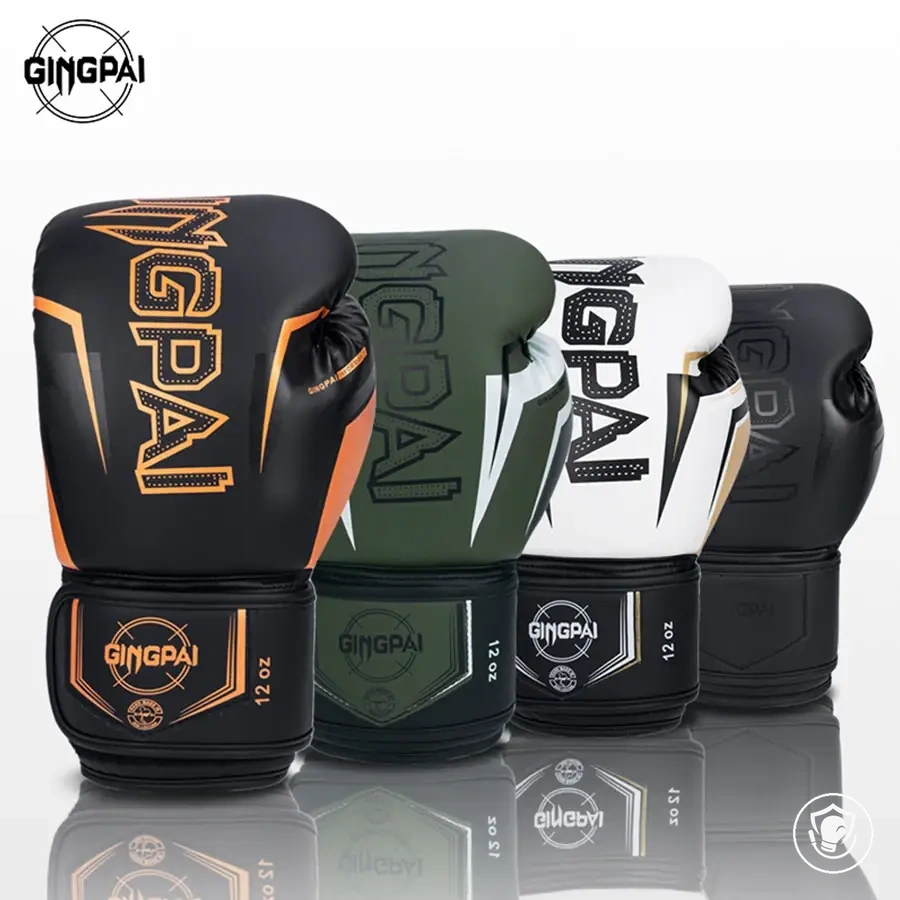
Here are product examples that may make comparison easier. Before buying, always review the compatibility criteria, essential features, and product details.
This chart shows the three main criteria groups—fit, training load, and comfort—that guide beginners in selecting the appropriate glove weight.
Using a glove weight chart as a starting point without mis-sizing the glove
A glove weight chart is a useful starting point, but it is not a guarantee of proper fit or safety. The chart organizes typical pairings by body size and training use, giving you a suggested ounce range to begin with. You still need to verify fit and comfort before relying on that pairing.
The following table organizes typical pairings by body size and training use.
| Body size range | Main use case | Common oz starting point | What to verify |
|---|---|---|---|
| Smaller or lighter boxers | Bag work, pads | 10–12 oz | Snug fit without pinching; wrist strap secure |
| Average adult build | General training (bag, pads, drills) | 12–14 oz | Comfortable fist; no hand slippage inside glove |
| Larger or heavier boxers | Sparring, partner drills | 14–16 oz | Adequate padding for partner; wrist support feels stable |
After checking the chart, verify fit by trying the gloves on with hand wraps and making a fist. The chart suggests a range; your hands and training partner confirm the right choice.
Chart says: 14–16 oz for sparring. What to check: Does the glove feel snug but not tight? Does the padding absorb impact without bottoming out?
Common misconceptions about glove weight, safety, and "more padding" claims
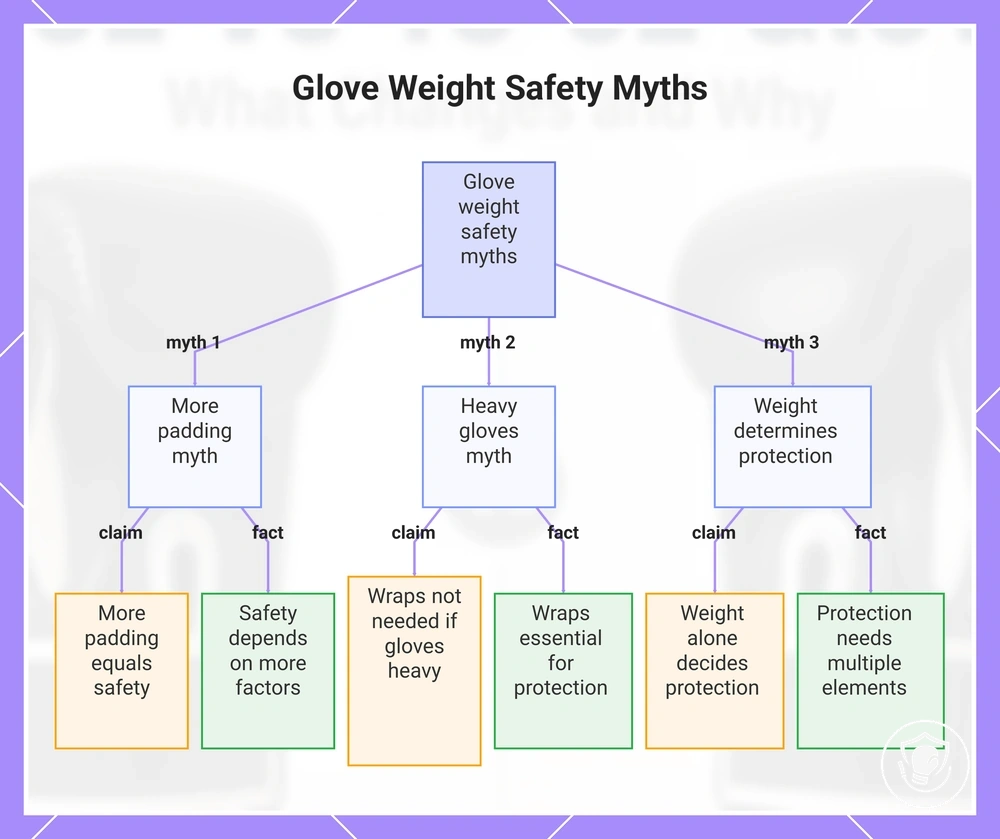
The most common misconception beginners have is that heavier gloves are safer because they have more padding, overlooking important factors like fit and technique.
More padding absorbs some impact, but protection feel depends on multiple elements, and this list separates what glove weight can influence from what it may not.
- Myth: More padding always means more safety. Clarification: Padding absorbs force, but safety is not based on padding alone.
- Myth: Heavier gloves protect your hands better regardless of wrapping. Clarification: Hand wraps are essential; without them, protection feel is reduced.
- Myth: 14 oz gloves are unsafe for sparring. Clarification: 14 oz gloves can be used for controlled sparring with proper technique and matched partners.
- Myth: A heavier glove automatically prevents pain. Clarification: Pain can still occur if fit or form is poor.
- Myth: Glove weight alone determines protection level. Clarification: Protection feel comes from a combination of weight, padding, fit, wraps, and punching form, not from a single factor.
Choosing the right glove weight influences your training experience, but safer training also depends on your technique and habits, such as proper hand wrapping and correct punching form. For more on these fundamentals, see the article on injury prevention basics.
This chart shows common misconceptions about glove weight and safety, separating myth from fact to clarify what truly affects protection.
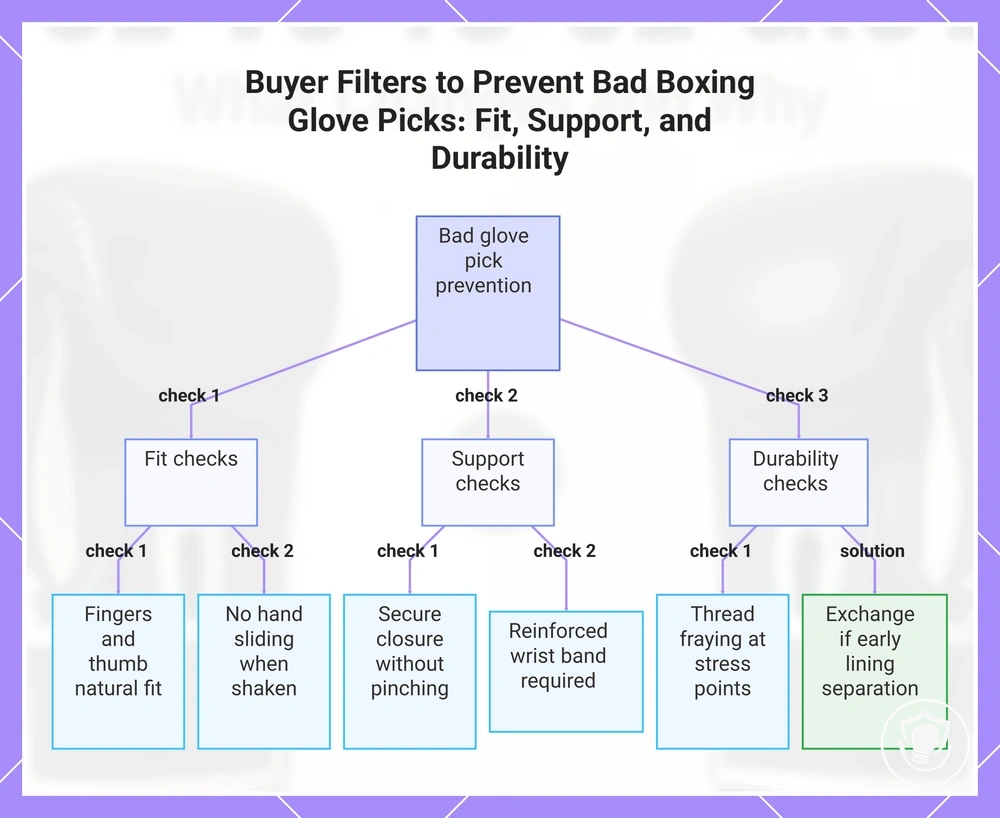
Buyer filters that prevent bad picks: fit checks, closure support, and durability signals
For beginners, a bad pick often means poor fit, weak wrist support, or early wear. The checklist below inspects each factor individually.
Begin fit checks by feeling how the glove fits when you make a fist. Fingers that reach the top without cramping and a thumb that moves naturally without tugging signal a good fit. When you shake your hand, the glove should stay in place; noticeable movement may signal a poor fit that can cause discomfort and reduce control.
Closure and wrist support influence stability on impact. A secure hook-and-loop strap should hold firmly without pinching or loosening; if it shifts or restricts circulation, the wrist support is inadequate and may increase strain. Avoid thin Velcro or closures without a reinforced wrist band.
Durability signals often appear after consistent use. Watch for thread fraying at stress points, especially around the thumb seam and palm area. The inner lining may also compress or separate from the shell; if you feel loose fabric or see bubbling over time, the glove is likely to break down quickly. If such fraying or lining separation appears in the first few sessions, exchange the gloves rather than hoping they improve.
To check whether a glove passes your buyer filters—fit checks, closure support, and durability signals—run it through the following checklist after narrowing your weight choice. This checklist helps you spot warning signs early.
Here are product examples that may make comparison easier. Before buying, always review the compatibility criteria, essential features, and product details.
- Fit
- The glove fits snugly without your hand sliding inside during shadow boxing
- Your fingers reach the end of the lining without curling
- The thumb compartment does not pull or restrict movement
- No excessive pressure points when you close your fist
- Support
- The hook-and-loop strap wraps securely around the wrist without loosening
- A reinforced wrist strap or band provides even compression
- The closure system does not dig into the skin or limit circulation
- Durability
- Stitching is uniform and tight along the main seams, especially the thumb and palm
- The inner lining feels attached to the shell and does not separate when you flex your hand
- No loose threads, fraying, or weak spots after initial use
- The material feels dense and shows no early wrinkling or bubbling
This chart shows the three essential buyer filters—fit, support, and durability—with key checks to avoid poor glove choices.