Home Boxing Floor Protection: Compatible Flooring Choices and Stable Bases for Beginner Setups
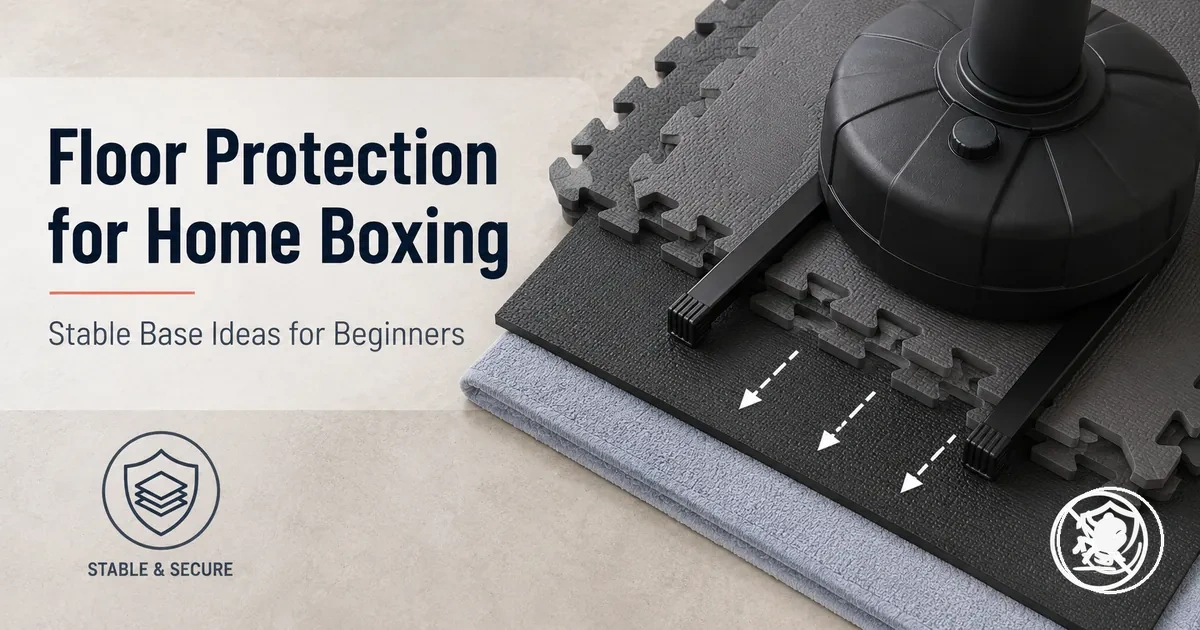
Home boxing floor protection means selecting a protective layer that stays compatible with the home surface while keeping beginner equipment stable. The goal is to control impact, reduce slip, and help prevent surface damage without making the base too soft.
The right floor protection for home boxing depends on three core decision variables: the type of home floor, the attributes of the protection layer, and the thickness and firmness of the material. Each variable affects how stable the base remains and how well the home floor is protected from scratches, dents, or finish wear. For instance, a concrete floor often requires a thicker mat to help absorb shock, while a wooden floor often benefits from a layer that helps protect the surface without introducing wobble. The exact outcome varies by floor type and the type of motion the equipment generates.
More cushioning does not always improve safety; excessive softness can make the base unstable and increase equipment wobble — showing the difference between comfort underfoot and stability under equipment. Selecting the right protection layer for your specific home boxing arrangement is a focused decision, not a full-room engineering project. For a broader overview of beginner equipment, see the beginner home boxing equipment hub.
Floor Protection Outcomes: Impact Control, Slip Control, and Surface Preservation
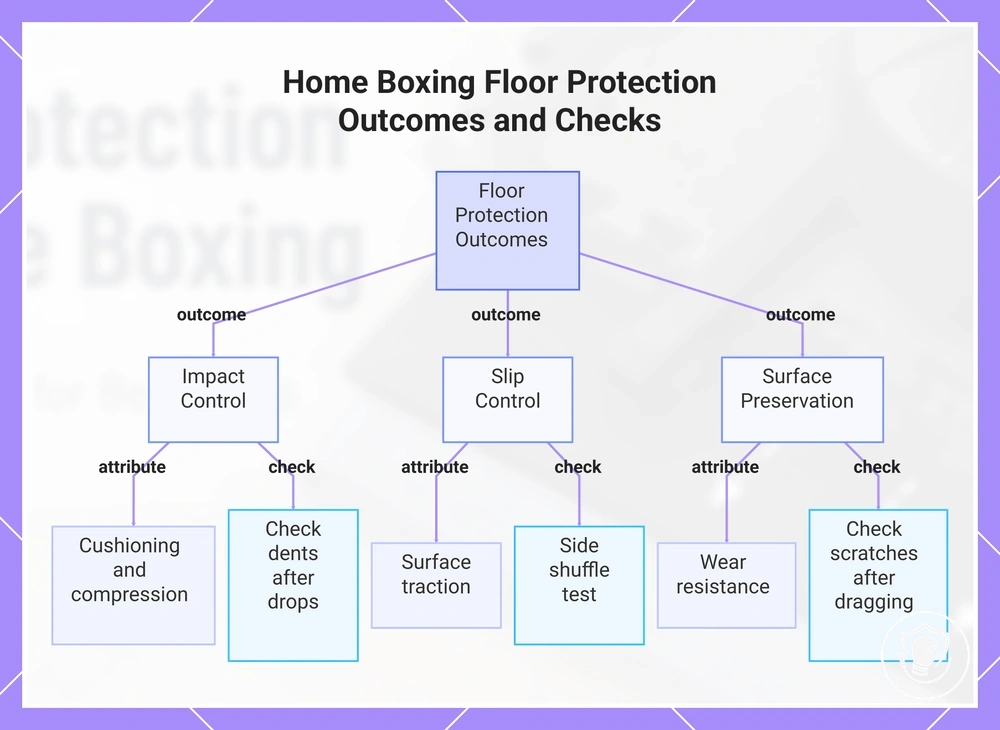
For home boxing, a floor solution must deliver three outcomes: impact control to absorb force from drops and strikes, slip control to provide traction and reduce sliding, and surface preservation to guard the finish against scratches, scuffs, and compression. These outcomes together maintain safety and floor longevity.
Impact control depends on cushioning and compression resistance. When a heavy bag base or weight plate hits the floor, the material under it should compress enough to absorb the force so it doesn't reach the subfloor. Slip control depends on traction where the surface meets the floor—high friction between mat and floor reduces the risk of sliding when you pivot or shift your stance. Surface preservation means resisting wear from repeated contact and from dirt or dust that can act as an abrasive. How important each outcome is depends on how the equipment moves: static equipment like a workout bench mainly needs surface preservation, while dynamic movements like boxing drills need strong slip control and impact absorption.
Consider a surface that feels comfortable for footwork but lets a heavy bag base slide when the bag swings. The mat might feel soft, but without grip underneath it can shift. Look for wobbling or sliding instead of assuming stability.
- Impact control – Check for dents or compression marks after heavy bag drops. Marks indicate energy absorption; permanent marks may need thicker protection.
- Slip control – Side shuffle on the surface; if your foot slides, grip is insufficient. Indicates need for higher traction or a mat with better friction.
- Surface preservation – Check for scratches or scuffs after dragging equipment. Scratches suggest the protective layer is wearing; consider a harder cover or sacrificial film.
- Indentation – Press your thumb into the mat after a weight drop; if compressed, the material lacks rebound. This indicates the mat may not recover fully, leading to permanent depressions.
- Sliding of base – Push the heavy bag base laterally; if it moves easily, grip under the base is weak. Indicates need for a non-slip pad between base and floor.
- Wobble during use – Watch the base during bag strikes; if it rocks, the surface may be uneven or too soft. Indicates insufficient stability for vertical loads.
This chart shows the three key floor protection outcomes (impact control, slip control, surface preservation) for home boxing and the primary methods to check each one.
Compatibility Factors That Determine the Right Flooring Approach
Compatibility depends on the existing floor type, equipment load, and movement pattern. These three variables determine whether a protective layer can prevent damage, maintain stability, and allow safe training.
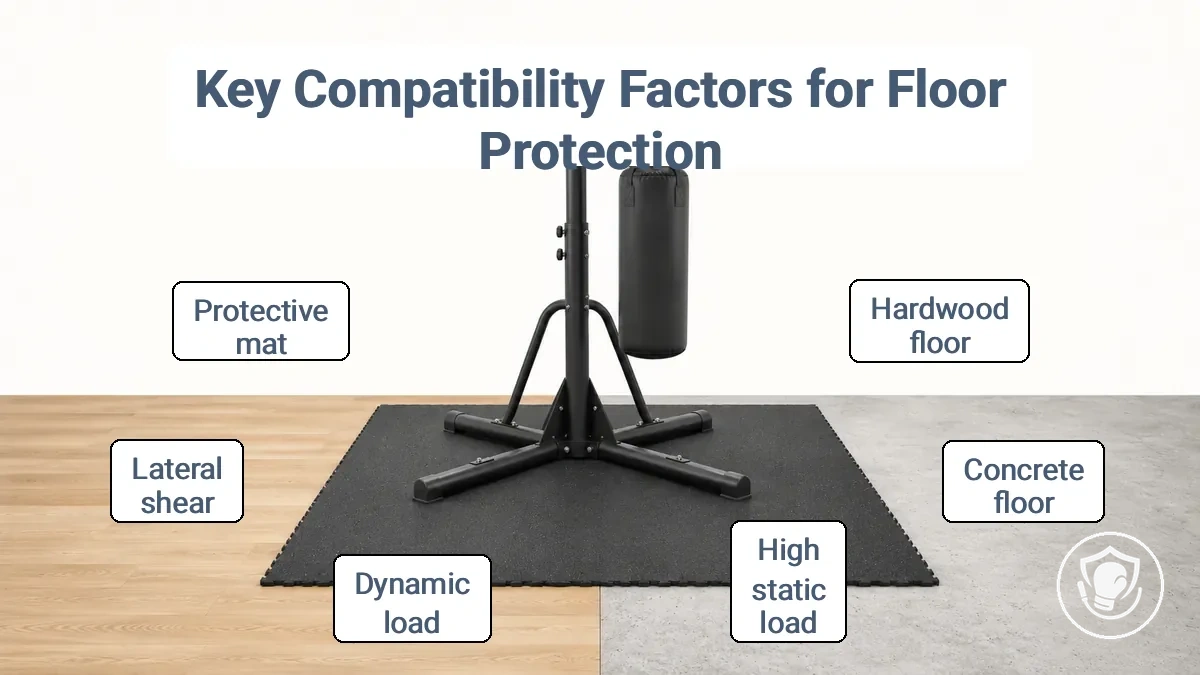
Flooring compatibility maps each surface attribute to the constraints imposed by the equipment and its use. Floor finish and moisture levels create vulnerability constraints, while movement patterns introduce lateral shear that requires stabilization to prevent tipping. The required layer outcome should protect against those vulnerabilities while preserving grip and stability. Over-soft layers can create a rocking or unstable base, which may increase tipping risk during dynamic movements.
Below are compatibility checks for common floor and equipment contexts.
| Context | Floor Type | Load | Movement Pattern | Constraint to Check | Typical Layer Outcome |
|---|---|---|---|---|---|
| Heavy bag training | Hardwood | High static and dynamic load | Swinging, lateral shear | Scratches, dents, moisture | Protective mat with firm grip |
| Heavy bag training | Concrete | High static load | Minimal lateral | Slip potential, noise | Non-slip mat with cushion |
Compatibility in this context means safe interaction between layers and surfaces, not a model-specific guarantee. small space setup may require additional attention to boundary fit. After installing the protective layer, test the setup for rocking or sliding before regular use.
Existing Floor Types and What They Require Before You Add Boxing Equipment
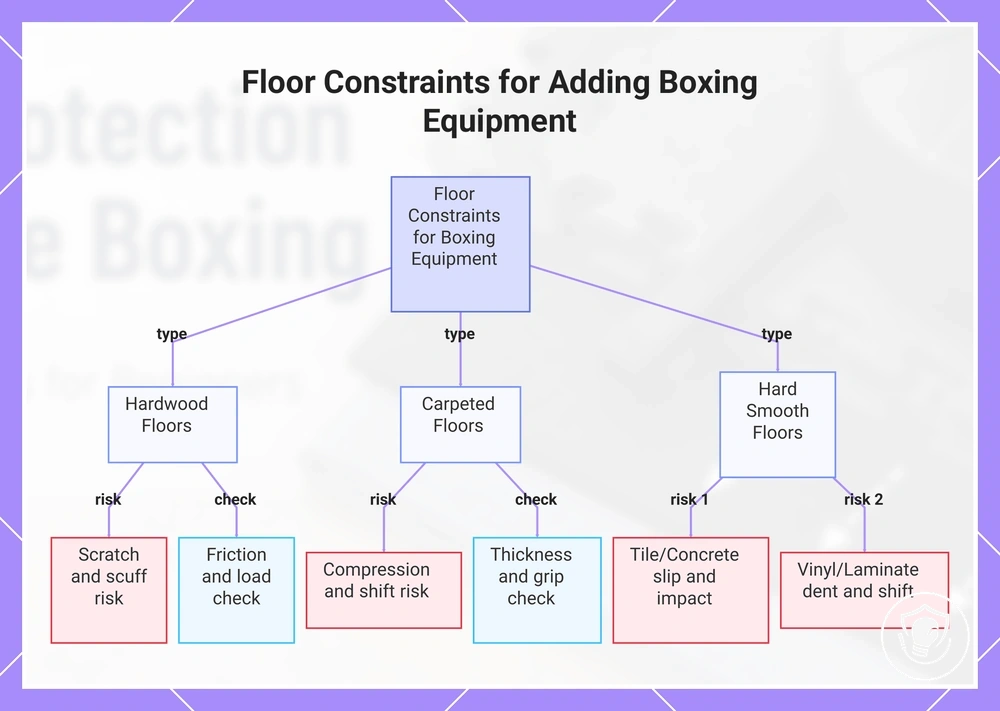
The existing floor sets the limits on friction, compression, and how protective layers can shift under repeated impacts. Floor type drives constraints, but the same stability checks apply to wood, carpet, tile, and vinyl, each depending on the floor’s finish, moisture, and whether it floats or is rigid.
- Hardwood floors: Risk of scratches and scuffs to the finish. Ensure the protective layer provides enough friction to minimize sliding and distributes load to avoid dents.
- Carpeted floors: Risk of excessive compression and shifting. Ensure the mat is thick enough to resist indentation and that dust and moisture do not reduce grip under the layer.
- Tile or concrete floors: Risk of low friction and hard impact transfer. Ensure the protective layer stays in place without sliding and that compression from punching does not cause slipping.
- Vinyl or laminate floors: Risk of damage from dents and shifting. Ensure the finish is protected from scuffs and that grip does not depend on moisture conditions that may vary.
On uneven floors, stability issues can appear even with an otherwise suitable mat. In such cases, the surface may require additional leveling or a thicker multi-layer system to prevent rocking during training.
This chart shows the specific risks and required checks for hardwood, carpeted, and hard smooth floors when placing boxing equipment, with a note that uneven floors may need extra leveling.
Equipment Loads and Motion Patterns That Change Flooring Needs
Static weight and dynamic motion affect flooring differently, so the same floor may suit one but not the other. Equipment that stays in place presses down vertically, while movement adds lateral shear and repetitive impact. These three stress types — vertical load, lateral shear, and repetitive impact — help you choose flooring that minimizes sliding, wobbling, or long-term damage.
A heavy bag base applies static weight, lateral shear from dynamic movement, and repetitive impact from footwork. The surface response depends on base design, floor material, and load distribution. A light footwork area may only need cushioning for impact, but a heavy base that twists and creeps requires flooring with higher grip and lateral stability.
- Vertical load: Heavy static weight creates compression, often leading to indentation or denting over time.
- Lateral shear: Twisting or sliding motion from dynamic movement can cause the equipment to slide or wobble (rocking).
- Repetitive impact: Repeated strikes or footwork generate vibration and wear, gradually degrading the surface, leading to tears or fraying.
Choosing Between Foam Tiles, Rubber Flooring, and Under-Equipment Pads
The choice depends on firmness, grip, and material behavior under repeated load and shifting. Foam tiles offer a softer surface but compress under heavy weight, while rubber flooring provides firm support and high grip for heavy equipment, and under-equipment pads (anti-slip pads) target specific contact points to spread load and protect the floor.
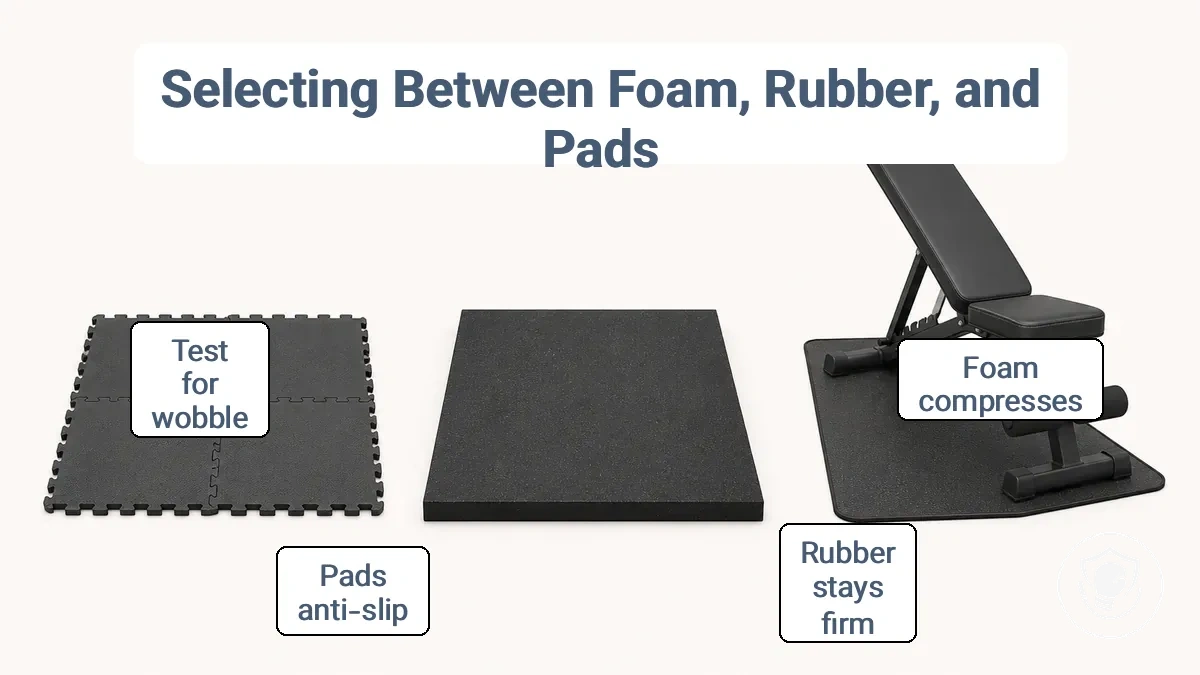
Softer foam can feel comfortable underfoot but may shift, compress, or cause freestanding equipment to rock under heavy loads, whereas rubber flooring resists denting and stays stable. The risk of movement increases when the floor surface lacks sufficient grip or when the base of the equipment is narrow. Thicker underlayment can absorb shock, but excessive thickness may create wobble if the equipment base is not fully supported.
- For bodyweight exercises and stretching: foam tiles are suitable; verify seams stay flat and tiles do not shift apart.
- For heavy weightlifting or dropping barbells: rubber flooring is appropriate; ensure firmness and enough thickness to help prevent denting; check grip.
- For treadmill or stationary bike: an anti-slip pad under the equipment can protect the floor; confirm the pad size matches the contact points and does not move.
- For mixed use with light equipment and floor exercises: foam tiles may work but may compress under static loads; test for indent after equipment sits for hours.
- For free-standing heavy racks or squat stands: rubber mats offer more stability; verify the mat does not slide on the subfloor.
- For protecting a finished floor from scratches: anti-slip pad under each equipment leg; ensure pad thickness does not add noticeable wobble.
- For high-impact plyometrics: rubber flooring absorbs impact without shifting; check that tiles interlock tightly and edges do not curl.
- For temporary or portable setups: foam tiles are easy to move; confirm they do not buckle under repeated jumping.
Myth: Adding multiple layers of foam increases protection. Truth: Layering soft materials can introduce wobble and reduce stability for equipment that relies on a firm base. Before committing to a full setup, test a single mat under your equipment for shifting or rocking.
Interlocking Foam Gym Tiles: Where They Work, Where They Fail, and Why
Interlocking foam tiles offer comfortable cushioning for light-impact activities like footwork drills but can fail under a shifting heavy bag base. The soft EVA foam compresses under weight, and the interlocking seams may separate, causing movement and eventual tilt.
Pros:
- Maintains stable seams when the base does not shift.
Cons:
- Low-density foam compresses under heavy loads, leading to bottoming out, seam separation, and tilt.
- Not suitable for heavy bag bases.
- Vulnerable to puncture damage.
Rubber Gym Flooring Mats: Thickness, Grip, and Stability Trade-Offs
Rubber usually improves grip and load handling, but thickness and hardness also change stability. A thinner mat provides firmer support and better leveling, while a thicker one increases compression under impact. The key trade-off is that higher compression often reduces stability on uneven surfaces.
Thicker rubber does not always improve protection; very thick soft mats can increase rocking on certain bases. Surface texture and base design also affect stability.
This table compares thickness bands by grip, compression, and leveling behavior.
| Thickness Band | Grip (Traction) | Compression | Leveling Behavior |
|---|---|---|---|
| Thin | High traction, less sliding | Low compression, firm surface | Good on even floors; usually minimal wobble |
| Medium | Good grip with some give | Moderate compression for impact | Balances leveling with cushion |
| Thick | Soft surface can reduce sliding | High compression for heavy loads | May cause rocking on uneven bases |
Conditional note: Very thick soft rubber may increase rocking on uneven floors, especially when the mat is used with dynamic exercises or shifting weight equipment.
Anti-Slip Mats and Equipment Protection Pads for Targeted Floor Defense
Anti-slip mats and equipment pads provide targeted stabilization and barrier protection under contact points such as punch bag feet or heavy bag stands. These layers increase friction, spread the load, and shield the surface from damage.
- Friction increase: The anti-slip mat raises friction at contact points, which keeps equipment from sliding during workouts. This reduces scuffs or scratches from shifting gear.
- Load spreading: The equipment pad distributes the weight of heavy items over a wider area. This lowers pressure on a single spot and helps prevent indentations on softer floors like vinyl or carpet. Thicker or denser pads typically handle heavier loads better, while thin pads may still allow some denting.
- Surface shielding: The pad creates a barrier between the equipment and the floor finish. It catches sweat, dust, and grit that would otherwise mar or stain the surface. Check that the pad material does not react with the floor coating; a simple cloth layer can provide extra protection if needed.
Caution: Dusty surfaces reduce grip, so cleaning is a first check before adding layers.
Thickness and Firmness Guidelines That Prevent Bottoming Out and Wobble
The key to preventing both bottoming out and wobble is a mat with enough firmness for stability and enough thickness to protect the floor surface. Insufficient firmness or thickness causes uneven compression or movement. On sensitive floors, adjusting mat choice and padding coverage can help balance these factors.
Mat firmness depends on material. Dense rubber or foam resist deformation better than softer materials, making them suitable for areas with limited floor tolerance. However, even the firmest mat cannot compensate for a subfloor that is too thin or uneven.
Heavier equipment increases downward pressure and may require thicker padding or extra layering, but soft layers introduce bounce, so firm layers are preferable.
- Choose denser mats for thin or sensitive subfloors
- Match mat size and thickness to equipment weight and floor condition
- Add a secondary layer for extra thickness
- Use edge taper or interlocking mats to reduce movement at seams
This table groups mat choices by equipment load and floor sensitivity. It shows the required firmness and typical thickness for stability and floor protection.
| Equipment Load | Required Firmness | Mat Thickness Range | Stability and Floor Protection Outcome |
|---|---|---|---|
| Low (light equipment) | Moderate firmness | Thinner mats may suffice | Less risk of bottoming out due to lighter weight |
| Medium (moderate weight) | Good firmness | Average thickness needed | Balanced with level floor and secure placement |
| High (heavy equipment) | High firmness | Thicker mats or multiple layers required | Higher risk of floor damage; extra coverage prevents wobble and imprints, but soft layers may add bounce |
A press and rock check indicates whether mat thickness is adequate. If the floor is felt through the mat, a thicker mat or padding is needed to avoid bottoming out.
Creating a Stable Base for Freestanding Punching Bags and Boxing Stands
Stability for a freestanding punching bag or boxing stand comes from limiting lateral movement, increasing grip on the floor, and distributing weight without adding soft bounce that can amplify wobble. An anti-slip mat or adhesive pad on the contact points further keeps the base from shifting. The heaviest fill material—typically sand rather than water—provides more mass and a lower center of gravity, which reduces tipping during strikes.
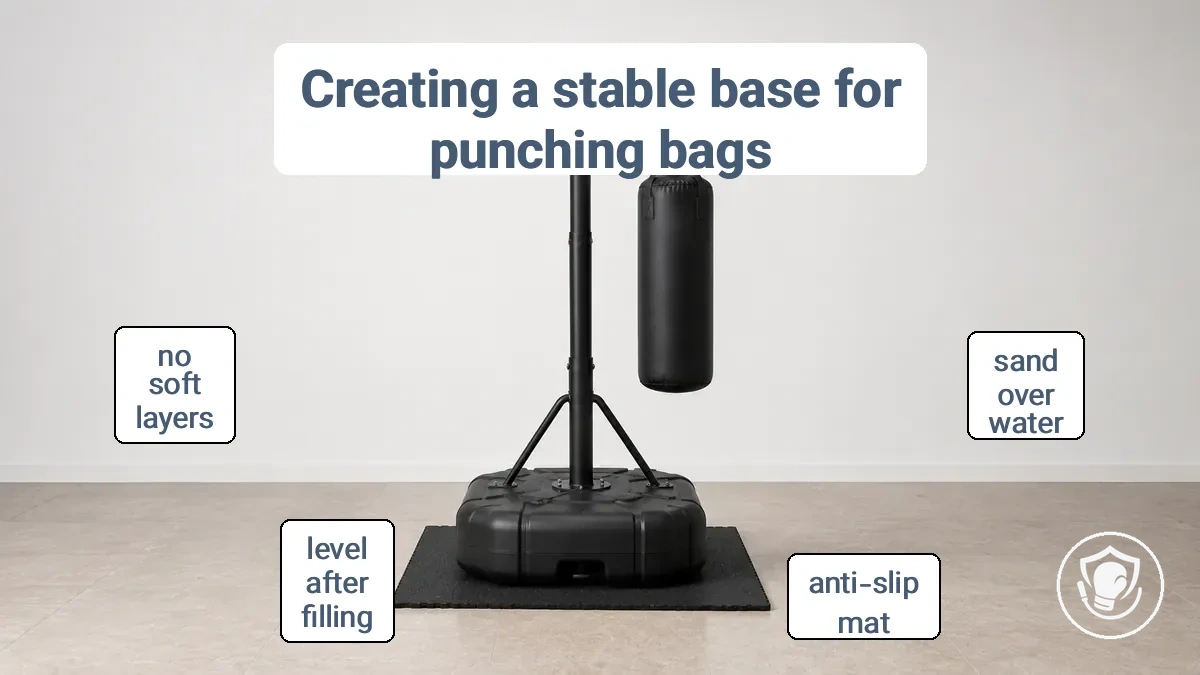
- Confirm the base sits flat on the floor. On tile, the smooth surface allows more sliding; check that no rocking occurs before filling.
- Add anti-slip where needed. For tile, a rubber mat or grippy pad improves friction. On carpet, the base may stay put, but compressed fibers can cause gradual lean.
- Level the base after filling by gently shaking the bag or tapping the sides to settle the sand evenly. Uneven fill can create a high center of mass and worsen wobble.
- If the base still wobbles after leveling, remove any foam or towels underneath—soft layers amplify movement rather than stopping it. Instead, increase fill weight or improve floor grip.
- Re-check after training sessions. Hard strikes can shift the base or compress carpet fibers, so a quick look and adjustment after each workout helps maintain long-term stability.
The same base filled with sand behaves differently on tile versus carpet; on carpet, a rigid board underneath distributes load and reduces tilt from compressed fibers. The placement and mounting basics section covers additional setup considerations.
Layering and Placement Logic for Stability Without Excess Bounce
A firm-to-soft layering gradient improves grip and protection while keeping the support plane stable. Stacking soft on soft can amplify rocking instead of dampening it.
- Firm base layer: Provides a stable foundation that resists indentation and reduces the risk of shifting under load.
- Medium top layer: Adds grip and cushion while maintaining enough firmness to minimize wobble.
- Soft-on-soft pairing: Leads to excess bounce and lateral slide, making the surface less predictable during use.
Preventing Floor Damage From Punching Bags: Sliding, Indentation, and Edge Wear
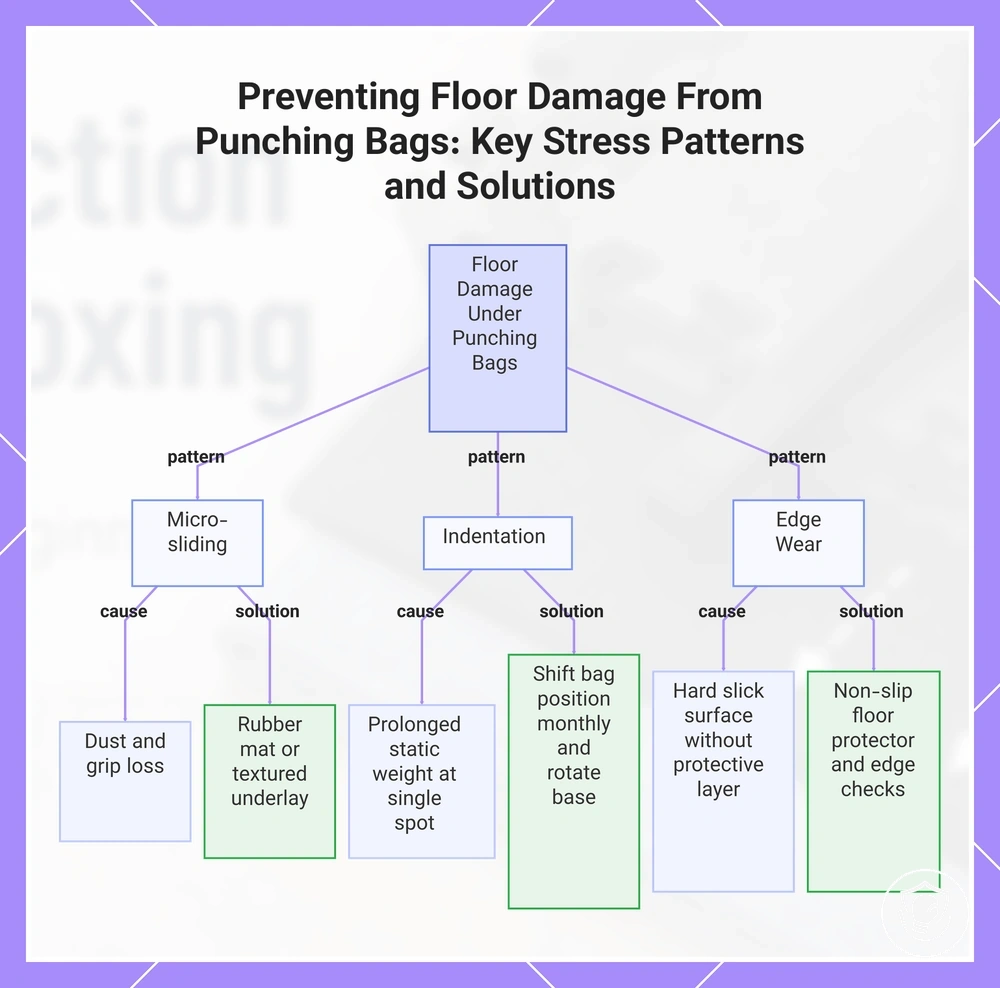
Most damage to floors under punching bags comes from three repeated stress patterns: micro-sliding, indentation, and edge wear. Micro-sliding occurs when the bag base creeps across the surface, often worsened by dust and grip loss. Indentation results from heavy, focused pressure at contact points. Edge wear appears as curling, seam creep, and scuffing from bag movement along the perimeter.
Understanding the causes of each pattern helps you take specific actions to reduce wear. Micro-sliding often stems from a lack of traction between the base and flooring; a rubber mat or textured underlayment can help reduce this creep. Indentation is typically caused by prolonged static weight at a single spot—repositioning the bag periodically spreads the load and can help minimize denting. Edge wear becomes more likely when the bag is used on hard, slick surfaces without a protective layer; a proper mat also reduces curling and seam creep. A simple weekly inspection to check for visible creep or dents, followed by repositioning the bag slightly, can slow edge wear on smoother floors.
- Micro-sliding – caused by dust and grip loss under the base – use a textured mat to reduce creep and preserve the floor finish.
- Indentation / denting – from sustained pressure at contact points – add a shock-absorbing mat, shift bag position monthly, and rotate base slightly with each repositioning.
- Edge wear – often from curling and seam creep on bare floors – use a floor protector with a non-slip bottom and inspect edges regularly.
- Scuffing – often from bag movement during strikes – choose a smooth, durable mat surface that allows cleaning without abrasion.
- Creep accumulation – builds up over repeated sessions – mark the initial bag position to detect drift during weekly inspection.
- Edge curling – worsens on bare floors with no mat – install a puzzle mat or rubber tile that extends beyond the bag base.
- Seam creep – occurs between mat tiles under heavy impact – lock seams with connector strips or apply single-layer rubber under the bag.
This chart shows the three main stress patterns that cause floor damage under punching bags, along with their causes and specific prevention solutions.
Common Setup Errors That Cause Shifting, Tipping, or Surface Damage
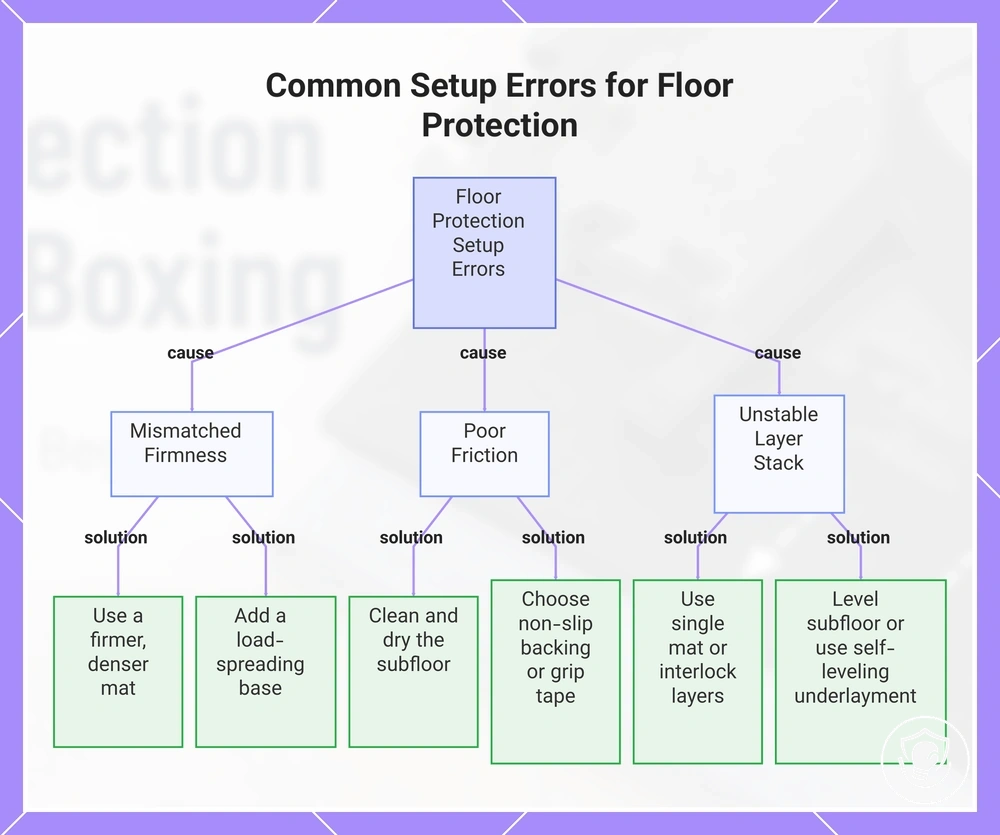
When a floor protection setup shifts, tips, or damages the surface, the failure usually traces back to mismatched firmness, poor friction, or an unstable layer stack. Figuring out which one applies helps you fix the problem without overcomplicating matters.
- Soft mat under a heavy bag compresses unevenly, causing rocking → switch to a firmer, denser mat.
- Dust or debris under the mat reduces grip, allowing sliding → clean and dry the subfloor before laying the mat.
- Stacking several thin mats without adhesion or interlock lets layers separate, creating an unstable stack → use a single mat of adequate thickness or interlock the layers.
- Placing a heavy bag directly on a mat without a load-spreading base concentrates force and can dent the floor or tear the mat → add a plywood or rubber spreader under the bag.
- A mat with a slippery backing on smooth tile offers poor friction and may shift → choose a mat with non-slip backing or apply grip tape.
- An uneven subfloor prevents the mat from lying flat, causing wobble at the equipment base → level the subfloor or use a self-leveling underlayment.
- An oversized mat that curls at the edges creates a tripping hazard and may lift during activity → cut the mat to fit the area and tape the edges.
- Moisture trapped under the mat can lift the mat and cause surface damage or sliding → install a vapor barrier before laying the mat.
Adding more padding can actually worsen tipping if it reduces the support firmness that keeps the stack stable.
This chart identifies the three main causes of shifting, tipping, or surface damage in floor protection setups and provides solutions for each.
Beginner Safety Boundaries for Home Boxing Flooring and Base Stability
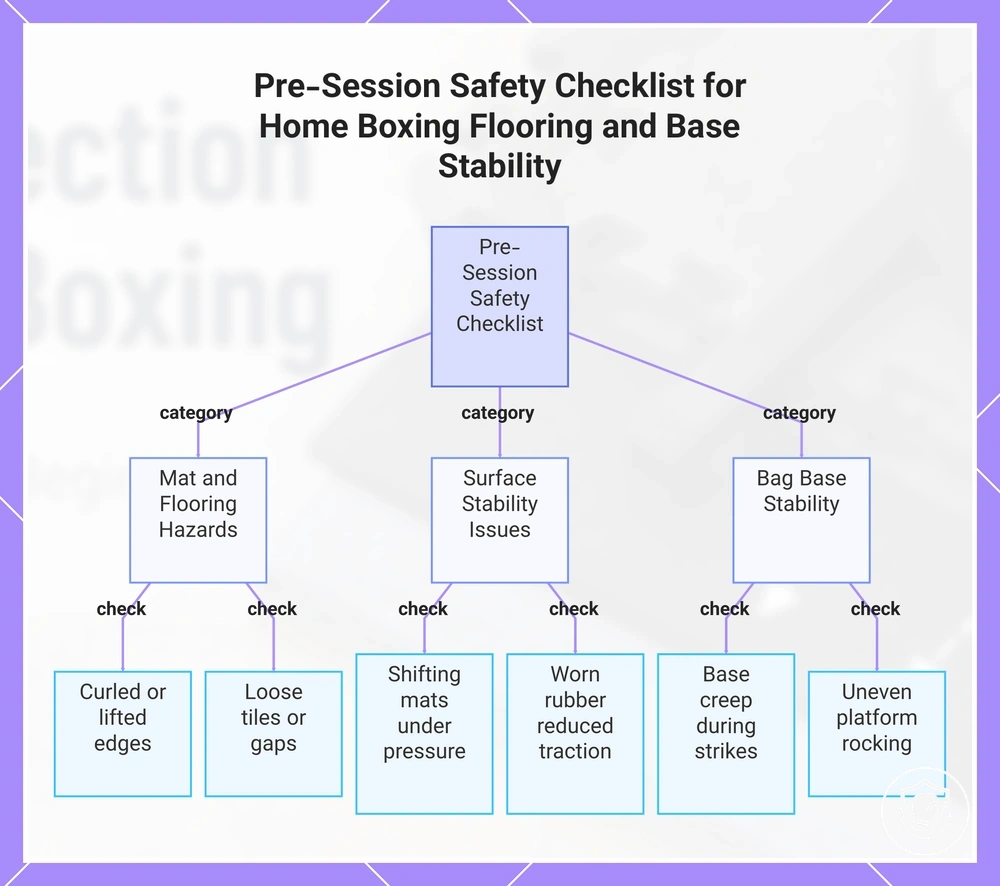
The safety of a home boxing setup relies on preventing slips, tip hazards, and keeping footing predictable under movement. A quick pre-session inspection spots conditions that need fixing before they cause an accident. Use this checklist to identify stop-and-fix issues before training.
- Curled mat edges: if a mat edge lifts or waves, it creates a tripping hazard – flatten or replace it before training.
- Shifting mats: if a mat slides under pressure, the surface is unstable – interlock seams or add anti-slip underlay.
- Base creep of bag stand: if the bag anchor shifts during strikes, the base needs additional weight or a non-slip pad underneath.
- Uneven flooring under bag: if the bag platform rocks or tilts, stop use and level with shims or stable padding.
- Loose floor tiles or puzzle mats: if tiles separate or pop up, they create a catch hazard – press back together or secure with edge strips.
- Worn or compressed rubber: if the floor surface no longer grips, especially after sweat, replace the covering to restore traction.
- Gaps between flooring and wall: if space is large enough for a foot to catch, fill with a trim strip or reposition the matting.
These safety checks apply to flooring and base stability only, not to medical advice or advanced training methods.
This chart groups the key pre-training safety checks for home boxing flooring and base stability by hazard category.