Beginner Home Boxing Equipment Durability: Materials, Wear Points, and Cost Over Time
Durability in beginner home boxing equipment refers to how long each component—gloves, hand wraps, the punching bag cover, and hanging hardware—maintains its intended shape, padding, and protective function under repeated use. Over time, materials degrade from impact stress, sweat moisture, and mounting strain. The key variable that influences durability and lifespan in this context is the combination of material quality, training frequency, and how well the equipment is maintained.
- Gloves: outer surface material (real leather versus synthetic), padding density, and stitching at wear points like thumb seam and wrist closure influence how soon protection begins to fade.
- Hand wraps: may lose elasticity and support when fabric fibers fray or hook-and-loop fastener weakens.
- Punching bag cover: may split at seams if synthetic surface is thin or stitching is single-needle.
- Hanging hardware: chains, swivels, and straps can develop rust or loosen at connection points.
Before each session, check for visible surface cracking, padding compression, or loose hardware.
Detailed cleaning routines and replacement checklists are handled in separate pages, so this section stays focused on material-driven durability.
Durability in beginner home boxing equipment: lifespan, protection stability, and failure boundaries
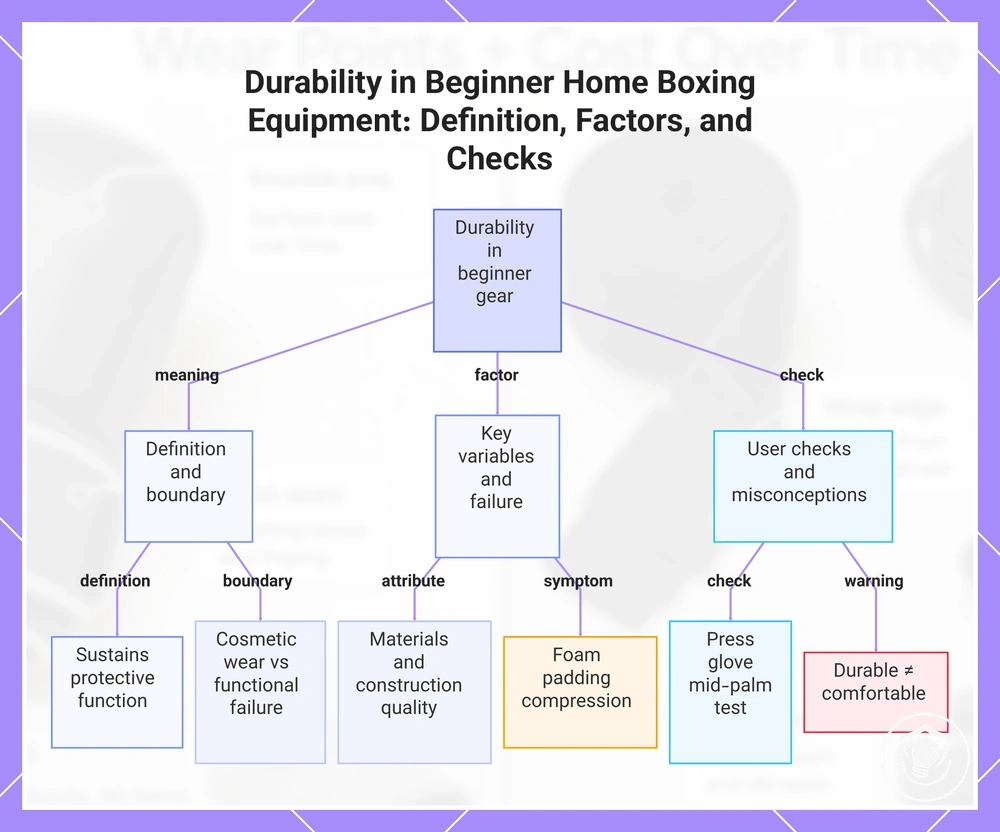
Durability is the ability of beginner home boxing equipment to sustain its protective function through repeated use without critical performance loss. The boundary between cosmetic wear, such as scuffs or faded logos, and functional failure, where padding compresses or seams split, defines how long the gear remains safe to use. Materials and construction quality are the key variables that control durability in this context.
A common failure mode involves the padding inside boxing gloves: the foam absorbs repeated impacts during heavy bag sessions, eventually losing its shock-absorbing capacity. Under conditions of high use intensity and sweat accumulation, beginner gloves can last from several months to over a year, depending on frequency and care. Focus pads and punching bags typically last a year or more when hung properly and not overstuffed.
Understanding these wear points helps beginners choose gear that matches their training load. A practical check for functional failure is pressing the glove padding mid-palm: if the foam feels flat or the wrist strap no longer secures snugly, protective stability may have declined.
A common misconception is that durable equipment is inherently comfortable. Stiffer materials and thicker padding often extend lifespan but can reduce mobility or cause hand fatigue.
This chart explains the meaning of durability for beginner boxing gear, the key factors that control it, and practical checks and misconceptions.
How long beginner boxing gear lasts: realistic lifespan ranges and the factors that shift them
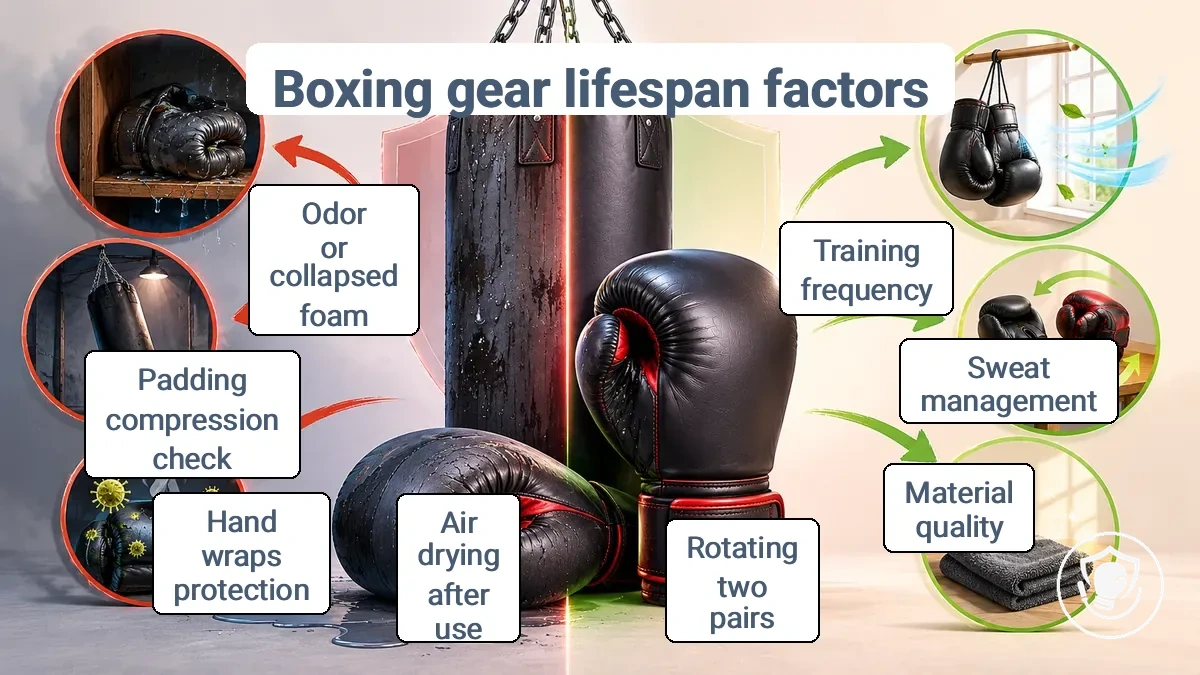
How long beginner boxing gloves last depends on training frequency, sweat management, and material quality — these factors directly affect wear points and durability. The infographic illustrates the factors that shorten or extend that lifespan range.
The table organizes common beginner boxing equipment by typical lifespan range, the primary wear driver, and early warning signs.
What shortens lifespan:
- high training frequency without rotation
- storing gloves while damp
- using sparring gloves on heavy bags
What extends lifespan:
- rotating two pairs for bag and sparring
- air-drying after every session
- using hand wraps consistently
| Gear type | Typical lifespan range | Primary wear driver | Early warning sign |
|---|---|---|---|
| Boxing gloves | 6 months to 2 years | Impact compression and moisture | Collapsed padding or persistent odor |
| Hand wraps | 3 to 12 months | Elastic fatigue and sweat | Loss of stretch or fraying seams |
| Punching bag cover | 1 to 3 years | Repetitive friction and load cycles | Surface cracks or seam splitting |
| Hanging hardware (swivels, chains) | 2 to 5 years | Metal fatigue and rust | Creaking sounds or visible corrosion |
Padding inside gloves compresses under repeated heavy-bag impact; with frequent training, the foam often loses its shock absorption, making the knuckles feel the bag directly — a clear sign that the gloves can no longer protect the hands. The most practical check is pressing your thumb into the padding — if it does not spring back, replacement is due.
For someone training once or twice weekly, the same pair of gloves may still feel supportive after a year, because the foam has time to recover between sessions.
Boxing Glove Lifespan Drivers: Training Frequency, Sweat Exposure, Lining Breakdown, and Closure Fatigue
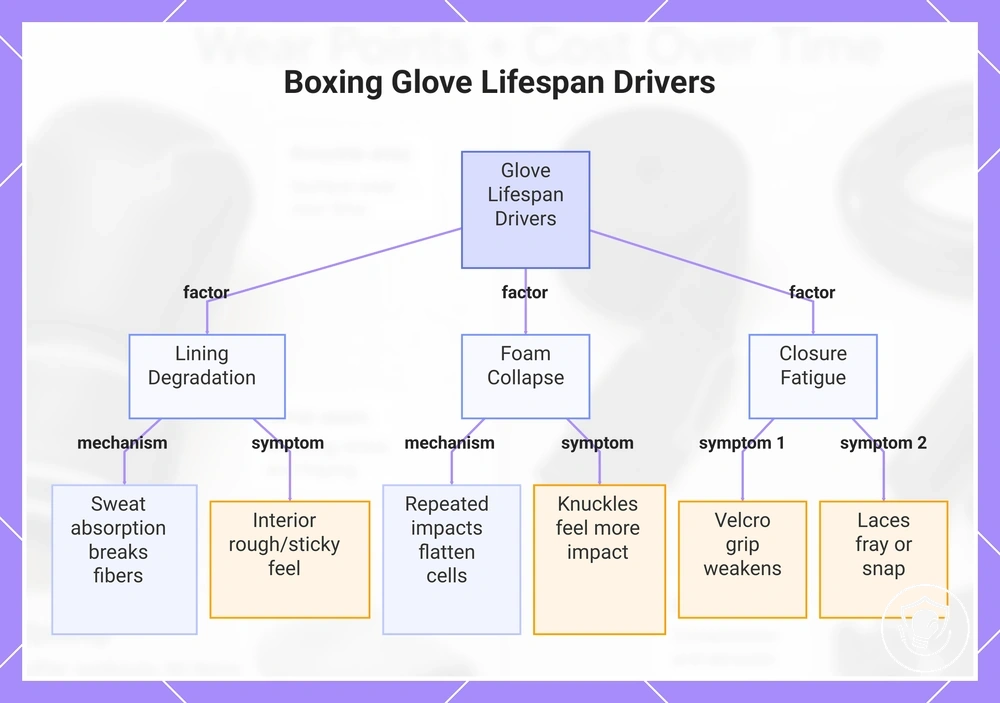
Boxing glove lifespan is mainly driven by moisture load, compression cycles, and closure fatigue that affect protection stability. Moisture from sweat softens the lining and foam, repeated impacts flatten padding, and wrist closure stress weakens velcro or laces. How quickly and thoroughly the gloves dry after each session is the most controllable variable for durability.
- Lining: sweat absorption breaks down fabric fibers; interior softens, feels rough or sticky (notice: rough interior), and odor becomes persistent.
- Foam: repeated compression cycles collapse foam cells; padding loses rebound, knuckles feel impact more directly, and hand protection decreases.
- Wrist closure (velcro): repeated pull and tension wear down hooks and loops; closure grip weakens, strap may not stay fastened (notice: loose strap), and wrist support drifts during training.
- Stitching: abrasion from bag contact and stretch causes threads to fray or break; seams split, allowing foam to shift inside the glove.
- Outer material: sweat and surface friction cause leather or synthetic to crack or peel; outer shell integrity weakens, reducing structural protection.
- Closure laces: tension and knot friction cause laces to fray and break; laces loosen or snap mid-session, requiring retying or replacement.
- Hand compartment shape: wet lining and improper drying warp interior shape; glove may no longer fit snugly, hand shifts inside, affecting punch alignment.
This chart shows the main factors driving boxing glove degradation and their observable effects.
Hand wrap lifespan drivers: stretch loss, fabric thinning, and hook-and-loop wear
The lifespan of hand wraps depends more on stretch retention in the elastic and fatigue in the hook-and-loop closure than on visible dirt or staining. Once the elastic stops returning to its original shape, the wrap can no longer apply consistent compression, and the fastener starts to slip.
- Elastic stretch loss – visible as increased slack after wrapping – reduces compression and support, making the wrap feel loose during training.
- Fabric thinning over the knuckles – visible as worn or see-through areas – reduces padding, allowing more impact to reach the hand.
- Loop stitching degradation on the hook-and-loop closure – visible as fraying or pulled threads – weakens the fastener’s grip, increasing the risk of slippage.
- Hook-side debris accumulation – visible as lint or fuzz clogging the hooks – reduces engagement strength, which can cause the closure to release unexpectedly.
A simple check for beginners is to feel for stretch loss by pulling the elastic section after wrapping: if it stays slack instead of snapping back, the wraps are near the end of their useful life. Gentle wash cycles can slow these wear patterns, but they usually do not reverse existing material fatigue.
Punching Bag Cover Lifespan Drivers: Abrasion, Seam Stress, and Surface Cracking Patterns
Punching bag cover lifespan depends more on abrasion rate in the strike zone and how seams handle filler movement than on thickness alone. Repeated friction from gloves thins the surface over time, while shifting filler pulls at stitched seams. Together, surface abrasion and seam stress determine when cracking or peeling becomes visible.
Cover material sets the abrasion resistance, but wear rate depends on glove surface roughness, humidity, and cleaning frequency. High humidity or rough gloves can make the surface crack or peel faster.
Seam stress can rise when filler settles unevenly or when the bag is struck repeatedly without rotating. The chain set, strap, and swivel also load the top seams, and corrosion there can worsen the stress. A practical sign to watch is fine lines around the top and bottom seams, which often precede full separation.
Hanging hardware lifespan drivers: chain link wear, corrosion, swivel friction, and strap tearing risk
Hanging hardware on a punching bag deteriorates from load-path wear and corrosion, eventually failing under repeated load and humidity.
- Chain set: inspect for rust, pitting, or deformation → rough movement and higher failure risk.
- Swivel: feel for rough rotation, listen for noise → indicates bearing wear and friction under load.
- Strap: look for fraying or abrasion at the cover seams or strike zone → tearing risk during use.
- Carabiner: check for cracks or distortion → reduced load capacity and possible sudden opening.
Any component showing visible cracks, link elongation, or material loss is at replacement level and should be removed from service.
Where Beginner Home Boxing Gear Wears Out First and Why Those Zones Fail
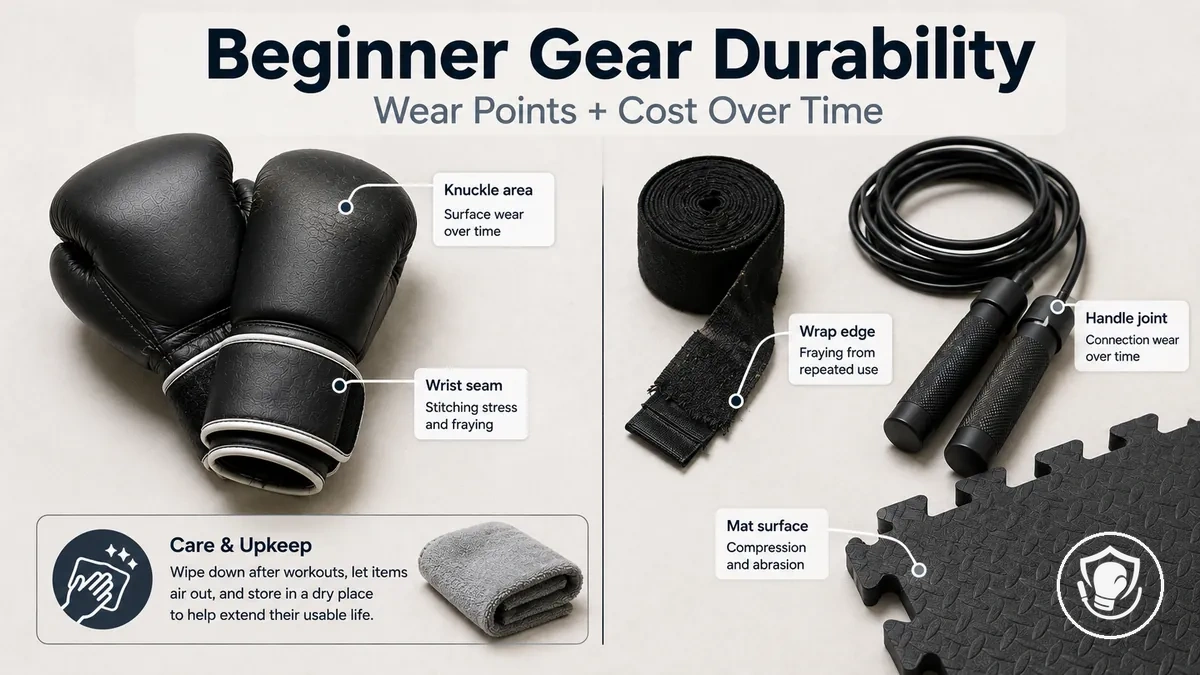
Wear in beginner boxing equipment concentrates at predictable contact and stress-transfer zones across gloves, wraps, bags, and hardware. These zones absorb repeated friction, shear, compression, or peel force depending on the part and the type of use. Durability and lifespan depend primarily on material quality and maintenance consistency.
A diagram of typical wear zones clarifies how each piece of beginner boxing equipment begins to degrade.
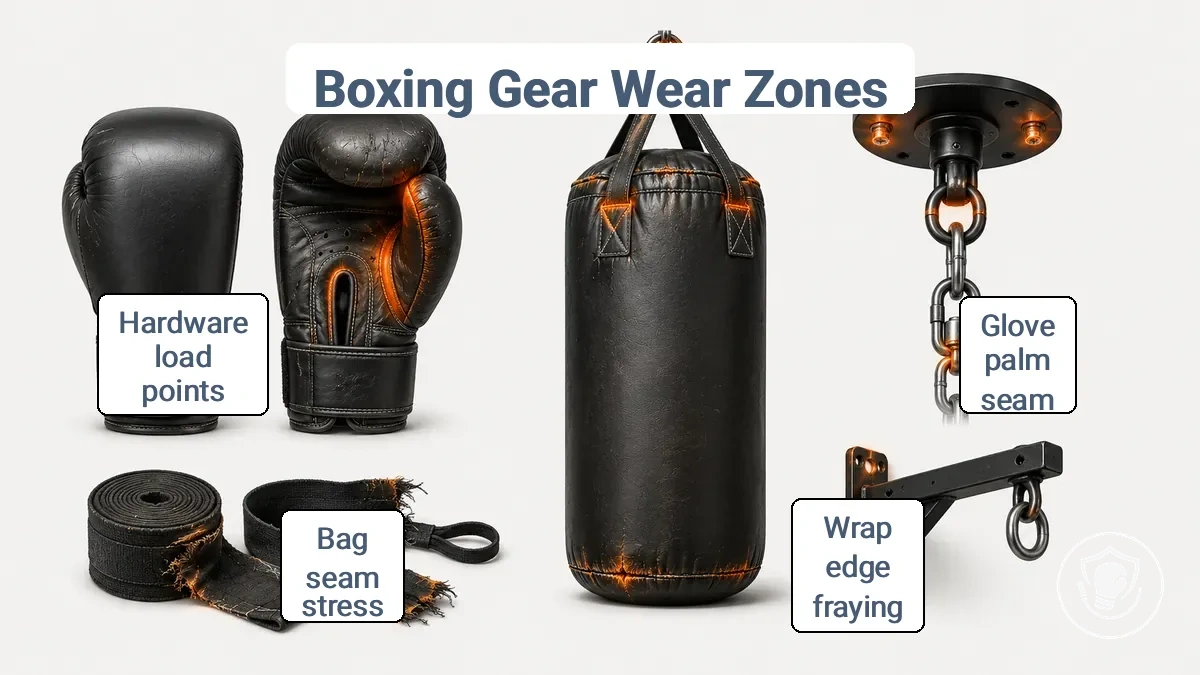
- Gloves: Inner palm and thumb seam – compression – padding flattens and stitching loosens – reduced hand protection.
- Hand wraps: Edges and finger loops – friction – fraying fibers and loosened wrap tension – less wrist and knuckle support.
- Heavy bag: Seams and top mounting loop – peel force – separation of cover material or hanger failure – bag may swing unevenly or risk detachment.
- Hardware (mounts/swivels): Load points and hinge pins – load – metal fatigue or loosening – bag stability decreases – potential safety hazard.
Inspecting these wear points reveals early signs of deterioration. Recognizing these signs helps decide whether better habits can slow further wear or whether replacement is the safer option.
Boxing glove wear points: knuckle surface, palm panel, thumb seam, inner lining, and wrist closure
Wear at the knuckle surface, palm panel, thumb seam, inner lining, and wrist closure often leads to reduced protection stability or fit drift.
- Knuckle surface – The outer foam and cover experience abrasion from bag and pad work. A visible sign is softening or indentations in the padding. This can change how evenly impact is distributed across the knuckles.
- Palm panel – Sweat and repetitive gripping can cause the material to crack or peel. Visible cracking on the surface often leads to reduced palm support and a less secure grip-bar feel.
- Thumb seam – Repeated flexing puts stress on the stitching. Fraying or split threads are early signs. When the seam weakens, thumb alignment and stability during punches can drift.
- Inner lining – Sweat and incomplete drying can make the lining rough or cause it to peel. A rough interior can reduce comfort and may alter how snugly the glove fits over wraps.
- Wrist closure – The Velcro hook-and-loop fastening can lose grip over time from repeated use. A closure that slips or no longer secures tightly is a typical sign. This often results in a noticeable loss of wrist support during strikes.
Hand wrap wear points: edge fray, mid-wrap thinning, loop stitching, and velcro separation
Wear points on hand wraps mainly show reduced support and a higher risk of slipping. What often controls durability is how the material—cotton or elastic—holds up under repeated tension and cleaning, not just initial thickness or brand.
- Edge fray: Look for loose threads along the edges. This points to material degradation that can spread with more use.
- Mid-wrap thinning: Press the fabric to feel for reduced padding. This means support loss in the knuckle area and may require more frequent rewrapping.
- Loop stitching: Tug on the thread where the thumb loop attaches. Loose stitching can cause the loop to tear during training.
- Velcro closure: Test the grip by pressing the hook and loop together. A weak hold means the wrap may not stay secure and could slip during a session.
Edge fray is often cosmetic, but thinning and stitching issues indicate structural wear from wash cycles, stretch loss, or drying heat. A practical check is to press and tug these stress points before each training session.
Punching bag wear points: cover seams, strike zone abrasion, attachment loops, and top panel stress
Punching bag wear points show where load and abrasion concentrate in home setups. Durability largely depends on strike alignment and swing amplitude.
For cover seams, stitching integrity is critical; off-center striking and bag sway create uneven tension that can lead to thread separation. Constant impact tests the strike zone's surface abrasion resistance; excessive bag swing increases wear on one side.
At the attachment loops and top panel, loop strength and corrosion resistance influence chain set security; loose or rusted hardware raises detachment risk. A practical check is to inspect seams and chain connections monthly for early signs of failure.
- Material thinning at the strike zone
- Seam separation along the stitching lines
- Rust or loosening at the attachment loops, strap, and swivel
- Top panel stress or deformation from the chain set and swivel
A small seam separation can spread quickly under repeated impact because the surrounding stitches then carry more load.
Chain Sets and Straps as Wear Points: Link Deformation, Connector Failure, and Load-Path Weak Spots
Chain and strap wear in a punching bag setup is a load-path problem with visible warning signs that appear before failure. Link twist, strap fraying, and swivel corrosion all reduce load-path integrity over time. Long-term durability depends largely on connector condition—specifically any visible deformation or corrosion on the chain set, swivel, or carabiner.
Every connector in the chain set carries the bag's full dynamic load during movement. Deformation or corrosion, accelerated by humidity, off-angle loading, or vibration, can cause progressive weakening that often first appears as a noise increase during use. Check for smooth pivot movement at the swivel and link junctions; binding or grinding signals surface wear that can lead to uneven load distribution and eventual failure.
- Symptom: A link appears twisted or bent. Likely cause: Off-angle loading or repeated impact. What to inspect: Adjacent links and the swivel for similar deformation. If twist is visible across multiple links, the chain set may have reached replacement-level deformation.
- Symptom: Strap fraying near the bag cover seam. Likely cause: Abrasion between the strap and the seam during bag swing. What to inspect: The seam stitching for broken threads and the strap's load-bearing surface for thinning.
- Symptom: Swivel shows pitting or surface discoloration. Likely cause: Corrosion from humidity or chemical exposure. What to inspect: Full swivel rotation for catching and any decrease in freedom of movement; corrosion-induced weakening reduces load capacity over time.
- Symptom: Audible noise increase during bag swing (squeaking or grinding). Likely cause: Worn bearing surfaces on the swivel or link pins. What to inspect: Pivot points for visible wear grooves or flattened surfaces. Noise is a signal to inspect, not a guaranteed failure indicator.
- Symptom: Chain links bind or fail to rotate freely. Likely cause: Link elongation from repeated overload. What to inspect: Compare link length to adjacent links; visible elongation indicates the link has stretched and may need replacement.
- Symptom: Bag cover shows concentrated abrasion at the strike zone. Likely cause: Bag repeatedly contacting a rough floor or wall. What to inspect: The chain set and strap for shock-load deformation—look for sudden bends or cracks in the connector.
Materials That Most Change Durability Across Beginner Home Boxing Equipment
The materials used affect how quickly wear points develop and when equipment becomes unusable. Outer surfaces, internal padding layers, and hardware components respond differently to moisture, friction, and repeated load. The balance between material quality and drying habits often controls actual lifespan.
For outer surfaces, genuine leather resists abrasion but can crack if left damp; synthetic vinyl handles moisture better but may peel under high-frequency use. Internal foams (often multi-layer EVA) maintain shape longer than single-density foam but can retain odors when not aired. Hardware such as stitching and metal fasteners corrodes in humid storage or loosens under load.
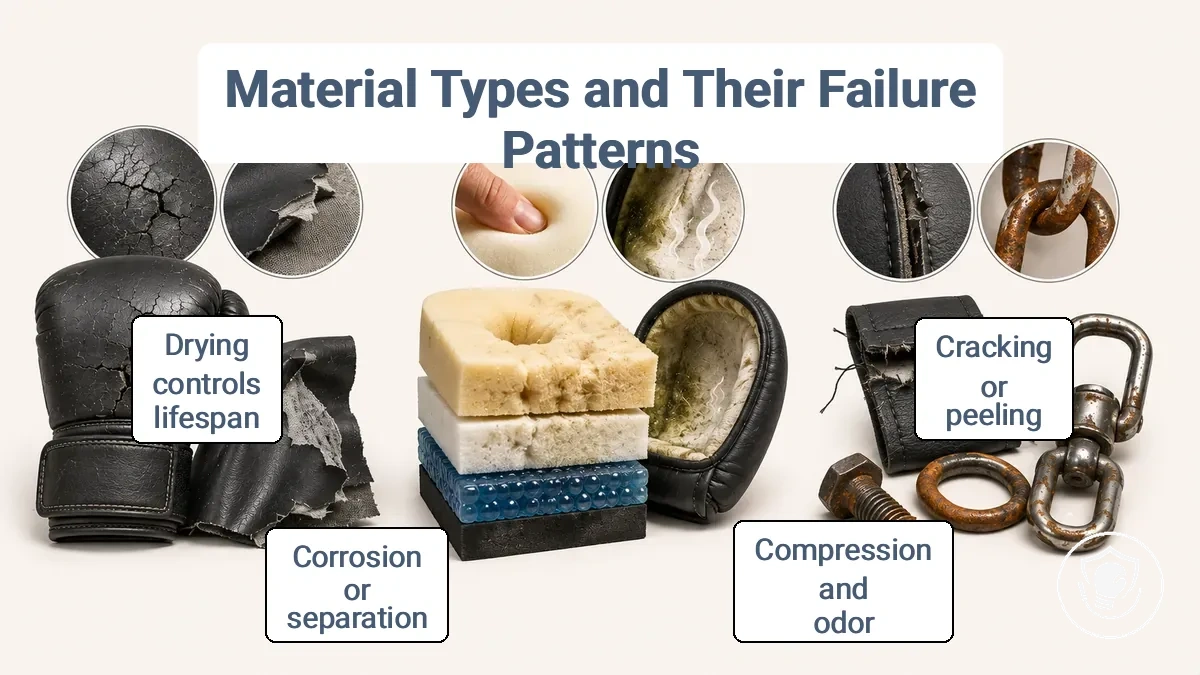
The table groups these material families by their dominant failure patterns.
| Material family | Dominant failure pattern |
|---|---|
| Outer surface (leather, synthetic vinyl) | Cracking or peeling after exposure to sweat and repeated impact |
| Internal padding (foam, gel layers) | Compression loss and odor retention from trapped moisture |
| Hardware (stitching, metal components) | Corrosion or separation due to humidity and regular stress |
Materials with higher durability often demand more careful drying, and even premium materials fail early when drying is poor or training frequency stays high.
The image illustrates these material families and their typical failure patterns.
Leather vs synthetic surfaces for gloves and bags: abrasion resistance, cracking patterns, and upkeep sensitivity
Leather and synthetic surfaces differ in how they handle abrasion and moisture, which affects cracking and peeling patterns. Durability depends largely on how each surface interacts with the environment—dry conditions often favor leather while moisture favors synthetics.
| Attribute | Leather | Synthetic |
|---|---|---|
| Abrasion tendency | Resists better in dry, rough use; can wear slowly | Can abrade faster unless coated; varies with coating type |
| Sweat tolerance | Absorbs moisture, stiffens, may crack when dried repeatedly | Resists sweat, stays flexible, but coating may peel over time |
| Upkeep sensitivity | Needs conditioning to avoid drying; difficult to wash thoroughly | Easier to wash; less maintenance needed but may degrade from heavy solvents |
| Typical failure look | Cracking and stiffening at flex points, then tearing | Peeling of coating, delamination, or hole formation at wear points |
Leather’s natural fiber structure wears gradually from abrasion, but if moisture penetrates and dries repeatedly, cracking may appear at crease lines. Synthetic surfaces often use a polymer coating bonded to a textile base; under constant flexing and sweat exposure, this coating can begin to peel or flake, especially if the bond degrades. A practical check for both materials is to inspect for early signs of cracking or peeling at high-wear areas—if these appear, the lifespan may be limited.
Glove internals that affect durability: lining, foam resilience, stitching density, and edge binding
Glove internals influence protection stability even when the outer shell still looks intact. Among them, foam resilience is often the first to degrade under compression cycles, which can reduce impact absorption over time.
- Lining: Degradation from sweat and friction causes fraying or bunching. This reduces comfort and can shorten the glove’s lifespan, especially when boxing gloves are used regularly without proper drying.
- Foam: Repeated impact compression and moisture can cause the foam to lose resilience, crack, or split. This can cause padding drift or a collapsed fit, reducing protection and increasing hand fatigue.
- Stitching: Stitch density influences seam strength. Loose or broken stitches often appear at high-stress areas near the wrist closure. This compromises the glove’s support and can cause the shell to separate from the lining.
- Edge binding: Abrasion from the velcro wrist closure and repeated insertion pulls on the binding. Worn binding can reduce structural integrity around the opening, leading to less reliable wrist support.
A practical sign to check is visible bunching of the lining or a loss of padding shape from regular use.
A common myth is that a glove’s protection remains as long as the outer shell looks intact, but degradation of the lining, foam, stitching, or binding can reduce protection stability even without visible surface damage.
Hand wrap materials: cotton vs elastic blends, quick-wrap styles, and how durability degrades over washes
Hand wrap material determines stretch retention and how quickly support degrades over wash cycles. Cotton wraps hold shape longer but lose elasticity with heat drying, while elastic blends may stretch out faster after repeated washing. Quick-wrap styles, a slip-on category with built-in padding, often show early support loss as integrated foam or gel degrades per wash.
| Wrap Type | Stretch Change After Washes | Fray Risk | Closure Lifespan |
|---|---|---|---|
| Cotton (non-elastic) | Minimal stretch loss; may shrink slightly | Low to moderate fray at edges over time | Velcro tends to hold well if loop stitching stays intact |
| Elastic blend (Mexican-style) | Elastic fibers can lose tension; stretch loss depends on wash/dry method | Moderate fray, especially at seams | Velcro may fatigue faster due to repeated stretch |
| Quick-wrap (gel/foam inner) | Gel or foam compresses; stretch retention varies by brand | Outer fabric can fray at wrist strap | Closure often wears out before wrap surface |
Durability depends on the interaction between wrap material, weave density, fastener condition, and wash method. Heat drying tends to accelerate stretch loss and fiber weakening. For quick-wrap styles, the integrated padding is a common failure point. A practical sign that a wrap needs replacement is when the velcro no longer holds securely or the fabric feels noticeably thinner at the knuckle area.
Hardware materials and finishes: galvanized vs coated steel, stainless tendencies, and rust-prone environments
Finish quality often matters as much as base metal for home-humidity durability. The corrosion resistance of a punching bag's chain set, swivel, and strap hardware depends on the surface treatment applied to the base steel. In a home gym where sweat and humidity accumulate, a galvanized zinc coating or a protective paint layer can slow corrosion, while stainless steel fittings tend to hold up longer under repeated exposure.
- Galvanized chain set and swivel: corrosion resistance is moderate; inspect for white powdery spots or orange rust on the strap or near seams. Once the zinc coating wears off at the strike zone or along the swivel, bare steel can corrode quickly, causing rough movement and noise.
- Coated steel hardware (paint or powder coat): good initial protection but can chip at contact points like the strap anchor or swivel. Check for scratches or exposed metal—once the coating breaks, corrosion can start, weakening the chain set and possibly leading to failure.
- Stainless steel fittings: high resistance to rust, but not immune in humid conditions. Look for surface pitting on the swivel or the cover fasteners. Any abrasion at the strike zone or seams can create entry points for perspiration, gradually reducing longevity.
- A consistently damp environment accelerates wear on all finishes. Inspect the chain set and strap for roughness or discoloration; catching these signs early extends usable lifespan.
A practical check for hardware durability is the feel of the swivel and the condition of the strap seams. Rough rotation of the swivel or corrosion at the strap attachment points indicates that the finish has likely started to fail. Replacing these parts before rust spreads can help prevent noise and maintain safe, smooth training.
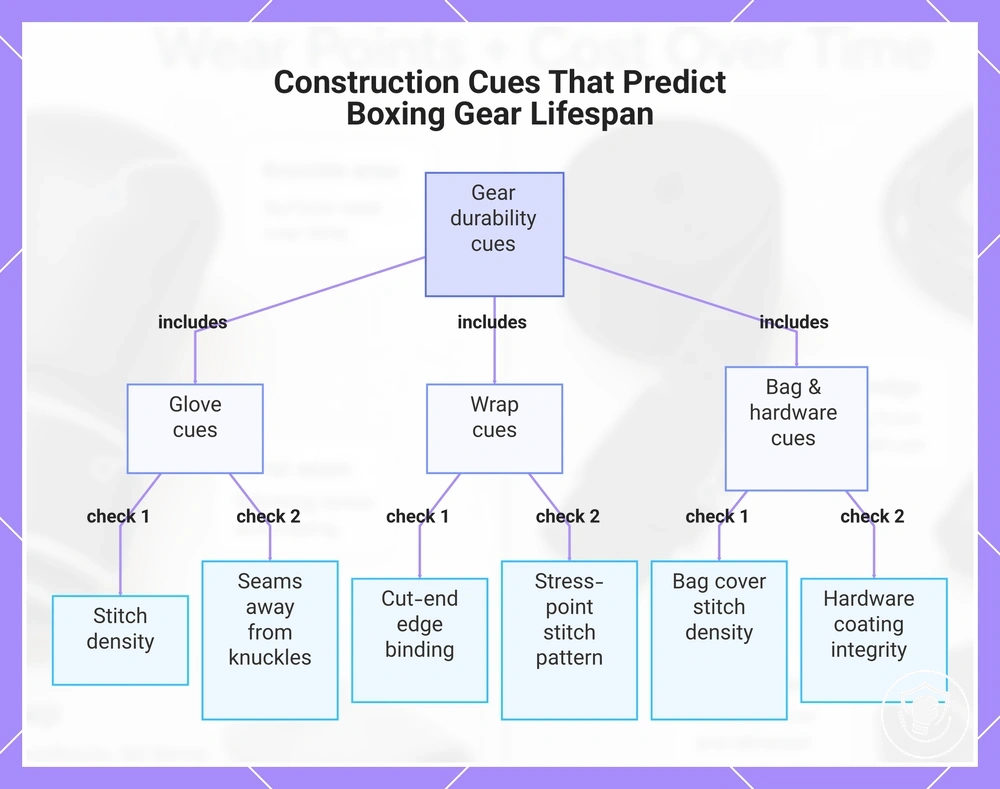
Durability checks before you buy: construction cues that predict lifespan
Construction cues predict durability more reliably than marketing labels for beginners, especially at common wear points.
- Gloves – Stitch density: Closely spaced stitches usually reduce splitting risk during heavy bag work.
- Gloves – Seam placement: Seams away from the knuckle zone often abrade less and fray later.
- Gloves – Edge binding on wrist and thumb: Reinforced binding in these high-movement zones typically delays edge curling and tearing.
- Gloves – Closure quality: Secure closure distributes tension evenly, reducing the chance of strap failure.
- Wraps – Edge binding on cut ends: Smooth, tight edge binding reduces the risk of unraveling after repeated washing.
- Wraps – Stitch pattern at stress points (thumb loop, wrist anchor): Reinforcing stitches at these points often reduce seam pull and extend usable life.
- Bag cover – Stitch density on the outer shell: Higher stitch density on the cover usually improves resistance to splitting from impact.
- Bag cover – Coating integrity: Consistent, crack-free coating on synthetic covers often resists moisture and surface wear.
- Hardware – Coating integrity on swivels and brackets: Smooth, even paint or powder coating often reduces corrosion risk, especially in humid training spaces.
- Hardware – Closure quality on mounting bolts: Well-threaded bolts with consistent plating often stay tight longer, reducing the chance of loosening.
Thickness alone can mislead. A glove with thick padding may still fail if the material or stitching is low grade. The better cue to verify is stitch density and how the padding is anchored to the shell.
Checking two or three of these cues per gear type often reveals which pieces are built to last, but they do not guarantee a long lifespan.
This chart groups durability cues by gear type, highlighting what to check for gloves, wraps, and bag & hardware.
Cost over time trade-offs for beginners: pay more now vs replace sooner
The real cost over time of boxing equipment depends more on your training frequency and how quickly common wear points develop than on the sticker price alone. The key variable that influences cost over time is replacement cadence: how often you must refresh each item given your actual use.
Each gear category has different durability strengths. For example, beginner gloves often use synthetic leather that can crack under moderate training frequency, while heavier bags with reinforced seams may hold up longer before seam failure appears. When a part fails unexpectedly, training downtime increases—and so does the risk of injury from worn gear. Training frequency typically correlates with replacement cadence as shown below. The decision lever here is whether to pay more now for a longer replacement interval or accept a shorter one and plan earlier refresh cycles. To see how these trade-offs affect your overall spending, see budget priorities and upgrades.
| Training Frequency Tier | Likely Replacement Cadence |
|---|---|
| Low (1–2 sessions per week) | Often extends replacement interval beyond a year for gloves; heavy bag cover may last longer. |
| Moderate (3–4 sessions per week) | Gloves may need replacement within several months; bag cover may require attention yearly. |
| High (5–6 sessions per week) | Gloves can wear out in a few months; bag seams may fail within a training season. |
Consider a beginner who trains three times per week. Entry-level gloves may show significant wear within four to six months. Planned replacement keeps cost over time more predictable and supports consistent training, whereas surprise failure often forces a lower-quality temporary option and adds unplanned expense.
A common belief among beginners is that paying more always means longer gear life. In reality, paying more may reduce downtime if the wear points are designed for your training frequency, but it can also be overbuying if the added durability is unnecessary. A safer approach is to inspect wear points regularly and plan a refresh interval based on your actual usage rather than relying on price alone.
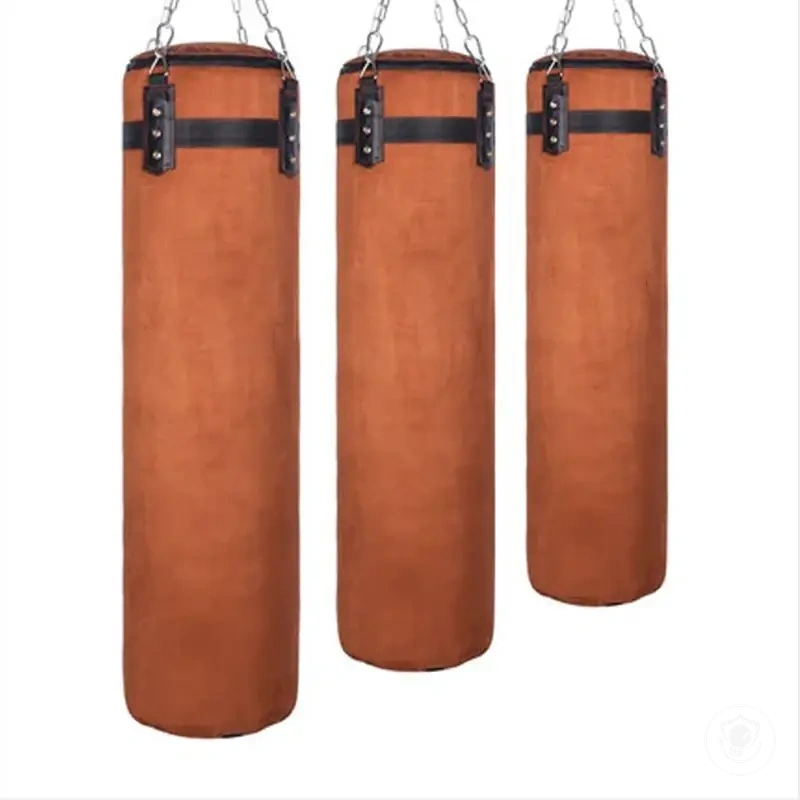
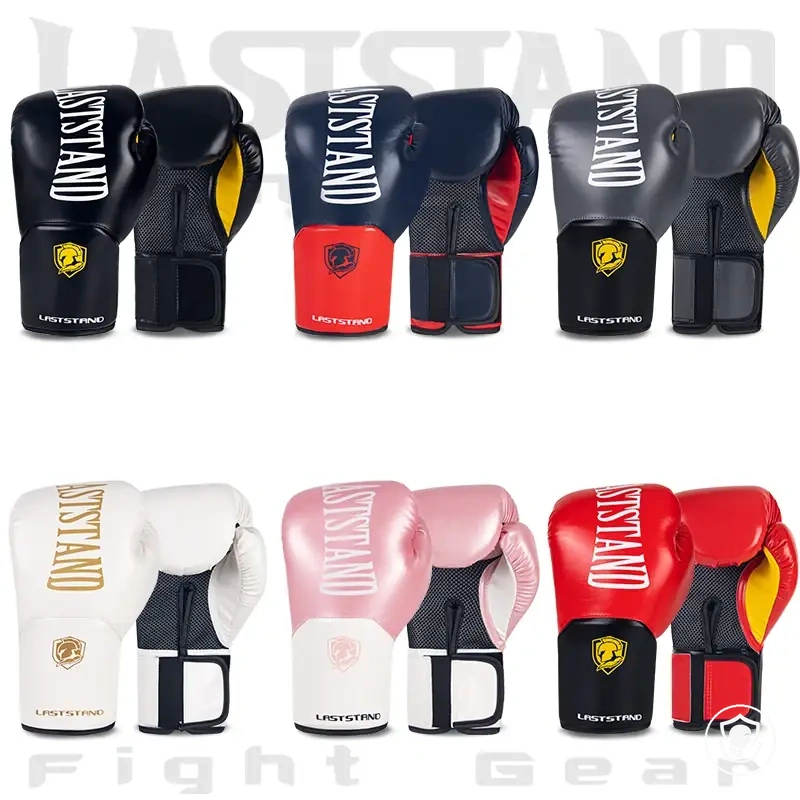
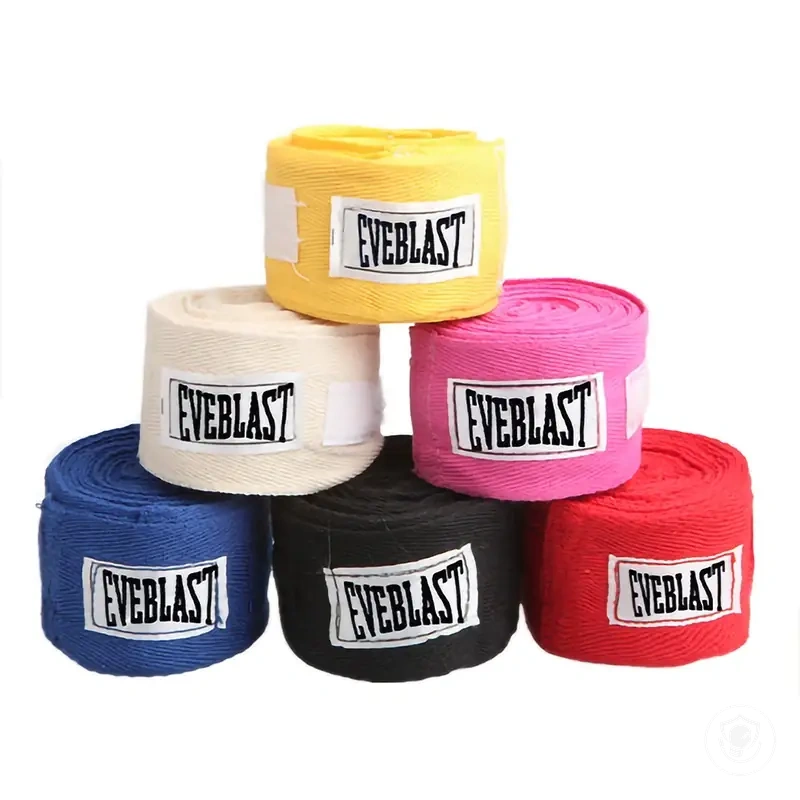
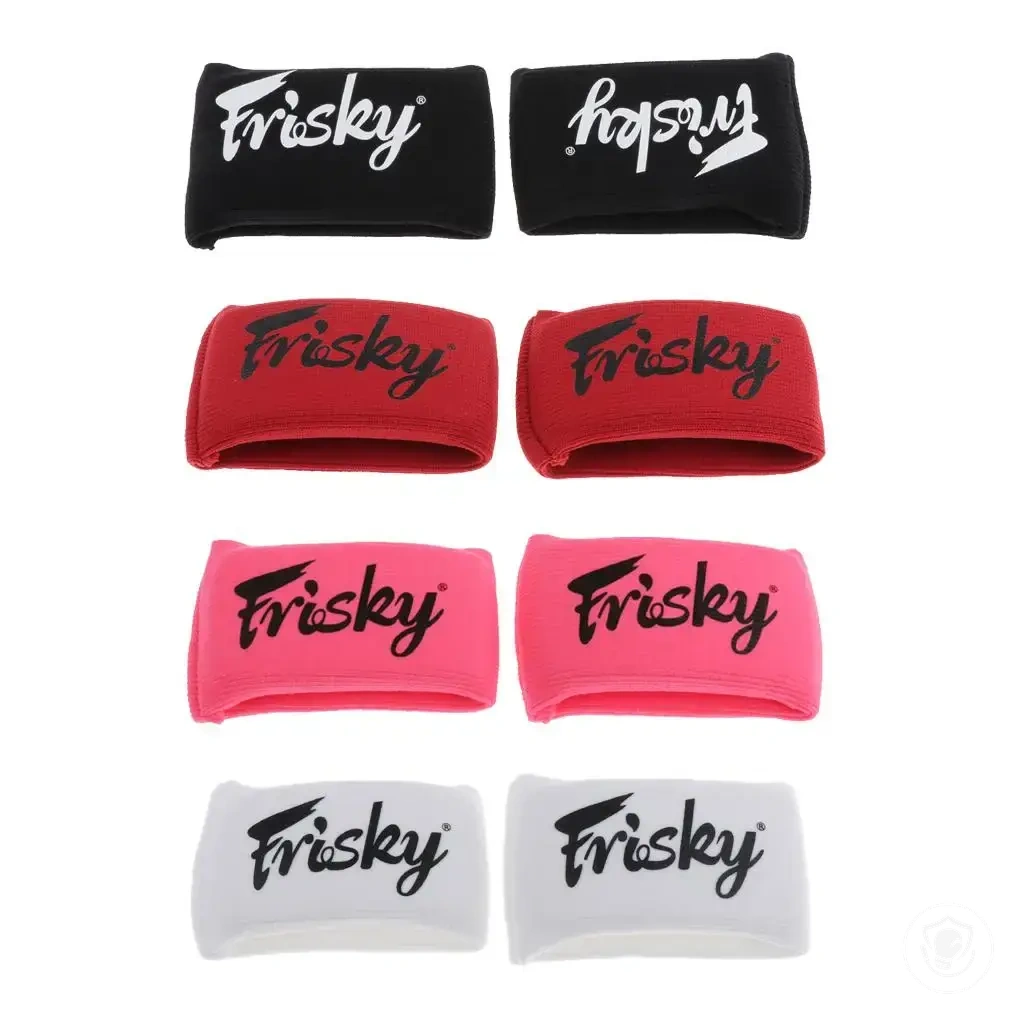
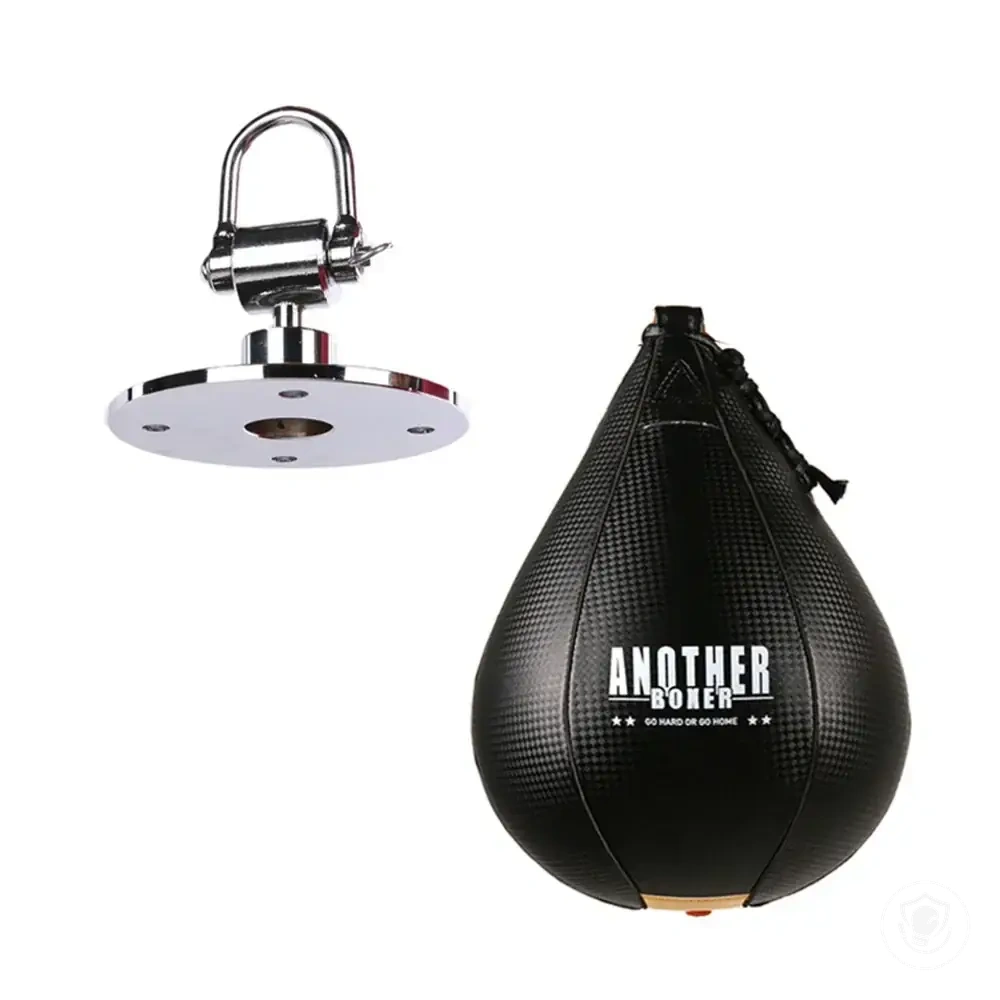
Here are product examples that may make comparison easier. Before buying, always review the compatibility criteria, essential features, and product details.
A simple cost-over-time framework: training frequency, replacement friction, and performance drift
A simple cost-over-time framework uses training frequency, replacement friction, and performance drift to estimate how often boxing equipment needs replacement. Training frequency is often the primary driver because repeated use directly affects how fast material breaks down. It influences replacement cadence, accelerates wear points, changes replacement friction (like downtime or cost per use), and makes performance drift more noticeable.
Common training frequency tiers map to likely friction points and performance drift signals:
| Frequency Tier | Accelerators (Friction Points) | Performance Drift Signals | Decision Implication |
|---|---|---|---|
| Low frequency | Minimal repetitive impact; gear sits idle for longer periods | Little to no visible change in feel or support | Maintain — inspect for storage-related issues |
| Medium frequency | Consistent wear on padding and straps; occasional moisture exposure | Slight compression in cushioning; mild loss of fit | Upgrade to higher-durability parts if performance matters |
| High frequency | Heavy impact, sweat buildup, repeated flexing at seams | Noticeable loss of shock absorption; straps may loosen or fray | Replace — failure risk rises and value trade-off shifts toward new gear |
Consider padding thickness: under high training frequency, padding may compress or shift, reducing impact protection over time. Strap stitching and shell integrity face similar stress: repeated use can cause material fatigue even without visible tearing. The most practical check is to compare the equipment's current feel during use against its original response; a drift in comfort or feedback often signals that replacement is worth considering before failure risk increases downtime.
When durability upgrades are not worth it: early-stage use patterns and overbuying risk
Overbuying durability occurs when a beginner’s use intensity is well below the gear’s design threshold. The key variable controlling durability here is training frequency—how often and how hard the equipment is actually used.
A part’s durability rating becomes a cost over time issue: higher-grade components often carry a premium, but if your training frequency is low, the replacement cadence remains long anyway. The marginal benefit of an upgrade shrinks, so the value trade-off shifts toward other priorities like fit, safety basics, or maintenance habits. A practical check is to map your current wear points: if failure risk is low even with standard gear, an upgrade offers a lower return for this use pattern.
- When durability upgrades help: training frequency is consistently high, wear points show visible breakdown, downtime would disrupt progress, and the budget allows for a long-term purchase without squeezing other essentials.
- When durability upgrades bring a lower return: training frequency is low or inconsistent, current gear still holds up, replacement cadence is easily manageable, and spending more on fit or safety basics would improve the experience more than a tougher shell or higher-grade material.
- Replacing standard gear on a natural replacement cadence often costs less than buying premium gear that outlasts your current training stage.
- A tighter budget is better directed toward comfort, proper sizing, and protective accessories that directly affect safety and consistency.
- If equipment sits idle for weeks, a high-durability model becomes an unnecessary lock on capital that could be used elsewhere.
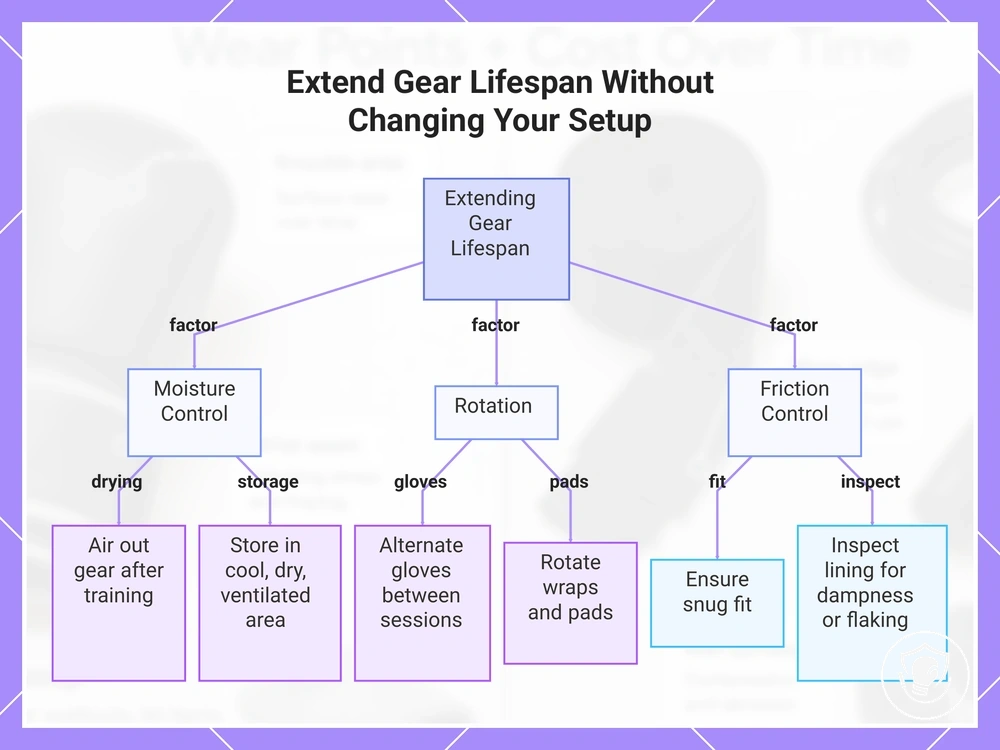
Extending Gear Lifespan Without Changing Your Setup: Drying, Storage, Rotation, and Friction Control
The largest lifespan gains from boxing equipment usually come from controlling moisture and reducing repeated friction points. A key variable that influences durability is how consistently you manage these factors after each session.
- Drying:
- Air out gloves and wraps immediately after training to prevent moisture buildup.
- Place gear in a well-ventilated area rather than a sealed bag to speed drying.
- Storage:
- Keep gear in a cool, dry location away from direct sunlight to slow material aging.
- Store loosely to maintain shape and reduce compression creases on padding.
- Rotation:
- Use multiple pairs of gloves and alternate between sessions to allow full drying and shape recovery.
- Rotate hand wraps and pads to distribute wear evenly across items.
- Friction control:
- Ensure a snug but not tight fit to minimize rubbing on lining surfaces.
- Smooth any rough seams or surfaces that could abrade the interior material.
Synthetic or leather linings can break down faster when exposed to moisture and friction, leading to delamination, cracking, and reduced impact protection.
After heavy sessions, inspect the interior lining for dampness or flaking as signs of wear. For deeper cleaning and odor control, see the cleaning and odor control routine.
This chart shows the key factors and checks for extending gear lifespan through moisture control, rotation, and friction management.
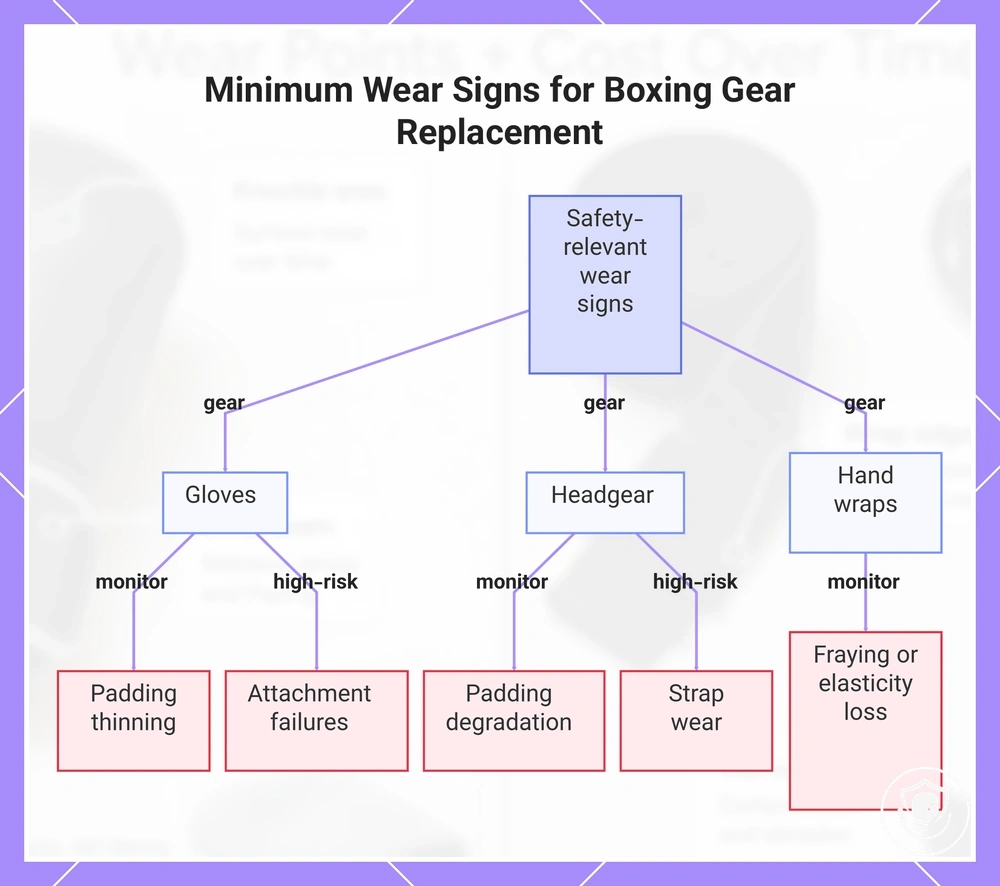
When wear becomes a safety problem: minimum signs that should trigger replacement planning
Safety-relevant wear on boxing equipment is any damage that compromises protection, secure attachment, or predictable behavior during use. When impact-absorbing or securing materials degrade, the item’s lifespan shortens and its ability to protect lowers. Regular inspection of wear points that affect support, attachment, or predictability is key.
Knowing when wear becomes a safety problem means recognizing the minimum signs that should trigger replacement planning. For a fuller replacement-sign checklist, see replacement signs to watch for. Below is a gear-specific breakdown of high-risk and monitor-level signs to help prioritize checks:
- Gloves – padding thinning: When the inner foam or gel compresses unevenly, shock absorption drops. Risk: increased impact transfer to hands. Action: monitor regularly; replace if compression is significant enough to affect protection.
- Gloves – stitching failure: Split seams near the thumb or cuff expose the padding. Risk: attachment failure during use. Action: high-risk; remove from service immediately.
- Gloves – strap deformation: A stretched or cracked wrist strap reduces secure fit. Risk: unpredictable movement and hand shift inside the glove. Action: high-risk; replace before next session.
- Headgear – padding degradation: Foam that no longer rebounds or shows permanent dents offers reduced protection. Risk: loss of impact cushioning. Action: monitor regularly; replace when dents remain after pressing.
- Headgear – strap wear: Frayed or loose chin straps can detach during use. Risk: attachment failure. Action: high-risk; replace or retire the headgear.
- Hand wraps – fraying or loss of elasticity: Torn edges or stretched fabric no longer provide consistent support. Risk: reduced hand and wrist stabilization. Action: monitor-level; replace when fraying reaches the structural layer.
Not all visible changes indicate structural risk. Surface scuffs or light discoloration on gloves are cosmetic and may not affect protection. However, any deformation of the strap or padding is a high-risk sign and signals that replacement planning should begin.
Here are product examples that may make comparison easier. Before buying, always review the compatibility criteria, essential features, and product details.
This chart shows the gear-specific wear signs that indicate when protection is compromised, along with their risk level and action needed.